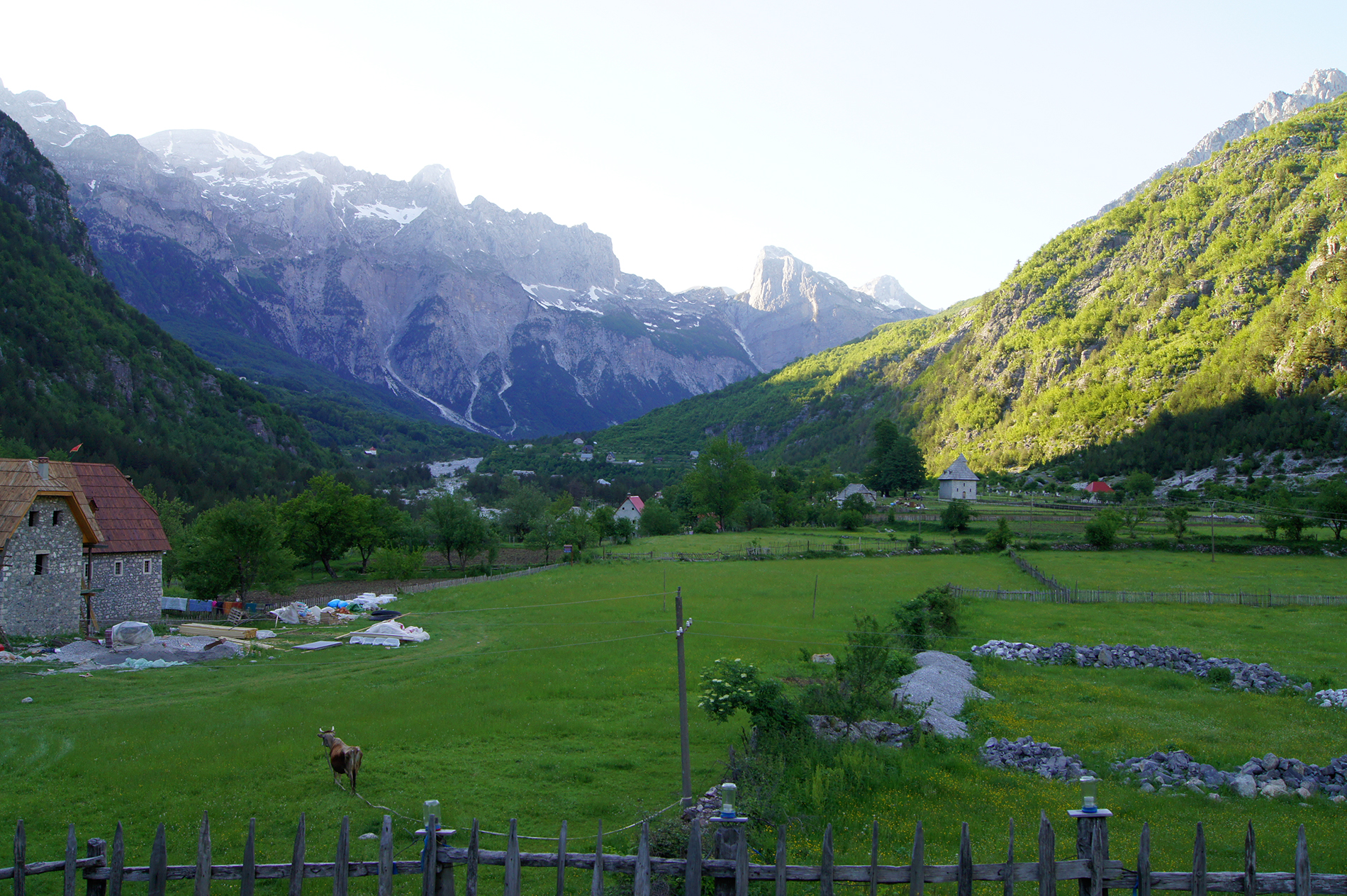
Back in 2006 when the then German Technical Cooperation (GTZ), the current GIZ International Cooperation, launched a project to turn the century-old towers into guesthouses accommodating tourists in the Theth mountain area in northern Albania, only five households accepted to become part of the project, worried over losing their hospitality tradition.
With modest investments of €2,000 per inn, GIZ provided beds, reconstructed the toilets, fixed showers and the kitchen using solar panel technology.
Currently, Theth numbers more than 25 inns and 100 households dealing with tourism which has turned the once abandoned remote area into an emerging sustainable mountain tourism destination.
A decade on the challenge in the northern Albanian site, is preserving its traditional centuries-old architecture with characteristic wooden and stone tower buildings, often fortified to protect local households from blood feuds.
Poor road infrastructure and inadequate access to electricity still hamper tourism efforts there.
Design Code, – A new ‘Kanun’ for the Highlands
Tourism pressure is putting at risk the traditional architecture in Theth, even though the village has been declared a protected historical center, say German and Albanian experts working on a new design code that would preserve local traditions when reconstructing existing buildings and building new ones, especially guesthouses.
With only a handful of houses a decade ago, Theth has now opened the doors to tourists who find themselves torn between the sight of magnificent landscapes and ancient houses, many of which in ruins and at a time when new buildings are no longer built based on traditions which have shaped local identity for generations, says a GIZ documentary on Theth.
The documentary features students and lecturers from Kassel University in Germany and the Albanian universities of Tirana and Shkodra who met in Theth for one week earlier this year to collect information about the natural and cultural landscape, the architecture of the buildings in the area as part of a joint project Albanian-German project financed by GIZ to preserve local architecture through new design code intended to become the new Kanun, the local code of honor that has governed life in northern Albanian since the late Middle Ages.
Experts say Theth can develop tourism without harming the beauty of its natural landscape, without losing its history which lives on in its characteristic houses and without forgetting traditions and its unspoiled heritage that can still be found today.
“Theth is being increasingly visited by foreign and local tourists who want to enjoy this fairytale landscape. A core part of this environment, in this cultural landscape, is the traditional houses. But it’s not only the houses, there’s also the immediate environment that includes the little gardens, narrow roads, beautiful plants, fields and thus the entire landscape should be preserved. It is the main pillar for future tourism development in this region,” says Petra Wagner, a senior consultant of the Germany-based GOPA Worldwide Consultants.
Nico Loesch, a student of the University of Kassel, says many of the local residents are not aware of the traditional architecture of the area.
“We have noticed that houses lie isolated from each other. They are not clustered in a true village center. People here build houses uncontrolled, I would say. They seem to believe they can do whatever they want,” he is quoted as saying.
“Another thing we noticed is that people abandon their old houses, leaving ruins behind. Almost a third of all houses registered and mapped were in ruins. Next to them, we see entirely new constructions. It is odd to see this and it makes you wonder why the abandoned houses are not restored or converted for other uses,” the student adds.
However, Albanian architecture student Zhoelta Guri, says the situation is not as bad as it might look.
“These houses here are in an almost perfect harmony with the landscape. We are talking about a traditional vernacular architecture of the area. I think we are fortunate that the local people have managed to preserve it up to this day,” says Guri.
“Obviously there are examples that did not follow these traditions. However these people faced economic problems which should be acknowledged. Some traditional building materials are difficult to find. This explains why builders deviate from traditional designs,” she adds.
The old tradition of living in Theth is also identified through gardens around the house with their wooden fences or piling loose field stone walls where the local craft of wreathing the house is inherited.
Drawing sketches of the doors and windows of the buildings to highlight the particular details found, students were told in interviews with local residents that the cross on the house gate symbolizes the forgiven blood.
Blood feuds, although declining still haunt some isolated northern Albanian areas where the centuries old Kanun code of honor continues to govern some aspects of life and stands above law, forcing many to live in self-imposed isolation and escape the country to avoid blood feud avenge.
“Families in blood feud used to come here and lock themselves inside for 15 days. But the last time that happened was about a hundred years ago” says the owner of what used to be a former blood feud reconciliation tower that has now turned into a tourist attraction.
An up-and-coming destination
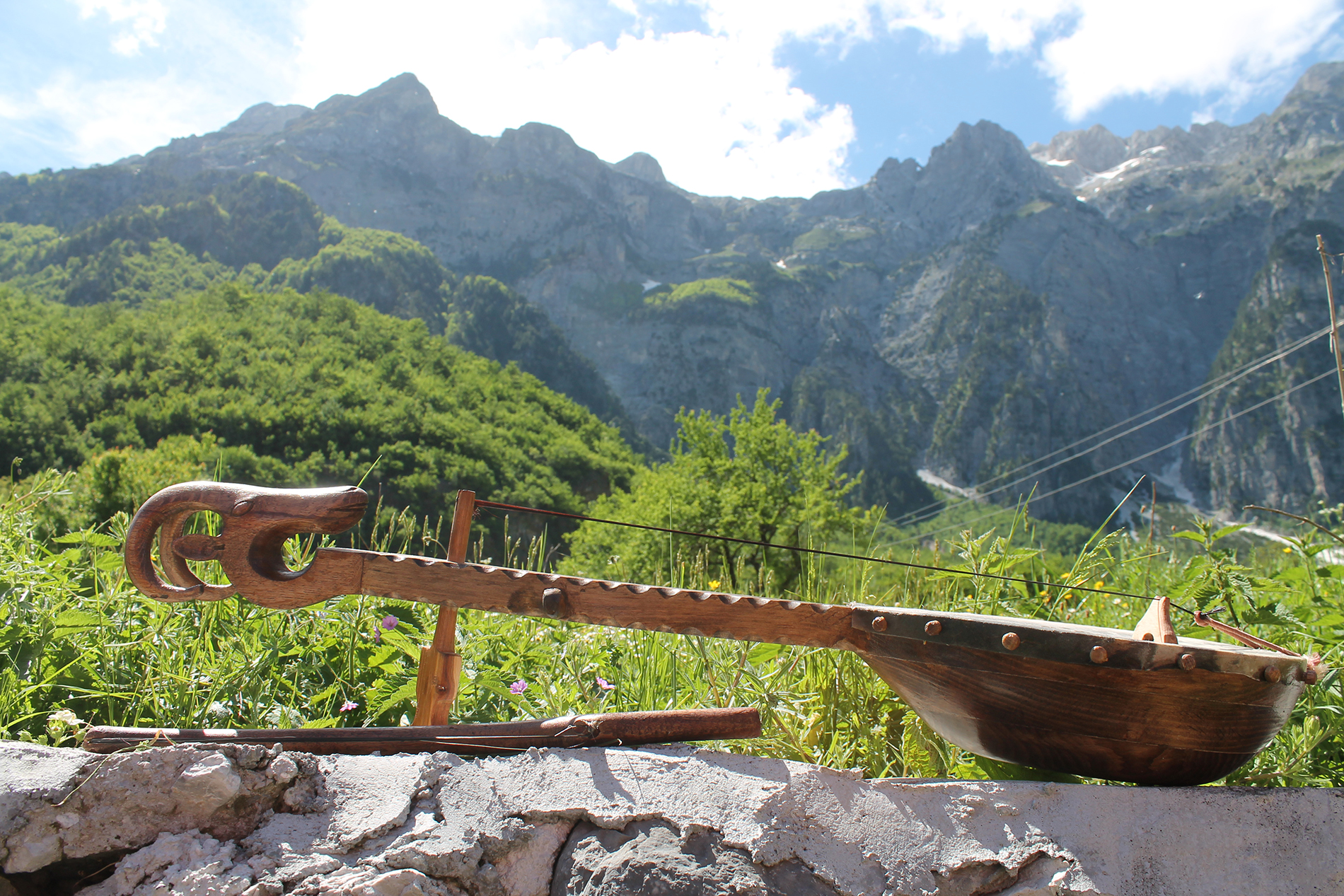
Situated in the Northern Albanian Alps, Theth is a perfect destination for Albania’s emerging mountain and adventure travel tourism which can help turn tourism in the country into a year-round destination.
“When spring arrives and only traces of the harsh winter remain, Theth, a mountainous area in northern Albania starts to live again. The road connecting it with Shkodra, the largest northern Albania city, reopens and people return to their guesthouses. They work hard and devote themselves to tourism and agriculture,” says the GIZ documentary about Theth.
Rich in natural and cultural beauty, Theth is one of the largest national parks in Albania. It is often referred to as the land of tradition and history. There lies the house where famous British traveler Edith Durham stayed 100 years ago during her trip through the Albanian Alps. Traditional costumes are still preserved and shown with pride and young couples often choose to get married according to local traditions.
Late Canadian-German Albanologist Robert Elsie who dedicated his life to Albanian studies was buried in Theth in October 2017 having his last wish fulfilled to rest amid the Albanian Alps, a place which he loved so much and also dedicated a book calling it Albania’s rugged Shangri-La, a fictional valley as described in a novel by British author James Hilton.
In his co-authored “A passion for Theth: Albania’s rugged Shangri-La” Robert Elsie and Dutch traveler Gerda Mulder introduce the region with the writings of the early explorers and travelers to the valley, accompanied by old photographs of the period.
“Though it is one of the remotest corners of Europe, Theth has never failed to attract visitors. Edith Durham was in her element when she visited the valley in 1908, as were the Austro-Hungarian scholars Karl Steinmetz and Baron Franz Nopcsa, and the American writer Rose Wilder Lane,” they write about Theth, which has in the past few years turned into one of Albania’s most popular mountain tourism destinations.
Katharina Halser of the University of Kassel says that the special feature about Theth is that up in the mountains one can still find pristine wild nature, while down in the valley the landscape is characterized by classical cultural landscape. “Those systems are interconnected. Even in wilderness areas, elements of cultural landscapes are common, for example, larger pastures and scattered terraced fields. Further down in the valley the landscape is predominantly shaped by humans. Such a close connection between cultural and natural landscapes is a feature that you can hardly find in Germany. This is why it is so special here,” she adds.
National Park of Theth
Theth is located in the centre of the Albanian Alps, 900m above sea level, between the Bjeshkà«t e Nemuna (the Accursed Mountains) to the west and the Mount Jezerca to the east, says the Albanian Alps travel portal. Theth is by far the most important tourism destinations in northern area along with Valbona. It is located 70 km from the city of Shkodra and 172 km from Tirana.
In November 1966, the mountainous area of Theth was declared National Park due its rare beauty and natural values. It has a surface of 2,630 ha, 1680ha of which are covered by forests, and the rest are pastures and rocky areas. It is managed by the Regional Agency of Protected Area (RAPA), located in Shkodra.
The national park has high values of biodiversity in relation to the habitats, plants and animal species. A meeting point of different types of forests such as beech, pine, spruce, alpine meadows, plenty of streams and mountainous rivers, glacial lakes etc. The park is rich in endemism and subendemism like Gentiana, Luthea, Eulfenia, Baldaccii, Viola, Dukagjinica, Lilium, Albanicum etc. You can also see the protected mammals like the brown bear (Ursus arctos), wolf (Canis lupus), lynx (Felis lynx), chamois (Rupicapra rupicapra), deer (Capreolus capreolus), wild boar (Sus scrofa), whereas from the birds category you can find the wild roost (Tatrao urogallus) and the alpine eagle (Aquila chrysaetos). In the crystal clear fresh waters of Theth’s and Shala’s river you can find a globally endangered otter specie (Lutra lutra). The park, apart from scientific, didactic, landscape and other values, it carries great potential for the development of tourism, in particular the alpine and cultural tourism.
Theth is surrounded by high rocky peaks of the two upper blocks, which sharply fall down in the valley and form breath taking sceneries, like the peak of Radohima (2,570 m), Arapi (2,217 m), Paplukà« (2,569 m), Alisà« (2,471 m) etc. Down the valley, at an altitude of 750-800m, lies the picturesque Theth on both sides of Shala river with its villages.
Theth can easily be reached by car, however a four-wheel-drive vehicle is required as part of the road is unpaved.
Guesthouses, travel agencies or local guides can pick up visitors with four-wheel-drive vehicles from Shkoder.