Jerina Zaloshnja
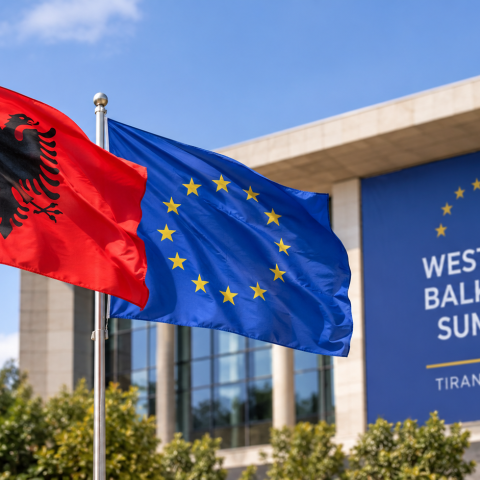
As Albania accelerates the formal process of European Union accession—opening negotiation chapters at a pace that seems to outstrip democratic reforms—it faces an urgent and unavoidable truth: a country cannot genuinely integrate into the EU without first building a functioning rule-of-law society. No volume of technical chapters opened or summits attended can substitute for the foundation that underpins every European democracy: independent institutions, fair elections, and justice that applies equally to all.
Yet Albania today, halfway through 2025, is failing this test.
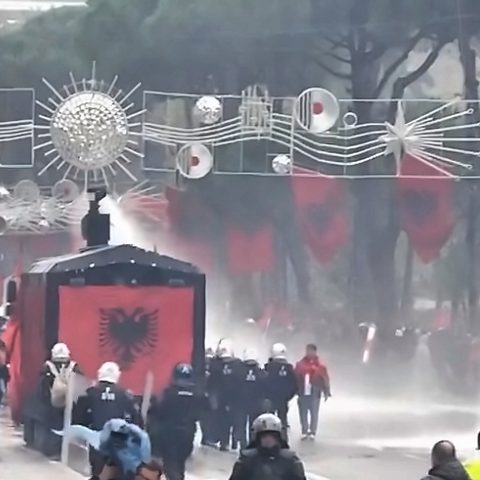
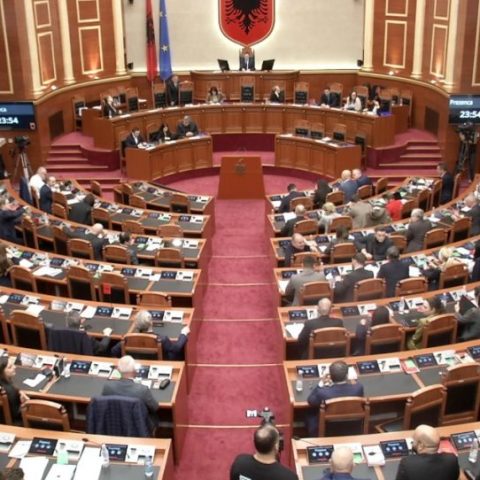
The most recent parliamentary elections, held under the banner of progress, were characterized by indepedent observers as a contest not between parties but between the state and the oposition— Echoes of one-party dominance—a déjà vu for Albanians who lived nearly half a century under a single-party regime
Albania’s ruling party, through its absolute control of the administrative and security apparatus, appears to have absorbed the state itself. This fundamental distortion of political competition undermines electoral legitimacy and signals to citizens that political power—not merit, not law—is the path to opportunity.
It is no surprise then, that over half a million Albanians have left the country in the last decade. What drives them is not only economic hardship, but the collapse of hope. As one Western diplomat stated privately with unsettling candor: “If the current trends continue, it won’t be clear who Brussels is actually integrating—territory or people? Because Albanians are vanishing.”
This erosion of trust extends far beyond the ballot box. The IPARD II scandal—detailing the misuse of over €30 million in EU rural development grants—has become a case study in systemic state capture. Government-affiliated consultancy firms extracted payments from small farmers for services meant to be free. Complex application rules effectively excluded the majority of Albania’s agricultural producers, while shell companies and fake bids siphoned EU funds with the complicity of state institutions. The agency at the heart of it all, AZHBR, was led by an official who later became Minister of Agriculture. No one has been held accountable.
This is not an isolated case. The infamous “incinerator” scandal—hundreds of millions of euros allocated for waste-to-energy plants, some of which exist only on paper—is another example. In each instance, institutions meant to uphold the law were instead instrumental in bypassing it.
And while the EU’s anti-fraud office (OLAF) has flagged abuses and frozen further IPARD disbursements, the European Commission and EU Delegation in Tirana have remained largely silent. This silence erodes not only the credibility of aid but the moral authority of the European project itself. It risks transforming European integration from a process of transformation into one of elite consolidation.
A functioning rule of law does not mean simply passing reforms on paper or establishing new institutions. It means institutions that are not captured by political interests. It means that the law applies equally to a former prime minister and to a farmer in Fier. It means that embezzlement leads to prosecution—not promotion.
In its current trajectory, Albania is developing not a rule-of-law society but a state where law is used instrumentally, to punish dissent and reward loyalty. Foreign aid, instead of empowering reform, often subsidizes this model. The tragedy is not just the waste of funds, but the damage to democratic belief.
The EU must do more than open and close negotiation chapters. It must demand that Albania meet clear and verifiable benchmarks: publication of all grant data; exclusion of those implicated in fraud; direct oversight by EU institutions; and independent monitoring with real enforcement powers. Albania, for its part, must show that it is not merely mimicking European norms, but internalizing them.
Brussels and Tirana must accept a shared responsibility: to ensure that integration is not just a slogan for the elite, but a transformation for the country. Without a real commitment to the rule of law, EU membership will remain a fiction—and Albania will remain a democracy in form, not in substance.