By Alba ȥla
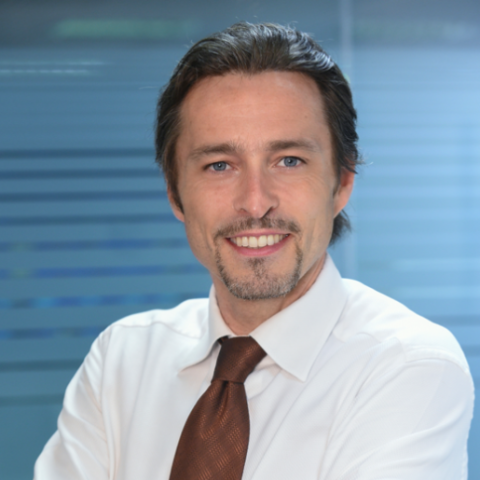
The embassy of Spain in collaboration with the Chamber of Commerce and Industry as well as the Albanian Agency for Investment AlbInvest held the seminar ” Policy and Economic Structure of Spain: History of a transformation 1957-2007,” with the honor guest being Germa Bel, professor of economic policy at the University of Barcelona. The seminar was held in the framework of presenting the Spanish transformation in the economic point of view. Spain’s economy has passed from an autarchic one to an open one and its development experience can be very valuable for Albania’s case. To address the transformation and the potential valuable lessons for Albania, professor Germa M. Bel Queralt gave a lengthy presentation at the event. The first thing one notices about professor Bel is his impressive record of academic publications and experience in strategic important posts including an MP position in the Spanish Parliament during 2000-2004.
Impressions from Albania
For professor Bel this visit is his first time not only in Albania but overall his first real contact with the Balkans. Usually engaged in his commitments in Latin America and the US it is only recently that he “has opened a window to the east” as he puts it. He took the first opportunity because even in the Balkan context he believes Albania has the special appeal, “most closed country in eastern EuropeŠunknown because of the isolation.” Given the brief visit he has only first-glance impressions: “I have found a more dynamic country than I expected, and more Mediterranean as well and this second one I should have expected,” he laughs. ‘Dynamic’ and ‘Mediterranean’ are two interlinked elements, according to Bel who shares the view with other foreigners. He had a short visit to Kruja where he especially liked the ethnographic museum “which gives a sense of mixed cultures, traveling from Catholic clothing pattern to Muslim ones, for example.”
Advice on sale of public assets
Asked about Albania’s challenges with privatization of biggest state-owned companies and his potential guidance on the process, given that he has considerable experience in the field, professor Bel gives lengthy advice. This is a topic he has devoted most of his research and work as a consultant. Advice should match the specific context but the general bias for a developing country would be: “the government assumes a whole new role, it does not go out of this business, it changes its role from operator to regulator. The new role is often even more difficult that the old ones.
“I am aware that you need a lot of investment in the energy field in order to solve the crisis,” he says- “before buying KESH, foreigners will need good prospects for results and a predictable regulatory policy particularly on the light of the problematic delivery situation.” Investors will need assurances that they are not dealing with high risk because then they will need high risk premiums. A stable framework provides for a higher level of certainty and then the rate of return required will not be that high. The trade-off should be addressed before hand.
The privatization of the insurance company should be easier and that of ARMO even easier given the high competitivity of the international oil market and the more extensive experience with privatization of oil companies worldwide (relative to energy companies). In the case of INSIG he advises strict financial supervision from the central bank.
“In general one has to avoid thinking that when you go private you cannot forget about the sector, you just have new responsibilities to be taken seriously,” he concludes.
European enlargement: Albania’s place
Despite EU issues not being his field, professor Bel has very interesting views to share about the future of Albania in the EU. He sees it “as only natural that in the future Albania should belong to the EU. It is difficult to say which type of process will precede and whether it will be dominated by political or economic issues.” He judges that EU was a great thing for Spain and it will be so for Albania. Of course opening the national economy to a huge market gives benefits and risks but the benefits are more important especially in the long run. However, the most important thing in his judgment are the reforms that are encouraged by the integration path, “because these reforms are just good in themselves for the country,” despite being EU homework. He list examples such as: building good institutional foundations especially for an independent civil administrative class. “I have heard that every time power shifts hands the administration changes and that is simply very bad,” he explains. EU will require the separation of state and party. Professor Bel assesses that it is high time for Albania to commit to a large step forward in going beyond transition state and transition economy and push seriously for things such a property rights, census and other reform with political implications that will assist the future of Albania in itself and in the EU.
Teaching challenges in the 21st century
Professor Bel is a research-oriented academic though he appreciates teaching as well. Because as he puts it “it helps you keep your feet on the ground. As he has had the opportunity to see both American and European Universities he gives some thoughts on students in the States which seem to him more “challenging, used to ask questions and debate your points,”
Spanish example: how much of a miracle?*
In Spain the main privatization transactions were completed in 1997-1998.
Keys for the 1994-2007 Economic Success:
* Fiscal Consolidation
* Stable Economic Policy
* Predictible Framework for Business
* Benefits from belonging to the EuroZone
* Internationalization of Spanish firms
Spanish Firms Becoming Global Players :
* Telecommunications:
* Telefonica, third largest operator in world
* Cintra, leading operator techn. information
Oil: Repsol is the seventh/8th th company in the world (oil & gas production,2005)
Energy: Endesa, Iberdrola, Uni