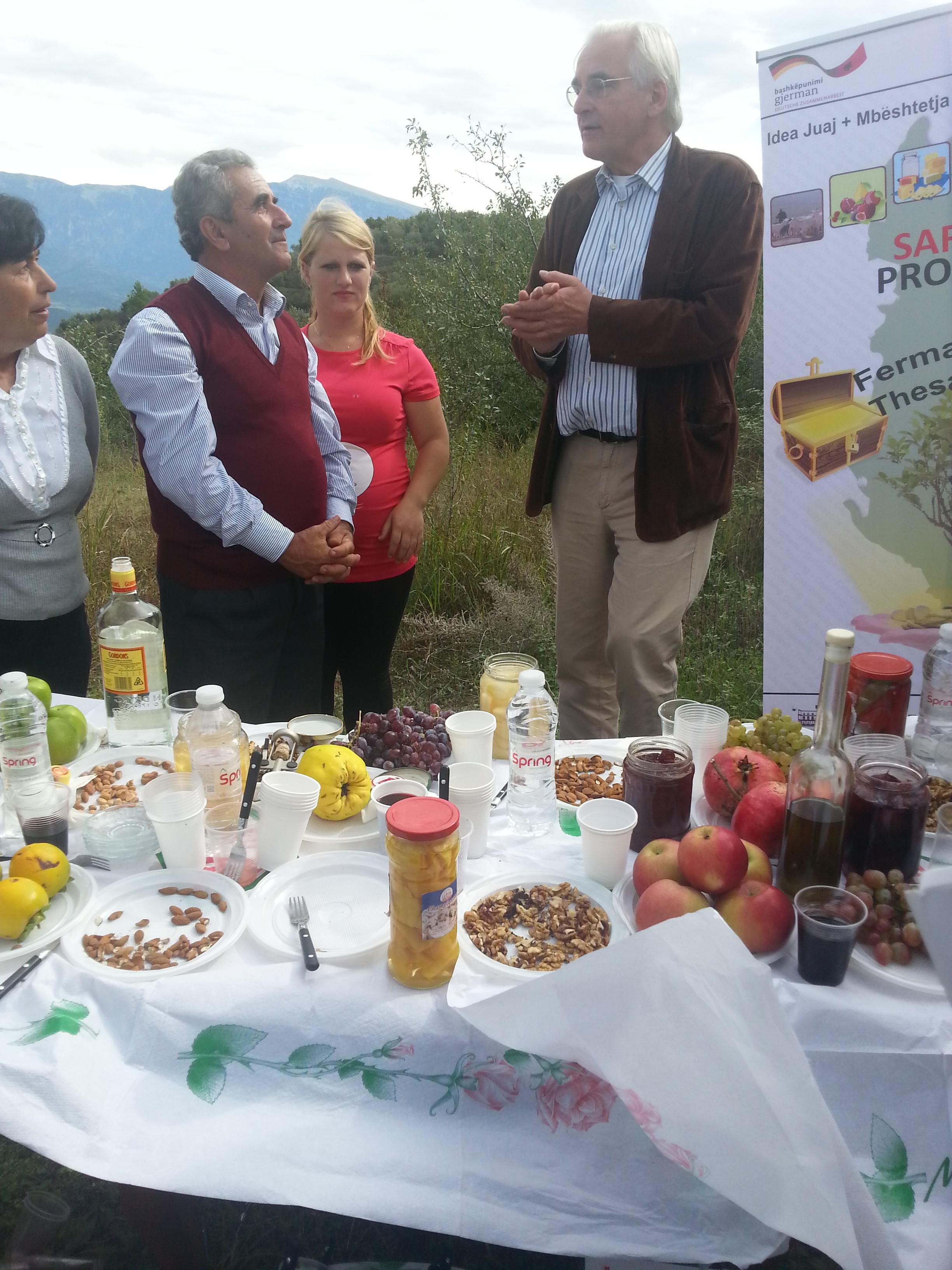
Some Albanians are proving that hard work and a little outside help can help reverse the abandonment of rural areas. Could a return to profitable and sustainable farming as well as other agricultural activities answer some of Albania’s most pressing problems?
By ANDI BALLA
Gezim Kuqi and his family have not been blessed with an easy life. But what they lack in fortune, they make up for with hard work.
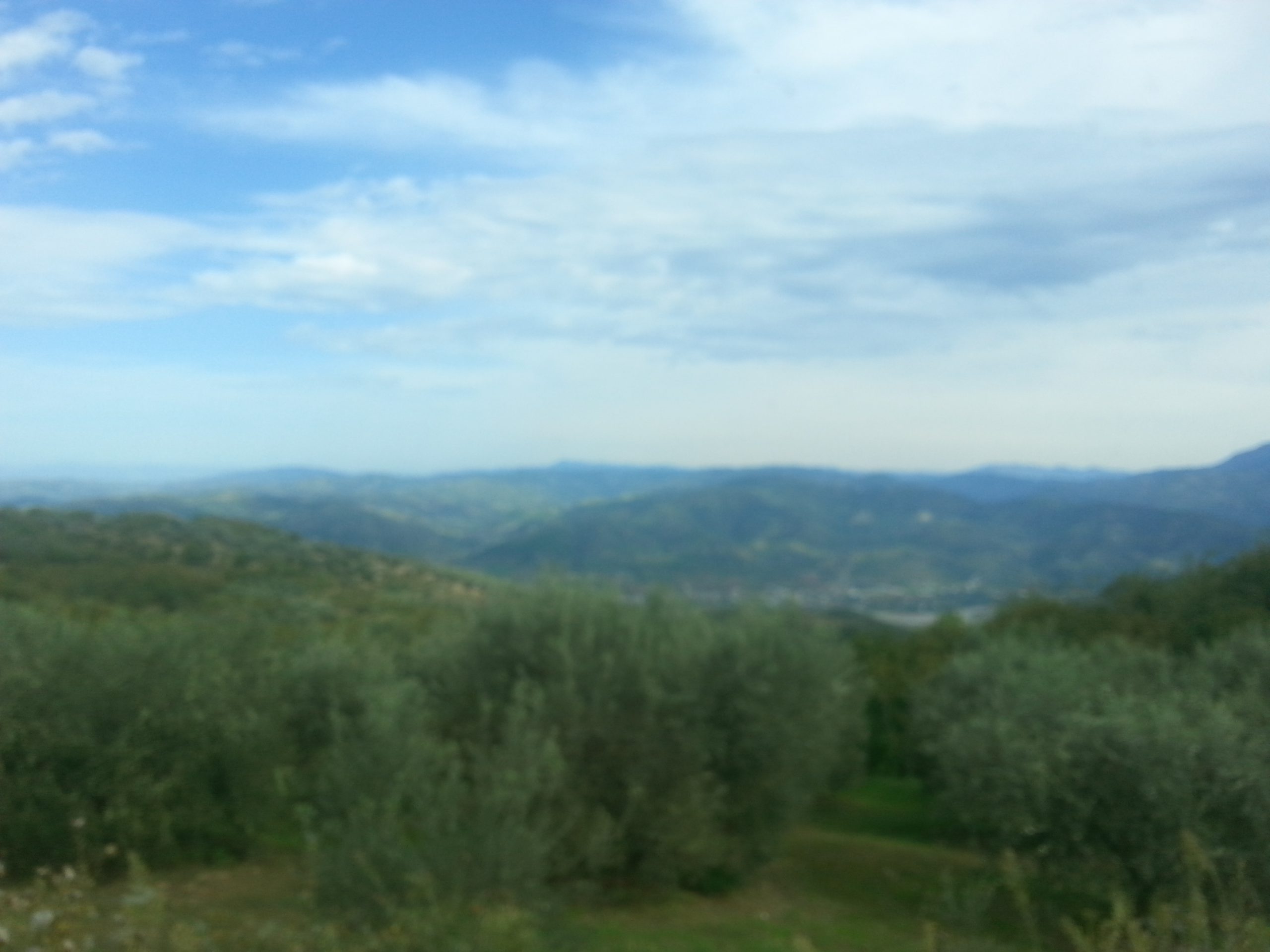
A former seasonal worker in Greece, Mr. Kuqi and his family have taken up farming in Drobonik, a mountainous village south of Berat where farming is only for the hearty. Landslides in the rainy season often wash away crops. The gravel road to the city is hard on vehicles and equipment, which must make everything more expensive to get to the farm and off of it to the market.
But Mr. Kuqi doesn’t look like a man that gives up easily. His lands are green and entirely cultivated, full of fruit orchards and nut-producing trees. There are olive trees too — a lot of them.
You can tell he and his family are hard workers in agriculture, because they are all fit and tan under a balmy mid-October sun. A heavily pregnant daughter in law is the exception. She is preparing the next generation of Kuqi farmers, or so the hope goes, says the grandfather-to-be.
Mr. Kuqi and his two sons used to work as seasonal agricultural workers in Greece. Whatever they saved over the years, they invested back in their Berat County farm, where now the entire family works.
“Everybody works in the farm that we have been able to bring together through patches of land owned by the family and others on which we pay rent,” Mr. Kuqi says. “I hire additional workers during labor intensive periods to pick cherries and olives.”
We, a group of journalists, have been brought to meet Mr. Kuqi and his family in a media tour organized by GIZ, Germany’s international cooperation corporation, and KfW, Germany’s development bank, as well as the German embassy, whose head, Ambassador Hellmut Hoffmann leads the tour.
Mr. Kuqi is hosting us today, because he is a participant in a program funded by Germany and other donors – SARED (Support for Agriculture and Rural Development in Disadvantaged Areas in Albania). The program is helping Mr. Kuqi to get a new tractor which will help him improve his fruit production.
The tour’s message is simple: Albanians can be successful at home – there is hope beyond emigrating. It comes at a time when more than 40,000 Albanians have left the country this year alone to escape poverty and lack of prospects at home. Most have tried to go to Germany, but they don’t qualify under the country’s laws to live and work there, so they will be returned home, say German officials.
Leaving the country is not the only problem, however. Albania has also seen a massive internal migration away from rural areas with populations moving into the cities, abandoning their lands and thwarting rural economic development in the process.
It’s a trend people like Gjergji Qosja would like to see reversed. Mr. Qosja owns Gjedra Ltd, a medicinal plant processor in Berat and another SARED beneficiary. The company’s products go into everything from organic teas to confections. The majority is exported to the United States and Germany, and Mr. Qosja sees potential for growth in the industry that has been one of the few very successful examples in Albanian exports.
“If we can get people a decent income by staying in the rural areas, they won’t have to stay unemployed in cities,” Mr. Qosja says.
Agriculture is only one of the sectors the Germans have assisted in Albania. In fact, they tend to focus more on “the basics of a modern society,” as one German consultant tells me. These are things like water supply, sewage systems and electric power. They have helped with these across Albania, including the Berat area where with assistance of KfW, the development bank, the Germans are helping build a new water supply system for the municipalities of Berat and Kucova. It is the latest project in a program that has invested 334 million euros in water supply systems across Albania since 1992, making Germany the top development investor in the area.
The water supply for Berat and Kuà§ova runs through the majestic Osum River valley. Back above the valley, on a lush hillside of Drobonik, Mr. Kuqi’s sons have started to share some goodies with the visitors – all products of their farm – pomegranates, chestnuts, apple composts – wine and rakia, the fiery brandy, too.
“Have some. They are very good. They are all made here,” the elder son says, beaming with pride
They were very good indeed, for they tasted like hard work and determination sure to deliver a better future.