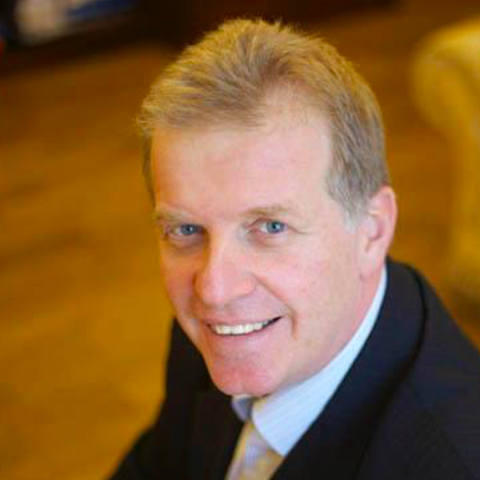
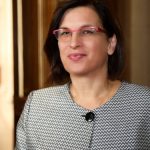
Jerina Zaloshnja from Tirana Times interviewed H.E. Manuel Montobbio, the Ambasador of Kingdom of Spain in Albania on the Spanish model of integration, Spanish projects in Albania, etc.
Q-You are the first Ambassador of the Kingdom of Spain in Albania. Why did Spain decide to open an Embassy at this particular moment in Tirana?
The opening of the embassy in Tirana is the accomplishment of an engagement taken by the Spanish government some time ago for a number of reasons. On one hand, Albania has clearly progressed on the international arena with the perspective to associate with the EU. Also, your country is getting closer to NATO membership. We are members of both of these structures and therefore have a direct interest on Albania’s further progress. Albania is also, as Spain, a Mediterranean country and we consider that the development of the Mediterranean dimension of its international relations and its participation in the Mediterranean fora is a challenge to which achievement Spain can contribute significantly. On the other hand, we consider that the embassy in Albania is needed to foster bilateral relationships in all relevant fields to our mutual benefit. As the World’s fourth largest investor economy and a relevant cooperation donor, with a very important international language, Spain has a lot to offer.
Q-Although we are both Mediterranean countries, the history of Spanish- Albanian relations has been sporadic at best. There does exist a myth that the great Cervantes may have stayed in a city populated by Albanians in Montenegro, Ulqin, as a prisoner kidnapped by local pirates and, often, good relationships start with a myth. What do you expect to change in bilateral relations?
Relations should bee promoted both bilaterally and in international forums. Bilaterally there are three main fields for promoting relations. Firstly, we want to promote Spanish culture and language. Spanish is the second international language and therefore a language of great interest. I think that the promotion of the Spanish language is the basic step conditioning relations in all other fields. Secondly, Spain is the fourth largest investor in the world thanks especially to economic expansion and Spanish investment in Latin America in the 1990s. Nowadays Spanish companies are looking for new frontiers for their investments. One of this is the area of EU’s enlargement and its neighbors. In this sense, I would say that there are interesting opportunities to promote Spanish investment and contribution to the transformation and development of Albania. Third, Spain is attaining in this legislative period 0,5% of its GDP Official Development Aid. Our International Cooperation phocuses on priority countries. Albania, together with Bosnia Herzegovina, is the only country in Europe declared a Special Action Country by Spanish Cooperation. We are designing an strategy with the main objectives to contribute to the implementation of the Stabilization and Association Agreement with the EU and the achievement of the Millenium Development Goals, which will lead to the execution of development cooperation projects in different fields with this perspective. We have a particular capacity to contribute to Albaniaճ approach to NATO and EU by sharing our know how and experience as, to a certain extent, we have passed through this process coming out form an authoritarian regime. We went through the transition from an authoritarian regime to a consolidated democracy and from an autarchic economy to one of the most opened economies in the world which is developing very fast. Spain has emerged out of the transition period to become one of the most successful EU member states EU in using its policies for our transformation. Until this year we have been the largest recipient of EU funds. Now we are not anymore, as we have got an average income that is above the EU average. This experience of transformation from a below average European country 20 years ago to the fourth largest investor, to a large extend thanks to our EU membership in EU, may be of great interest for Albania. We can share these experiences and cooperate in this field to provide cooperation towards EU and NATO membership.
There is also a specific area where we can cooperate: the Mediterranean. We believe that the Mediterranean is a geo-strategic space, which we share with Albania, and we are open ton contribute to Albania’s approach to the Mediterranean international fora, such as the Barcelona Process, born during the Spanish presidency of the EU in 1995. Our cooperation should proceed in all these processes, fostering of partnerships in different international forums.
Q:Mr Ambassador can you tell us about the Spanish projects actually in Albania
There are different Spanish projects in different areas, like IBERDROLA which in one of the top Spanish companies on electricity. They are implementing in Albania a project financed by the Worlds Bank and European Development and Reconstruction Bank for production energy in Durr쳠and Elbasan. Also, they are going to begin with the construction of a thermoelectric station in Fier. These are considerable investmentsױ1 million Euro each.
In our development cooperation we have a large program of micro credits totalling 14 million Euro. In this field, we are prioritizing credits to people that in normal banking conditions cannot gain access to credits, especially in rural areas. We are also cooperating with the High Council of Justice and the Ministry of Agriculture.
There is a House of Spain here in Albania where Spanish language courses are offered.
We are about to sign a Memorandum of Understanding with Tirana University to provide a Lecturer of Spanish, and are willing to contribute to the establishment of the Department of the Spanish Language and Culture at the University.
We have celebrated the joint Defense Commission between Albania and Spain. There is an action plan to foster the defense relations for this year. Spain has joint commissions in defense with only 22 countries in the world. I would say there are many initiatives going on.
Another field where we are promoting our presence in Albania is the cultural field. This year we had two weeks of the Spanish cinema in Tirana, one in May, the other in November. Spain has also participated in Tirana International Film Festival, with 9 films out of 100, and we have promoted other cultural events.
Q: The Spanish model of relatively smooth democratic consolidation and European integration stands as an example among observers interested on these topics. This model has become known and debated in Albania as well. Do you think Albania can learn from the Spanish experience? How will you promote such learning?
There is a branch of the political science, transitology, which deals with explaining and promoting the process of democratic transition and consolidation. I would say that for good or for bad, the model of transition which is promoted by transitology to a large scale is based to the Spanish transition. The political transition of Spain has been a model for many countries in Latin America because it was a pact between the moderates of the regime and the moderates of the democratic opposition and a transition made from the law to the law. In this sense it was a transition which also was accompanied by a deep social and economic transformation and a successful opening up in foreign policy. In this sense, Albania or any other country can learn from this model.
What we can do to promote? To bring people who can share relevant experiences. In the month of May there was in Tirana a public conference of Marcelino Oreja, who was the Minister of Foreign Affairs of the government who carried out the democratic transition in Spain and requested the entry of Spain into the EU (afterwards he was Secretary General of the Council of Europe and a member of European Commission). Precisely this conference was on the comparison between the Spanish and the Albanian process. We have had the visit of the Secretary General for the EU of our Ministry Of Foreign Affairs, where we shared our experience of transformation within EU with government officials and different representatives from civil society. In our cultural activities this is something to be present both at sectoral level and also with some opportunities at the reach of the Albanian public opinion. This is one of the strategic lines we are going to promote.
Q:You have been personally involved on Spain’s EU Participation during its twenty years relationship with Brussels as a member of the union. Can you share some of that experience with us and haw do you think it will help you perform in your current position?
In my professional background, as many other Spanish diplomats, I have had the occasion to work from the inside, in different positions, in Spain’s EU adaptation process. I was involved in the adaptation of foreign policy and foreign relations of the EU as well as developing a wide strategy within the EU together with many other Spanish diplomats. I did my postgraduate studies at the College of Europe, a center to prepare specialists on the EU affairs. This background may be useful to share our experience with a country whose main national perspective is precisely to have a EU perspective. In this sense I hope that both these professional and personal experiences whose great asset is to have stabilized Spain within EU (a national objectives of our democratic transition) will help me to understand well the challenges and needs of present day Albanian society.
Q: On a more personal level, you must still be very busy with consolidating the embassy’s presence on the ground. Have you been able to see a little bit of Albania? How do you feel in your new country of residence?
I have been already in Durr쳬 Kruja, Shkodra, Vlora Berat. If I have to describe the country with one word this is essentially a Mediterranean country. People enjoy life, they want a better life and this is a good attitude for the future.
Anything else?
I believe there is a challenge of common knowledge. I find out a great sympathy for Spain here in Albania. But, the challenge is also to make Albania better known in Spain.
***
Manuel MONTOBBIO
Doctor in Political Science by the Autonomous University of Barcelona, Master in High European Studies by the College of Europe (Bruges, Belgium) and graduated in Law and Economics by the University of Barcelona. Career Diplomat from 1987, at present Ambassador of Spain in Albania. Among other positions at the Ministry of Foreign Affairs and Cooperation, he has been Ambassador ad Large, responsible of the Action Plan for the promotion of Spanish presence at International Organizations, as well as for the Universal Forum of Cultures Barcelona 2004, Director of the Cabinet of the Secretary of State for Foreign Affairs, and Head of the Planning and Evaluation Office of the Secretary of State for International Cooperation. He has been posted at the Embassies of Spain in San Salvador, Jakarta, Mexico and Guatemala. From 1987 till 1999 his career has been very connected to Spanish participation in the Central American peace processes. Author of La metamorfosis del Pulgarcito. Transici