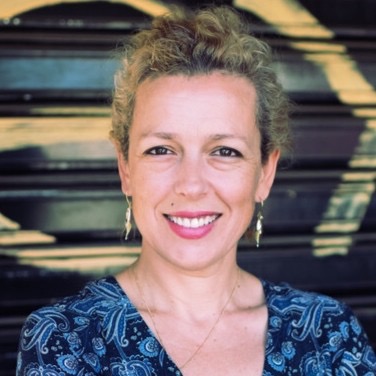
World Bank country manager, Camille Nuamah, explains the bank’s role in OSSH’s privatization and the current dispute between OSSH’s owners, CEZ, and Albanian authorities over the increase in the electricity price.
TIRANA, Dec. 22 – It’s to early for the OSSH owners to seek World Bank guarantee money as there are many steps in the negotiations between Albanian authorities and the Czech company, CEZ, that need to take place first, Camille Nuamah, the World Bank country manager for Albania said this week.
She added that Albania’s energy sector is entering into a new era of commercial operations, and the main players, power companies, regulatory authorities and consumers have a say in the way the sector develops and set associated tariff levels.
The ongoing discussions among the companies and the regulator are a normal process that we observe in the energy markets including in developed countries and should be allowed to proceed as outlined in the regulatory framework for the sector, according to the World Bank.
“We are looking forward to a well balanced resolution where the incentives for efficiencies by consumers and energy companies are well balanced with the need for investment by the public and private energy sectors,” Ms. Nuamah said in an interview given to journalists from the News 24 and Vizion Plus televisions and the daily Shqip. It was made available to on the World Bank Web site.
Q: Can you explain the partial risk guarantee?
A: At the time of the privatization of the shares of the distribution company to CEZ, all 3 parties entered into an arrangement which is called the partial risk guarantee. The partial risk guarantee is like an insurance policy issued to the private companies for which they pay fees, (no fees are paid by the government), the private company pays the fees for insuring them against any departures by the regulatory body from an agreed regulatory statement. So this guarantee basically helps to give insurance to the firm that the regulatory body will stick to the arrangements that have been agreed. At the same time as part of the privatization there is a contract between the government and the private operator obligating the company on its side for certain types of actions in terms of the investment, efforts to reduce losses, increase collection, etc. The combination of these two are meant to provide a framework in which the private operator is guaranteed a reasonable rate of return on the new investments they are bringing to Albania to reduce losses, increase collection and improve the distribution and supply of energy and also to provide insurances on one side that the private operator will do what they have obligated themselves to do in the sale and also that the government through the regulator will honor certain agreements that have been made in order to allow the investments to proceed effectively to improve the quality of the sector.
That’s what the partial risk guarantee is? How is the World Bank involved? The World Bank in some respects is offering an insurance to the private operator that the regulator will honor. Now why was this necessary in Albania? No this was not necessary because there were real serious doubts about the regulator, but they were necessary because the regulator in Albania is a relatively recent entity and does not have a long enough track-record of implementing the regulatory framework for a new private operator to come in. So we have used this instrument. The World Bank has used guarantees on many sorts of arrangements between public and private sector around the world. In this case in Albania this is the third time that we are offering a partial risk guarantee for the specific transactions of the privatization of an electricity distribution company. There is a guarantee in place in Romania, and I think one in Uganda, and they have worked quite well, well partly because Albania is entering into a new phase of operations in the sector where there is a private company aliasing with the government and that there are two other public companies as you are aware the KESH generation and transmission system operator. The interactions in the public private partnership as you have now which most developed countries have in the energy sectors. The guarantee is there to help in combination with the contract sort of regularize and encourage good cooperation between all the parties.
Q: Can the company just take the guarantee in situations where the increase of the tariff is not in the level that CEZ wants?
A: Ok. It’s not what CEZ wants or what the regulator wants. It’s what was agreed as part of the transactions. And there are many other various elements that go into the computation. The regulatory statement is almost like a formula by which you have a lot of inputs into the formula: cost, projected demand and loss of energy and other things going into the formula. The guarantee, what’s interesting is that the process of the guarantee is meant to facilitate the procedure, the dialogue between the firm and the company. So your question again is can CEZ take the guarantee? It’s far too soon to tell because this is in the early stages of a new type of dialogue. There are many rounds of back and forth discussions and answers looking at the documents and the data that would have to continue before we can come to any such conclusions.
Q: CEZ says that he will create a gap in the flow of cash by 20 billion leks. That is too much or what?
A: I am not prepared to comment at this point because we have just started the discussions of the various documents and the data that are going back and forth. Can’t comment at all on specifics of either the tariff increase or the statements that have been made by CEZ because there are a round of procedures. Just to give you a sense even in the USA where I have to pay my electricity bill on my apartment, you will see at the tail-end of the electrify bill here will be statements on the state of negotiations between the regulator in my market which is NDC and the private, I think its is PEPCO electricity company how this discussion is proceeding. So it is far too soon to say what the various public statements have been, and but these are very normal procedures.
Q: Has CEZ applied at the World Bank till now for the last decision of the Regulatory entity?
A: No. The procedures don’t evolve at that stage. There is still some back and forth going on. I think the team is now beginning to look at the documents that have gone back and forth. Up until a certain stage it was entirely between the regulator and the company. And they have some underlying data that they will have to clarify exactly what is the current situation, and those will go back into the formula and there will be another round of discussions.
Q: The CEZ company said that the tariffs will increase for another 4 years. Is that based on the contract?
A: I would encourage you all actually to take a very close look because both the contract which was passed in the parliament and the regulatory statement as part of guarantee instrument and all of the various documents are publicly disclosed. I think both of them are on the website of the regulator and some of them are on World Bank website. So you really want to take a quick look. It’s a bit complicated but it’s not really rocket science. At the various stages of the discussions and at which point, usually these processes take quite a while actually and there are rounds of discussions and if an agreement has been reached there are further rounds of discussions at some point an independent party will look at numbers if there is still discussions. But I think it’s still early days for this is a very new era for the operation of the energy sector in Albania to begin to apply this, for us this is quite normal that would normally take place even without the guarantee instrument, in the tariff setting exercise that is going on, between the energy sector and the regulators in many countries.
Q: Both the regulator and the operator CEZ interpret the tariff increase in different ways. So in your opinion about the contract, will it increase every year 15 percent plus the inflation?
A. The regulatory statement does outline a series of tariff increases over the regulatory period and I think the guarantee covers three regulatory periods. So this is the first series of tariff increase. Why is that important? At the moment Albanians don’t pay costs for the electricity. You can’t move from not paying costs to immediate cost recovery in one year. It’s almost impossible. So there are a series of proposed gradual tariff increases even in the regulatory statement. At the same time CEZ needs to invest immediately so that they achieve some of the goals that they have obligated so the conflux how fast the tariff moves and how fast the investment flows are carefully in the statement.
Q: The government has publicly said that it will pay a part of the price increase directly to CEZ. Is that against the World Bank advice to eliminate subsidies in the market?
A: Well our policy, our advice to the government, is that subsidies that the government wishes to provide these are not CEZ but to the consumers because it’s the consumers that receive the electricity, should be really targeted on the very poor. We are about to launch some activities that we are doing together with UNDP to have another look at the social protection mechanism for providing subsidies to poor families for the electricity tariff that has been reviewed to see how well it’s working and how it should work in the future. So in terms of our recommendation to the government on what the government should subsidize in terms of the electricity consumption we would suggests that with limited resources the government should focus its resources on the extreme poor.
At the same time let me bring in my climate change discussion which I have been talking about for days. Part of the need for the public to pay the true cost of electricity is also to incentivize efficiency in the electricity consumption until you pay what it really does cost for electricity to be provided including all the investments in future extension of distribution network, reducing losses, improving the quality of distribution, infrastructure, people don’t have any incentive to conserve on electricity.
Right, at the end of the day so in some senses there will be a natural reaction, we hope, from the public as well that if tariffs are coming closer and closer to costs they are also going to adjust their consumption in ways to conserve. And this is fruitful not only for the country, individually from them because it has financial benefits conserving electricity, but as a contribution in some senses to fact the planet is facing in increasing temperatures as a result of carbon emissions that have to do with the electricity generation. Of course here in Albania you are lucky because 90 percent of the electricity is hydropower, but still the future demands and the future supplies of energy they are going to come from and sometimes the use of electricity itself for a further set of emissions, so in some respects this is a very nice path towards sustainability.