
TIRANA, Nov. 18 – The U.S. Department of State issued the 2010 International Religious Freedom Report, including Albania.
Washington considers that in general Albania has a free practice of religion, adding that the government generally respected religious freedom in practice and that there were no reports of societal abuses or discrimination based on religious affiliation, belief, or practice.
Albania has no reliable data available on religious participation or membership; the last official census including such data was conducted in 1939. the census which is expected to be held next year will also include the religious affiliation of the persons.
The report said that the majority of citizens do not actively practice a faith.
There are four traditional religious groups in Albania: Muslim (Sunni), Bektashi (a form of Shi’a Sufism), Orthodox Christian (the Autocephalous Orthodox Church of Albania), and Roman Catholic. there are numerous Protestant denominations and other religious groups, including the Baha’i Faith, Jehovah’s Witnesses, and The Church of Jesus Christ of Latter-day Saints (Mormons).
The State Committee on Cults reported more than 230 religious groups, organizations, foundations, and educational institutions operating in the country.
By law the country is secular. The government does not require registration or licensing of religious groups; however, the State Committee on Cults maintains records and statistics on foreign religious organizations that contact it for assistance. Religious movements may acquire the official status of a juridical person by registering with the Tirana District Court under the Law on Nonprofit
Article 10 of the constitution calls for separate bilateral agreements to regulate relations between the government and religious communities.
According to the Ministry of Education, public schools are secular and the law prohibits ideological and religious indoctrination. Religion is not taught in public schools.
The government continued to address claims from each of the four traditional religious groups regarding the return or restitution of property seized during the former communist era; however, many of the property claims remained unresolved.
There were no reports of religious prisoners or detainees in the country.
There were no reports of forced religious conversion.
There were no reports of societal abuses or discrimination based on religious affiliation, belief, or practice, nor were any substantial acts of vandalism reported.
Though there has been no religious census it is generally believed that about two-thirds of Albania’s population is Muslim, followed by Orthodox and then Catholics.
Albanians were not allowed to practice any religion under communsit rule between 1967 and 1990.
Washington praises Albania’s religious freedom

Change font size:




Latest from News

Milošević’s Language Returns to Serbia’s Government
Change font size: - + Reset Ethnic Cleansing Remark Tests Serbia’s Claim to Have Broken With Milošević A Serbian minister’s declared willingness to expel Kosovo Albanians has drawn condemnation across the region
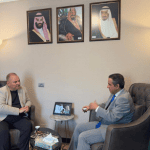
Saudi Ambassador Meets Head of Albania–Saudi Parliamentary Friendship Group
Change font size: - + Reset Tirana Times, July 6,2026 – Saudi Arabia’s Ambassador to Albania, H.E. Turki bin Ibrahim Al-Madi, received Albanian MP Baldi Çomo, Chairman of the Albania–Saudi Arabia Parliamentary Friendship
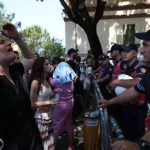
Anti-Government Protests Escalate in Tirana as Demonstrators Block Parliament
Change font size: - + Reset Tirana Times, July 03, 2026 – Albania’s month-long anti-government protest movement entered a more confrontational phase on Thursday, as demonstrators gathered outside Parliament, blocked access points
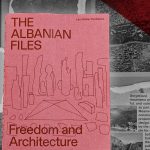
Are Europe’s Star Architects Helping Launder Albania’s Criminal Economy?
Change font size: - + Reset The Albanian Files suggests that international architecture may have served not only as design, but as a prestigious façade for opaque money, captured institutions and one-man
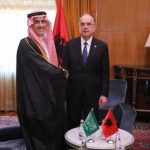
Saudi Ambassador Presents Credentials To Albanian President As Ties Gain Momentum
Change font size: - + Reset Tirana Times, June 05, 2026 – Saudi Arabia’s new ambassador to Albania, Turki Ibraheem Almadhi, presented his credentials to President Bajram Begaj, marking the formal start