By Rudina Hoxha
The World Academy of Tirana (WAT) has some great news to share. It has become an International Baccalaureate PYP authorized school.
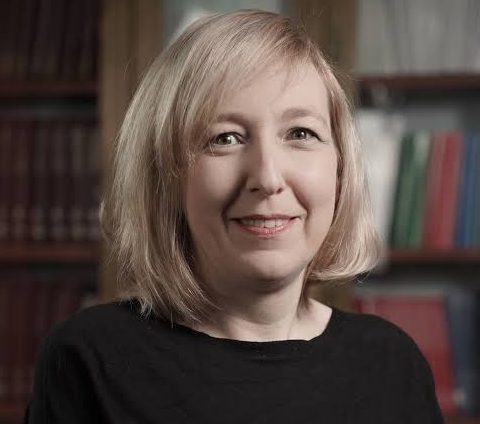
In an exclusive interview with Tirana Times, Armelle Vioujard Gjoni, International Baccalaureate PYP (Primary Years Programme) Academic Director/PYP Coordinator, explains the WAT’s new position and its internationally recognizable reputation after achieving this milestone.
“This gives meaning and true value to any diploma awarded to our students,” Gjoni pinpointed, adding “What’s more exciting is that the World Academy of Tirana is also officially recognized as a candidate school for the Middle Years Program (MYP) which is designed for students aged 11 to 16.”
Full interview below:
“World Academy of Tirana” is officially an International Baccalaureate PYP authorized school. Please, can you explain in more details
what does it mean?
WAT: Yes, we are pleased that our school has such a reputable international recognition, the first of this kind in Albania, which gives meaning and true value to any diploma awarded to our students.
In technical terms, this means that we are now part of a global network of nearly 4000 IB Schools across 147 countries in the world. We have been implementing the Primary Years Programme (PYP) for 3 years now, and we will continue to ensure the programme is guided by the IB philosophy, principles and values while promoting and guaranteeing a meaningful and coherent learning experience for our students. The PYP covers grades ranging from Pre-elementary to Fifth (5 to 12 years old). It is a program completed in preparation for the IB Middle Years Program or the IB Diploma Program.
What’s more exciting is that the World Academy of Tirana is also officially recognized as a candidate school for the Middle Years Program (MYP) which is designed for students aged 11 to 16. It provides a framework of learning that encourages students to become creative, critical and reflective thinkers. Families living in Albania will benefit a lot from this excellent opportunity offered to their children.
It should be noted that all IB programs can stand alone and students coming from each of the programmes can easily integrate in any other educational system. The strong point about the IB program in comparison to other programs is its adaptability and broadness when it comes to the curriculum. Students that study in an IB school in a particular country can easily integrate into any other programs and continue studying around the world.
What kind of benefits and knowledge will pupils enjoy and how?
WAT: IB promotes the education of the child as a whole, well beyond the traditional subjects of teaching. An IB learner is a lifelong learner, which means that learning is a permanent ongoing activity. The implementation of the learner profile in our teaching provides for a long-term vision of education. IB learners strive to be inquirers, knowledgeable, thinkers, communicators, principled, open-minded, caring, risk-takers, balanced and reflective.
Above all, what makes us stand out from other educational institutions is that the student is in charge his/her own learning experience, while the teacher is only the facilitator of such experience and process. We push our students to ask questions and to take action, not stay passive, which in turn encourages a more independent thinking individual for the future.
The mission of the World Academy of Tirana (WAT) is to cultivate internationally-minded, socially conscious and cross-cultural students who connect their acquired knowledge to action in the real world. Our goal is to inspire children to become active, compassionate, lifelong learners who can relate harmoniously with other people and cultures.
What about the curricula? Will they undergo changes? If yes, what concretely?
WAT: In the PYP you will find that the traditional subjects incorporate the transdisciplinary themes in order to provide a comprehensive, well balanced curriculum that requires the students to reflect on their roles and responsibilities and to participate fully in their learning process.
The written curriculum consists of five essential elements: concepts, knowledge, skills, attitudes and action. The knowledge component is developed through inquiries into six transdisciplinary themes of global significance:
– Who we are
– How we express ourselves
– Where we are in place and time
– How the world works
– How we organize ourselves
– Sharing the planet
These transciplinary themes are supported and balanced by six subject areas. At the heart of the programme is the learner (our student) constructing his/her own learning with a commitment to structured and purposeful inquiry. Teachers are guided by these themes as they design units of inquiry that both transcend and articulate conventional subject boundaries.
The International BaccalaureateΠ(IB) works with schools in 147 countries. Will you get more access to streamlined academic programs?
WAT: Being part of the IB World Schools Network means that we are part of a well established and solid community of learners which is committed to offering high quality international education. This is an ongoing and transformative process for us, not a static one.
As we are an international school, new teachers will be joining the school and leadership will evolve, in line with our philosophy of development. With a consistent reflection on our own practice and collaborative work we will work towards improving teaching to improve learning. It is crucial to keep a spirit of inquiry and a clear sense of purpose in our teaching while using the PYP curriculum written in collaboration with all teachers to fit the students’ needs and cultural context of the country. The journey towards learning never ends and changes are the result of a long process.
With the support of the IB World Community, ongoing professional development of our teaching staff and through a rigorous and regular assessment process, we will ensure the successful continuation of the implementation of the IB programs.
Who would you thank for this great project, successfully implemented within a short time?
WAT: As an IB school, we strongly believe in collaborative work. Open-mindedness and communication, collaboration and professionalism are key elements to success. We would like to thank all the teachers, the pedagogical leadership team, the whole school community and of course the parents who participated and supported us throughout the authorization process. At WAT everyone is part of a community of permanent learners!
Armelle Vioujard Gjoni
PYP Academic Director/PYP Coordinator