
By Frank Ledwidge
It was all a very long time ago. New York is named after the Northern English city of York. The name ‘York’ is very ancient, a contraction of the Roman name for it – Eboricum. Who knows that ‘Washington’ means ‘Wassa’s Farm’ in old English? The English were invading Britain at about the same time as the Slavs were moving down into the Balkans, driving the original Illyrians South and East. The English were followed by the Vikings, the Normans and others. Who knows and who cares? But in the Balkans things are, as always different. .
Some readers may remember the scene in the excellent ‘Schindler’s List’ where Amon Goeth, the SS Commander, briefs his men before they enter the Krakow Ghetto to remove and murder its inhabitants. ‘For six hundred years’ he says ‘there has been a Jewish community in KrakowŮ.in six hours it will not exist’. Soon, he goes on to say the Nazis would ensure that ‘it will never have existed’. Like so many foreigners and indeed locals in 1999, in despair I walked through the ruins of medieval churches destroyed by the KLA with the express purpose not only of removing the Serbs for today, but making the statement that even the past was not beyond destruction; that you can write people out. It’s going on as I write, much more subtly, people expelled and monuments threatened and not least with towns and villages being renamed. The Serbs tried it themselves of course; but in this case imitation is not flattery. How long before someone invents an Albanian origin for the word ‘Kosovo’?
Albania itself has few such hang-ups about identity. Look at any map of this or indeed any country secure in its skin, and you see before you a statement of her history. Starting with ‘Tirana’; my own favourite explanation is that it was named by Suleiman Pasha after Teheran to celebrate his taking of Persia in the 17th Century. Like Tirana, Teheran is situated on a plain beside a mountain range. It’s not true though. The name seems to come from the Illyrian word ‘Theranda’, meaning ‘fallen material’ -referring to the rocks and earth brought down from Daiti. Shkodra is a very ancient word, possibly deriving from ‘Shko-drin’ – ‘Where the Drin goes’. Durres is another archaic name, it was Dyrrachium for the Romans and Dyrhachion for the Greeks, no-one knows why.
Berat, with its light coloured walls? This is nothing other than a corruption of the Slavic ‘Belo Grad’ ‘the White Town’. Another even larger city to the North, also once a great fortress, has the same name. You will know it as Belgrade. Not far from Berat is Corrovode, situated on a river. At some time during the Serb or Bulgarian period of Albania’s history someone remarked how dark the waters of that river were, almost black – Crne Voda, ‘black waters’. Have you been to Divjaka, a small seaside resort near Fier? Then you will have visited a place that another Slav thought was wet and unhealthy; Divjaka is Serbian for ‘marsh’. And on it goes.
My own favourite etymology concerns an area in the deep North of the country. Somewhere that considers itself to be the guardian of the old Albanian ways. It is the home of the current Prime Minister, Tropoje. If I were to say that Tri Polje means three fields, would you accept that the name at least is not local?
So if you have a few minutes to spare, have a look at a map of Albania and track the peoples that came through. They left forts, castles, temples, churches and mosques. They left roads and towns. They left something of themselves too, in the names they gave. Trying to rewrite history is like trying to rewrite the land. It’s wrong and its doomed to fail. Thankfully Albania, unlike many of its neighbours has never tried.
What’s in a name?

Change font size:
Latest from Features

The Western Balkans’ Right to Democracy Depends on the EU Enlargement
Change font size: - + Reset by Sokol Lleshi, Assistant Professor of Political Science, University of New York Tirana Background The political systems in the Western Balkan region feature politicized public administrations,

Why Waiting Is Not Neutral: The Costs of Non-Enlargement
Change font size: - + Reset Debates about EU enlargement tend to focus on the risks of admitting countries before they are ready. In her recent paper, Marta Szpala broadens the debate
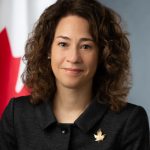
Beyond Diplomacy: Ambassador Elissa Golberg on the Future of Canada–Albania Ties
Change font size: - + Reset Tirana Times, July 21, 2026 – Relations between Albania and Canada have expanded steadily in recent years, from growing trade and new bilateral agreements to closer

EU-Western Balkans Summit 2026: New Impetus for the Enlargement Debate?
Change font size: - + Reset By Odeta Barbullushi and Marina Vulovic Tirana Times, June 09, 2026 – A new proposal on enlargement was tabled by the French President Emmanuel Macron and
The Pope, AI and the Future of Humanity
Change font size: - + Reset The most important political text of the 21st century comes not from politicians but from Pope Leo XIV by Milena Harito I am an atheist, but