By Veton Surroi
It is being repeated, like a theatrical scene, although not with the same content, the yearend. Last year around the same period there was pressure towards President Ahtisaari not to announce his plan at the end of the negotiating process, because this would damage – it was said – the chances of the democratic forces in the announced parliamentary elections in Serbia.
The Crisis is in Serbia
This year, at the end of the additional negotiations with the intermediary Troika, and after the report has been delivered to the UN Secretary General, pressure is being put to hold off on independence declaration in Kosovo until the presidential elections in Serbia. We are told once again that the declaration is an act that could damage the democratic forces in Serbia.I will not go into the larger implications of these similarities, except the fact that it should be noted that the whole process of disintegration of ex-Yugoslavia was the declaration of people and states for independence and at the same time the establishment of new relationships with Serbia. In Slovenia, the act of independence was made by the people, but the act of war was done by Serbia. Similarly in Croatia, and with more tragic consequences in Bosnia-Herzegovina. Luckily, in Montenegro there were no victims, but the process had the same substance: the majority population made its decision and Serbia tried to thwart this choice. The conclusion: after all these years of dissolution of ex-Yugoslavia, the source of all ex-Yugoslav crises is in Serbia, and it remains there, as will be manifested in the case of the Kosovo independence.In fact, after all these years of the dissolution of ex-Yugoslavia, finally the status of Serbia will be resolved as well – as an independent state, one that does not rule over others.
A key issue of transatlantic politics in today’s Europe
This form of dramatic manifestation will have two more characteristics. On the side of Serbia will line up Russia, due to its own geostrategic interests, a Russia enriched with petrodollars in want of reconquering the political space left behind by the Soviet Union. Kosovo in the meantime has turned into a point of transatlantic agreement, respectively of closeness between the United States and the European Union after the previous cool off due to the Iraq war. Becoming e key issue of transatlantic politics in today’s Europe, independence of Kosovo in a very telling ways shows that it is an issue of partnership. There is a logical path of the Kosovo case development: we had the peace talks in Rambouillet, NATO’s military intervention in 1999 to prevent genocide, establishment of the UN administration in Kosovo and now we will have the EU supervision of our independence. Further on it would be logical for this transformation to lead to EU membership.Partnership means that in the following months we will hear less and less about unilateral declaration of independence and more and more about the coordinated declaration of independence. This signifies that Kosovo authorities will take on their obligations towards their partners in the international community, obligations that arise from the Ahtisaari packet. At the same time, there will be the taking on of the obligations by the international community, with the most prominent one being the recognition of Kosovo independence in the current borders.
Three key challenges will threaten Kosovo independence
Three key challenges in the in the ensuing period will threaten Kosovo independence from the early on.The first challenge is the fact that independence of Kosovo will not have the traditional judicial cover, as was the case in the other processes of dissolution in ex-Yugoslavia, but will be based on the ambiguity of the 1244 Resolution. This ambiguity will be used by Serbia and Russia to deny the legitimacy and international legality of independent Kosovo.
Through this method the two will try to scare especially the Third World countries, but the process of international recognition from the powerful countries – by the United States and the absolute majority of EU countries – will open the irreversible path to the majority of world states, although this process might take some time.
Nonetheless, the eventual joined Serb and Russian attempt will be successful in keeping Kosovo temporarily out of international organizations like the UN, OSCE, etc. This will impede Kosovo’s direct participation in the organizations that derive from the UN, and will also impede the implementation of the Ahtisaari packet, especially in the domain dealing with the OSCE mission in Kosovo and the tasks of this mission.
The second challenge deals with Serbia and the projection of her politics, which will aim to disrupt the functioning of Kosovo as a normal state. Threats of embargo and disruption of energy transport are already known. Furthermore, some current government circles in Serbia will engage members of their security services, either military or civilian, which are the least reformed institutions in Serbia, with the aim of destabilization of the situation in Kosovo, generating even violence, especially towards the ethnic Serb citizens in Kosovo. And within this attempt, there is no doubt that there will be a concerted Serbian state effort to legitimized and legalize that entire segment that is called “parallel structures.” This means that on Kosovo independence day we will see the ethnic Serb members of the Kosovo Police Service in the northern part of Kosovo put on other uniforms, or the Bridge Guards in Mitrovica take off their leather jackets and put on uniforms of the state that pays them.
Without any doubt, viewed from the perspective of some circles in Moscow, this is the scenario for the creation of a frozen conflict. From Moscow will be heard the voice directed towards the EU: “here is your frozen conflict, it’s not only in the Caucasus anymore.”
The functioning of independent Kosovo
The third challenge has to do with the functioning of independent Kosovo, a new experiment. Implementation of the Ahtisaari packet will be difficult, in some segments even impossible. For example, an important part of this packet relies on the Prishtina-Belgrade partnership to address the needs of Kosovo Serbs. In the absence of Belgrade’s cooperation, there will not be a partnership, thus neither implementation. Likewise in other regards, such as decentralization. Ahtisaair’s packet is, to use the words of a world renowned economist, a 21st century packet for a country that has the economy of a poor Latin American country of the 60’s.
And although there should be no doubt that Kosovars will adopt the obligations of the packet into their legislation, there needs to be a much stronger partnership with the international community in order for its implementation and to protect the functionality of the country. Here, of special importance will be the nature of the European Union’s mission in the independent Kosovo. How will the given powers be used, how will the equilibrium with the Kosovar institutions be established – these and other similar questions remain today, and from the answers given in the first few days of the upcoming mission we will understand whether we will be dealing with something new or the temptation to be the new administrators in what will then be an independent Kosovo.
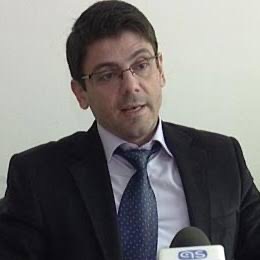
Speech by Veton Surroi delivered at the Conference After 10 December – EU’s Challenges and Responsibilities Towards Western Balkans, organized by the Bertelsmann Foundation in Ljubljana.