
TIRANA, March 31 – Obtaining NATO membership is Tirana’s most important political goal for 2008, and is also seen as a tool for increasing foreign investment in Albania.
If Albania becomes a NATO member this year, it will gain increased opportunities for progress due to the improvement of the country’s image, the credibility of the government and the establishment of a more secure environment for economic development and foreign investments.
Albania’s GDP grew six percent in 2007, according to the Institute of Statistics.
That was achieved in spite of the serious energy crisis throughout the year. The same rise in GDP is expected in 2008.
Inflation has been kept at three percent as a result of a strong system of economic controls.
The government has prepared a very ambitious budget for 2008, seen as budget Albania’s largest in the past 18 years. However, the budget will likely be altered following the recent catastrophic explosion in an army dump in Gerdec near Tirana as authorities reallocate much of its funding to compensate for losses from the disaster.
Upcoming elections will be held in 2009, so this year is the government’s final opportunity to fulfill electoral promises it made three years ago when Prime Minister Sali Berishaճ Democratic Party came to power.
The government is accelerating the implementation of development projects, especially related to infrastructure.
The Albanian public administration, however, is facing many difficulties regarding the absorption and management of projects and money. Last year, only 80 percent of investments were carried out. International organizations, including the EU, have repeatedly expressed their concern regarding the ability to execute the many previously announced public projects.
Another important factor in the country’s development is the newly-independent Kosova. Tirana expects to eventually benefit from increasing regional stability by increasing trade between the countries. Also, increased communications is anticipated due to the potential growth of Kosova’s economy.
One of Albania’s major projects to increase traffic between Kosova and Albania is the Durres-Kukes highway, expected to be completed in 2009.
Overall, Albania has seen an increase in FDI. Many large companies have already expressed an interest in, or begun implementation of, projects primarily dealing with the energy sector and transmission grids.
Albania has considerable oil and gas reserves, which may reach three billion barrels of oil and three billion cubic meters of natural gas, according to a study carried out by international consultant Gustavson, hired by Manas Petroleum. If the study is accurate, Albania will have opportunities to fulfill its economic strategy in 2008 and, in the future, may become an oil and gas exporter.
Albania’s FDI for 2007 was more than 400 million Euros and is expected to be much higher this year based on the interest expressed by foreign businesses in industries such as the energy sector and construction materials.
Berisha has said, “2008 is the year when the fiscal package will be entirely installed, which will bring about the deepest fiscal revolution in the history of this country.”
However, Albania does face challenges. It suffers from an energy crisis and a lack of diversification of energy resources. Although the government has made continuous promises to solve this issue within the year, it will be hard pressed to do so.
Economically, Albania ranks near countries such as Russia or third world countries, which have a very large gap between rich and poor citizens. Also, the fight against corruption and informality is a continuous struggle, and these phenomena seems to be growing rather than dissipating. Corruption is not only seen in the central administration, but now has also reached the service sector. Additionally, problems still exist in tax and duty collection.
NATO membership to improve FDI in Albania

Change font size:


Latest from Business & Economy
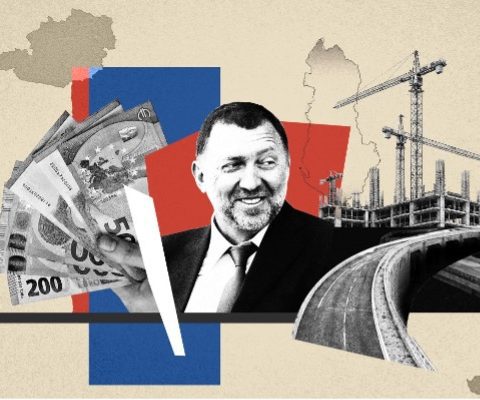
How a Sanctioned Russian Oligarch’s Business Interests Reached Albanian Public Contracts
Change font size: - + Reset Millions of euros flowed to companies linked to Strabag while Oleg Deripaska remained a major shareholder, exposing gaps in Albania’s ability to identify who ultimately benefits
Albania’s Cash Boom Raises Money Laundering Concerns
Change font size: - + Reset Cash outside Albania’s banking system reached a record 5.6 billion euros, last month. Tirana Times, August 30, 2026 – The amount of cash circulating outside Albania’s

Vlora Airport Heads to Arbitration
Change font size: - + Reset Albania faces another potentially costly international dispute after losing several arbitration cases in recent years that have exposed the state to hundreds of millions of euros

Concrete, Cocaine and Corruption: Albania’s Fragile Growth Model
Change font size: - + Reset Albania’s Concrete Economy: How Construction Became the Country’s Dominant Growth Model Tirana Times, July 10, 2026 – A booming construction sector has made Albania an outlier

Austria Leads FDI, but Real Estate Tells the Bigger Story
Change font size: - + Reset Bank of Albania data show Austria topping first-quarter foreign investment flows, while property and construction continue to shape Albania’s FDI model. Tirana Times June 25, 2026