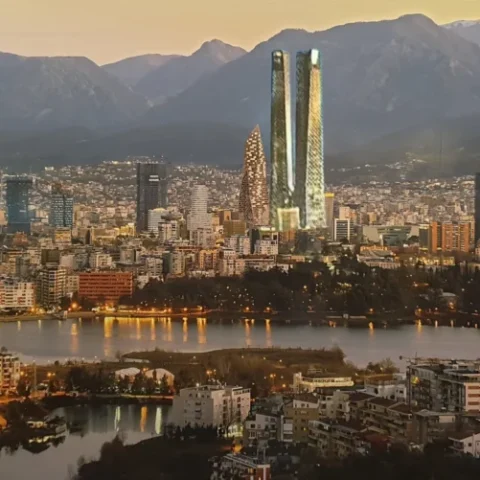
TIRANA, Oct.5 – Apartment prices during the past few months have remained unchanged, despite a moderate increase in demand which has not been reflected on sales, according to the Albanian Constructors’ Association. Senior members of this Association do not expect prices to increase in the next few months but warn of sharp rises starting from 2011 because of higher costs. The real price increases are expected to be felt by spring 2011 when the construction, which has been the hardest hit sector of the Albanian economy since 2009, is said to recover.
“Of course as soon as many companies emerge from the crisis they were plunged into, prices will increase again,” said Ilir Hebovija, the Association’s deputy director as quoted by local media this week.
According to Hebovija, despite increased interest last summer, only few apartments were sold.
Reports show citizens are becoming more reluctant to buy new apartments because of falling revenues and especially a sharp decrease in immigrant remittances. This is confirmed even by data of the Albanian Association of Constructors which says some 4,000 apartments remain unsold because of falling purchasing power.
Apartments prices in Tirana vary from 700 to 2500 euros/m2 in downtown Tirana compared to 400-650 euros/m2 in uptown areas of new ring road and Fresku.
The highest prices are reported in the downtown area know as Bllok, where prices go up to 2,500 euros/m2.
Costs
Construction costs continue increasing despite the crisis this important sector to the Albanian economy has been suffering since the last quarter of 2009.
The construction cost index rose 0.2 percent year-on-year during the second quarter of 2010 and 0.2 percent compared to the previous quarter, recent data published by the Institute of Statistic (INSTAT) shave shown. One year ago, the change was only 0.04 percent. Compared to the first quarter of 2010, direct expenditure rose by 0.3 percent while material expenditure by 0.4 percent.
Construction and electrical material prices rose by 0.3 and 0.5 percent, respectively compared to the previous quarter. Transport and machinery expenditure also rose by 1.4 and 0.2 percent, said INSTAT.
The Construction Cost Index calculates the difference of expenses in construction considering the change of basic input prices such as construction materials, construction
vehicles and equipment, expenses for employees.
Confidence & Expectations
Central bank surveys show the construction confidence index increased by 3.7 percent during the second quarter but remained 8.9 percentage points below its long-term average. Its improvement was mostly caused by the increase in demand by 7.6 percentage points and the production and employment balances, which rose by 2.8 and 0.7 percent respectively, but remained negative. Companies said informal economy and lack of construction permits were the biggest obstacles to their normal activity.
The capacity utilization rate in this sector remained 69 percent, 3.3 percent more than the first quarter and 0.8 percent above its historical average.
Construction companies expect negative developments for the third quarter despite the increase in demand. Production prices are also expected to increase.
The construction sector continued its poor performance even in the first three months of this year, dropping by 21.1 percent year-on-year and 4.3 compared to the last quarter of 2009.
Construction was also the hardest hit in the last quarter of 2009, recording a 14.4 per cent drop compared with same period of 2008 and an 11.8 per cent decrease from the third quarter of 2009.
Construction has been one of the most dynamic sectors in the country contributing to more than 10 percent of the GDP in the past years and employing 18 percent of people working in the private sector.
Q2 price increases slow down
Apartment price increases slowed down in the second quarter after sharp rises during 2009 and in the first quarter of 2010, the central bank said in a report.
The house price index in the second quarter increased by 4.3 percent year-on-year compared to the 11.1 percent average in 2009 and 11.2 percent in the first quarter.
The slowdown was a result of falling demand under conditions of a stable supply, said the Bank of Albania in its monetary policy report for the second quarter.
Demand for apartments and houses remained at low levels in the second quarter of 2010 mainly because of lower income in the labour market and a drop in remittances.
Tight lending standards for home loans also had an impact. Home loans to individuals registered negative growth rate for the second quarter in a row during this year.
Home supply remained stable considering the increase in the number of construction permits at the end of 2009 and the low number of transactions.
Meanwhile, rental prices registered a sharp increase during the April-June period, ending the declining trend registered since the second quarter of 2009.
Apartment prices in the first quarter of this year rose by 15.8 percent compared to the same period last year.
Some 40 percent of the price increase was estimated to have been caused by the depreciation of the Albanian national currency, Lek, against Euro, the currency in which apartments are sold in Albania. The national currency lost more than 12 percent against the European currency in one year.
The drop in the volume of construction was mainly caused by the contraction of private constructions, said the Bank of Albania in a recently published report. As a result, cement consumption and the number of construction permits dropped by 3.3 and 15.7 percent year-on-year, respectively in the first quarter of 2010.
The value of construction permits for the “buildings” category, which has been on decline since the third quarter of 2009, fell by 49.8 percent at the end of March.
The report says the crisis in the construction sector reflects business and consumer hesitation to invest because of tight lending standards and the low level of programmed public investments.