
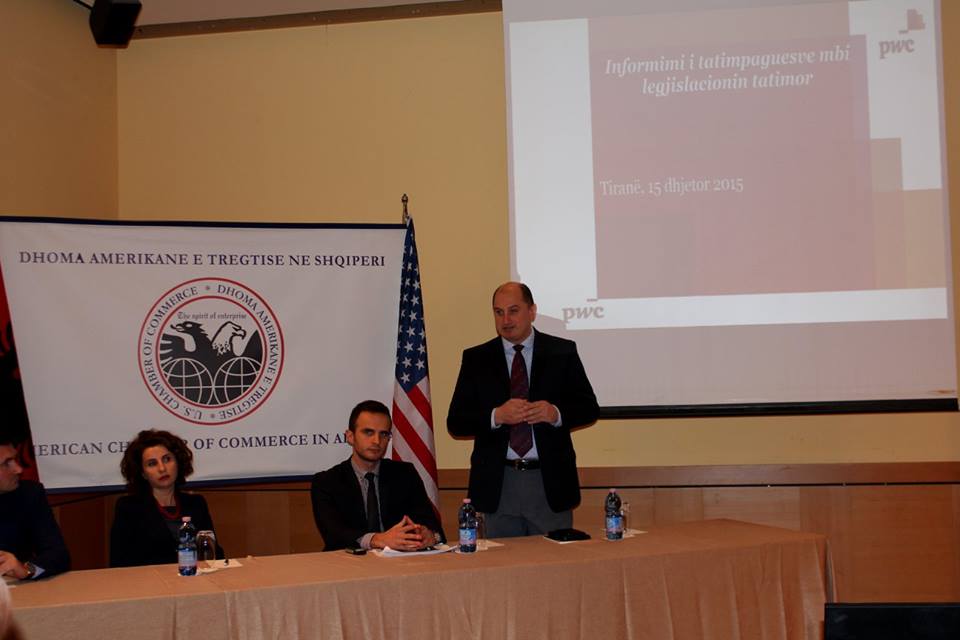
TIRANA, March 2 – The ongoing application of reference prices and VAT refunds related to them, the reduction of working hours for export declarations in the Durres Port, the reconciliation of payments at customs branches and double payments for a new customs scanning concession are the key concerns the American Chamber of Commerce has raised for this year.
The Chamber, which represents some of the country’s biggest foreign and local investors, describes the issues as barriers which lead to increased business costs.
Reference prices and VAT refunds related to them has been a perennial concern for the business community.
“This procedure leads to additional costs for businesses in the form of additional customs taxes paid, but also creates liquidity problems due to paying VAT to the customs administration based on reference prices,” says the Chamber. In addition, AmCham exporting members are facing problems with VAT refunds.
In a meeting with AmCham last month, Customs Director General Pranvera Fagu said that only 11 percent of imports were cleared through customs using reference prices in 2015 and the customs administration was working to further reduce the ratio for 2016.
The reduction of hours for export declaration at the country’s biggest port has also created obstacles and increased costs for exporters.
“The General Tax Directorate order to limit the hours during which export declarations may be completed in the interior customs offices for exit through Durres customs creates obstacles and additional costs for taxpayers,” says the Chamber.
“Limiting the time of customs service increases parking costs, transportation costs and penalties from the breach of contractual obligations to foreign customers,” they say.
The tax administration says it is working to launch an electronic customs declaration system and make available an online database for 2016 in a bid to improve service, ease procedures and lower business costs.
AmCham members are also concerned over the need for reconciliation of payments made at customs branches before 2013 when they were not connected to specific accounts.
Double payments for customs screening services is another concern for AmCham members who say they had to pay the scanning fee twice, both at the port of entry and at the final customs clearance for a four-month period. While the issue has been addressed by the government, no solution has been offered to the additional costs that business incurred during the 4-month period when they had to pay the fee twice last year.
Starting Sept. 7, Albanian businesses are being charged for scanning services offered by U.S.-based Rapiscan concessionaire €22 for declarations of more than 1,000 euros with customs authorities and euro 5 for declarations of less than 1,000 euros. The scanning, intended to curb smuggling and tax evasion, has been made compulsory after a review of the concession contract reducing the initial 2013 tariffs.
The American Chamber of Commerce in Albania has also strongly opposed a recent government draft law which makes the registration of businesses with the country’s chambers of commerce compulsory by paying an annual membership fee, arguing that changes increase business costs and strengthen public-run chambers.
Informal economy, government bureaucracy and monopoly or unfair competition are the top three concerns for doing business in Albania, according to the latest AmCham Business Index, an annual index measuring the business climate perception of Chamber members.
The Chamber has earlier appealed for a review downward of taxes on profit, dividend and personal income as an incentive giving the business community more room to develop and increase registration numbers.
Since 2014, the corporate income tax and the withholding tax on dividends, rents and capital gains have increased by 5 percent to 15 percent, making the tax burden in Albania one of the region’s highest.








