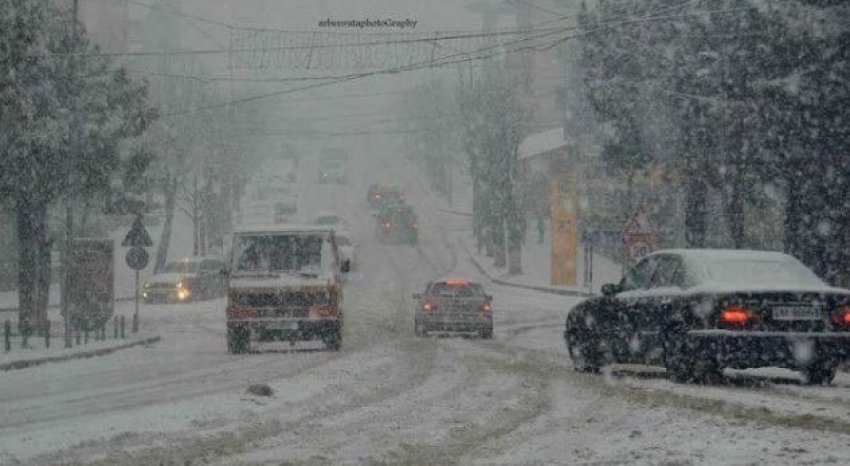
TIRANA, Jan. 12 – Snow and ice in usually balmy coastal cities and record-setting low temperatures everywhere have made January 2017 the coldest in more than three decades, causing general havoc on Albania’s unprepared infrastructure and people.
More than a dozen people have died directly or indirectly as a result of the cold weather. Police found two homeless men had died due to exposure to low temperatures in the port cities of Durres and Saranda. Meanwhile in Gjirokastra another victim of the bad weather died when in he fell during in an attempt to unfreeze a family water tank.
Bad weather continues to endanger many lives in Albania, especially those of the homeless. In Saranda, two indigents were saved thanks to the intervention of an educational institution, which housed them in a boarding school at night. In some major cities other dozens of homeless have been taken by authorities and police to special warming centers.
Albania’s ombudsman, Igli Totozani, urged municipalities to establish more places to house people in need during the record-setting deep freeze.
Quality of life has suffered too as in many cities, municipalities are unable to provide clean streets and frost and ice have paralyzed water networks, disrupting water supply to residents.
Problems in urban centers come as construction quality issues affect the ability of the infrastructure to deal with subzero temperatures.
Classes in the pre-university education system were also suspended due to the possible outbreak of a flu epidemic as thousands have been affected, especially children. Some critics say the state was caught unprepared and could not provide enough heat to hold classes.
Authorities were on alert as snow and frost covered all of Albania, including the central regions of Tirana and Durres where about a third of the country’s 2.8 million resident population lives.
The challenge was to keep roads passable, avoid road accidents and respond to emergency health situations in remote areas which have already been isolated by heavy snowfall.
Meteorologists expect the uncommon situation for Albania’s Mediterranean climate to be over but the colder the usual winter is expected to remain in place.