TIRANA, Oct. 4 – Last week’s draft-law “On the Protection of National Minorities in Albania” has received criticism by both Bulgaria and Greece. The former claims the existence of an additional Bulgarian minority in Albania, whereas the latter asks for a distinction between a national minority and a linguistic minority, in addition to saying the Vlach minority is actually an ethnic Greek minority.
These reactions invoked a response not only by the officials at the Ministry for Europe and Foreign Affairs, but also by the Macedonian minority representatives in the country.
A few days after presenting the draft-law to the Parliamentary Law Commission, Sofia’s diplomatic representation in Albania sent an official email to the Parliament, asking that two of its officials and the heads of Bulgarian associations in Albania be part in the upcoming draft-law discussions. The reason for this is Bulgaria’s claim of the existence of Bulgarian minorities in Albania, which, according to a 2011 census, are not actually present in Albanian society and therefore not mentioned in the draft-law.
In addition, the Bulgarian national news agency reported of a phone call between Bulgarian PM Boyko Borissov and Albanian PM Edi Rama, during which the former requested that the rights of the Bulgarian minority in Albania be respected in accordance to international legal standards. Rama, the agency reported, ensured his homologue that the draft-law was not yet finalized and that Bulgarian interests in Albania would be fully protected.
Following these developments, Ervin Taluri, deputy Director of the Association for Albanian-Bulgarian Friendship, said during the Commission meeting that took place on the 3rd of October: “We, as representatives of the Bulgarian minority in Albania, express our request based on Albanian national laws, historical facts, citizens’ will and desires, and ask for the recognition of the Bulgarian minority in Albania.”
The main opposition to this statement came from Macedonian minority representatives in the room. There are about 5,512 citizens of Macedonian origin in Albania, according to the 2011 census, on behalf of who spoke Vasil Sterjoski, saying that “new associations were born in Albania, supposedly Bulgarian. And, not only from the Macedonian community, but also among Albanian citizens many are becoming Bulgarians just to be able to go to Europe.” According to Macedonian representatives, the Bulgarian minority in the country is inexistent and should not therefore be recognized.
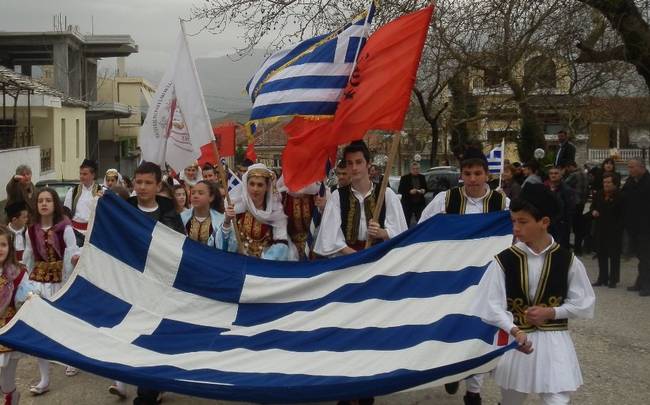
The Greek minority on the other hand, which is officially the biggest in Albania, had different opposing claims. Leonidha Papa, head of the ‘OMONIA’ Association, said: “I would call it fatal, if this law ends up in Parliament in the near future. It’s a law that doesn’t add anything to the existing framework, only takes away from it and transfers competencies to the Council of Ministers. It also takes away a lot of pre-existing rights we had in the framework of the European Council convention.”
Moreover, OMONIA requested the use of both languages in the administrative units where one third of the population belongs to a minority, as well as a distinction between an ethnic minority and a linguistic minority, pointing to the Vlach minority issue mentioned above.
Minister for Europe and Foreign Affairs, Ditmir Bushati, has chosen to stay neutral in response to these claims, supporting the already-stated principle of self-declaration and the work of agencies in verifying the validity of what citizens declare. Replying to both Greek and Bulgarian statements, he said: “This law will extinguish the privileged position of each minority in report to the rest and wipe out the differentiations made thus far.” Aiming to keep Albania objective towards each claim, Bushati also added that the state would not interfere in identity issues not belonging to it. However, this train of action will most probably be tested in the future at least by Bulgaria, which will receive the presidency of the European Union in 2018 and will focus on the issue of Bulgarian minorities in Albania more closely, Bulgarian media reports.