TIRANA, Oct. 20 – The Albanian government has condemned what it calls provocative language and unprecedented meddling in internal affairs by neighbopuring Greece over a statement by the Greek foreign ministry expressing concern about “apparent links between organized crime and the political scene in Albania.”
The reaction came after the neighbouring country made reference to internal political developments in Albania, where prosecutors are seeking the arrest of former Socialist Party Interior Minister Saimir Tahiri on alleged links to a gang trafficking drugs in Italy, to express concern over a regulatory plan affecting Greek minority houses in the coastal Himara town, southern Albania, and the new law Albania has approved on minorities.
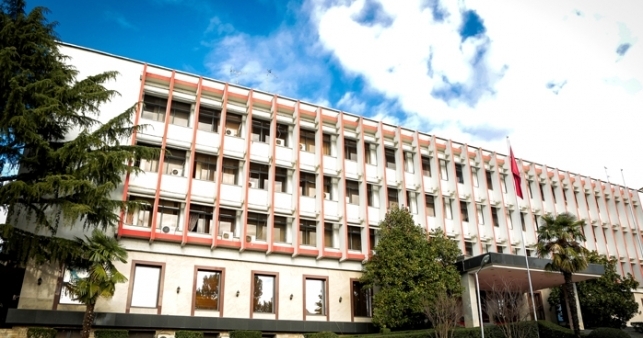
In a statement issued on Friday, the Albanian Ministry for Europe and Foreign Affairs says “meddling in the internal political debate in Albania and references to issues which are under investigation by authorities, constitute infringement of diplomatic practice, of the spirit of good neighborliness, and of the strategic relations Albania and Greece.”
Earlier on Thursday, Greece’s foreign ministry said the Albanian government’s decisions against the Greek minority were aimed at distracting Albanian public opinion from the major political issue that has arisen with drug trafficking.
“Equally concerning is the fact that the Albanian government continues to promote measures for the demolition of property belonging to members of the Greek national minority, within the framework of its policy to uproot the historical presence of Hellenism in the region of Himara,” said the Greek foreign ministry
“[The October 18] decision of the Albanian authorities confirms that the recently passed law on minorities is a step backwards for the main minority in Albania. There are many who interpret it as an act aimed at distracting Albanian public opinion from the major political issue that has arisen with drug trafficking. We hope this is not the case,” it added.
The Albanian government says it has provided registration and compensation of property to the residents affected by the implementation of the Himara regulatory plan, and has shown full availability, in compliance to the best international legislation and practices.
As far as the Greek minority is concerned, the Albanian foreign ministry said the new minorities’ law “guarantees the individual and collective rights of all persons belonging to national minorities, wherever they live, and in accordance to the criteria and spirit of the Council of Europe Framework Convention for the Protection of National Minorities.”
“Any other ethno-nationalist reference evoked by the above-cited statement runs counter to the spirit and the European legal practices on the protection of national minorities,” said the ministry.
Earlier this week, Greek Ministry of Foreign Affairs spokesperson, Alexandros Yennimatas, complained that the law will make minorities relive the abuse that happened during late dictator Enver Hoxha’s regime, instead of being protected.
Albania also added the Bulgarians in its new minorities’ protection law as the ninth minority group in the country, where ethnic minorities comprise only about 2 percent of the 2.8 million resident population.
Albania’s 2011 population census showed there were some 24,000 Greek minority citizens living in Albania, making it the country’s largest minority. Greek minority citizens mostly live in the southern part of the country, accounting for 0.9 percent of the total population, figures which Greek minority representatives oppose as too low.
Albania does not recognized Himara and nearby coastal villages as a Greek minority area, seeing the residents as Greek-speaking Albanians.
The property rights and development issue is complicated by the fact that the area is one of the most desirable places in the country for tourists, which puts development pressure on the locals.
Albania’s foreign affairs ministry says it remains committed to continue addressing open issues between the two neighbouring countries in accordance with the European spirit and international law, “despite the undermining effects of the above-cited statement over the climate of trust and cooperation between our two countries.”
The Albanian government has also previously condemned meddling into its home affairs by neighboring Greece.
Albania and Greece have several hot issues to resolve including the maritime border, a state of war law Greece has with Albania since WWII, and the issue of Cham Albanians who were expelled and stripped of their citizenship and property in northern Greece at the end of World War II under accusations that they cooperated with invading Italian and German forces.
Some 500,000 Albanian live and work in Greece, the country’s second largest trading partner. Greece is the top foreign investor in Albania where its companies are present in almost every sector of the Albanian economy, including banking, telecommunication, construction, energy and health.
However, the Albanian migrant numbers and trade links between the two countries have sharply dropped in the past decade as the neighbouring country faced its worst ever recession in the aftermath of the 2008 global crises that saw its economy contract by a quarter.