TIRANA, July 19 – Credit to Albania’s private sector was officially below zero in the first five months of this year, but Albania’s central bank says lending grew by an annual of about 5 percent when corrected for exchange rate and loan write-offs effects that statistically keep credit below real figures.
The situation is a result of a sharp strengthening of Albania’s national currency, lek, against the euro, the currency of about half of total credit and the write-off of bad credit that has spent three years in the loss category in a bid to reduce the stock of non-performing loans.
The national currency traded at an average of about 127 lek in May 2018, down 5.5 percent compared to the same period last year, artificially reducing the amount of lending in Europe’s single currency when reported in Albanian lek.
Meanwhile, the stock of non-performing loans dropped by 30 billion lek (€234 mln) to 80 billion lek (€625 mln) at the end of 2017 when NPLs hit a 7-year low of 13.23 percent, in a process triggered by the compulsory write-off of bad loans that have spent more than three years in the banks’ balance sheets and new deals restructuring loans for big borrowers in trouble.
Credit to the private sector has been sluggish in the past five years amid a high level of non-performing loans and poor demand by both businesses and households.
Governor Gent Sejko says average interest rate on lek loans fell to 6.3 percent in May, supporting the reduction of borrowing costs and triggering a 6.6 percent increase in lek-denominated credit.
Last June, Albania’s central bank decided to initiate emergency interventions to buy excess euros from the local currency exchange market in a bid to stop euro’s free fall and the negative effects it has on the country’s Eurozone-destined exports, local producers facing tougher competition from cheaper imports and half of euro-denominated savings in the banking sector.
In another coordinated move, the central bank also decided to cut the key interest rate by another 0.25 percentage points to a historic low of 1 percent in new monetary policy easing aimed at achieving the 3 percent inflation target.
Meanwhile, total deposits in the first five months of this year contracted by 2.7 percent or 26.6 billion lek (€210 million), reflecting the euro depreciation effect for about half of euro-denominated savings and possible panic withdrawals as the euro hit a 10-year low against Albanian lek in a short period of time and interest rates remained slightly above zero.
Average interest rates on time deposits of up to three years stand at about 1 percent last May.
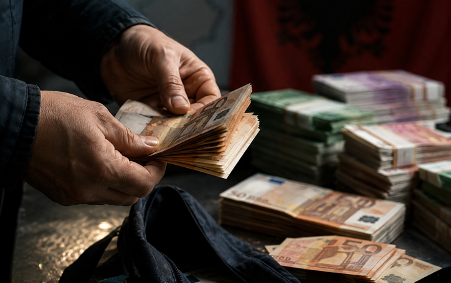
Albanians’ saving were at 968 billion lek (€7.6 billion) while credit to the private sector was at about 540 billion lek (€4.2 billion), making the country’s banking system fully liquid and deposit-funded, according to Albania’s central bank.