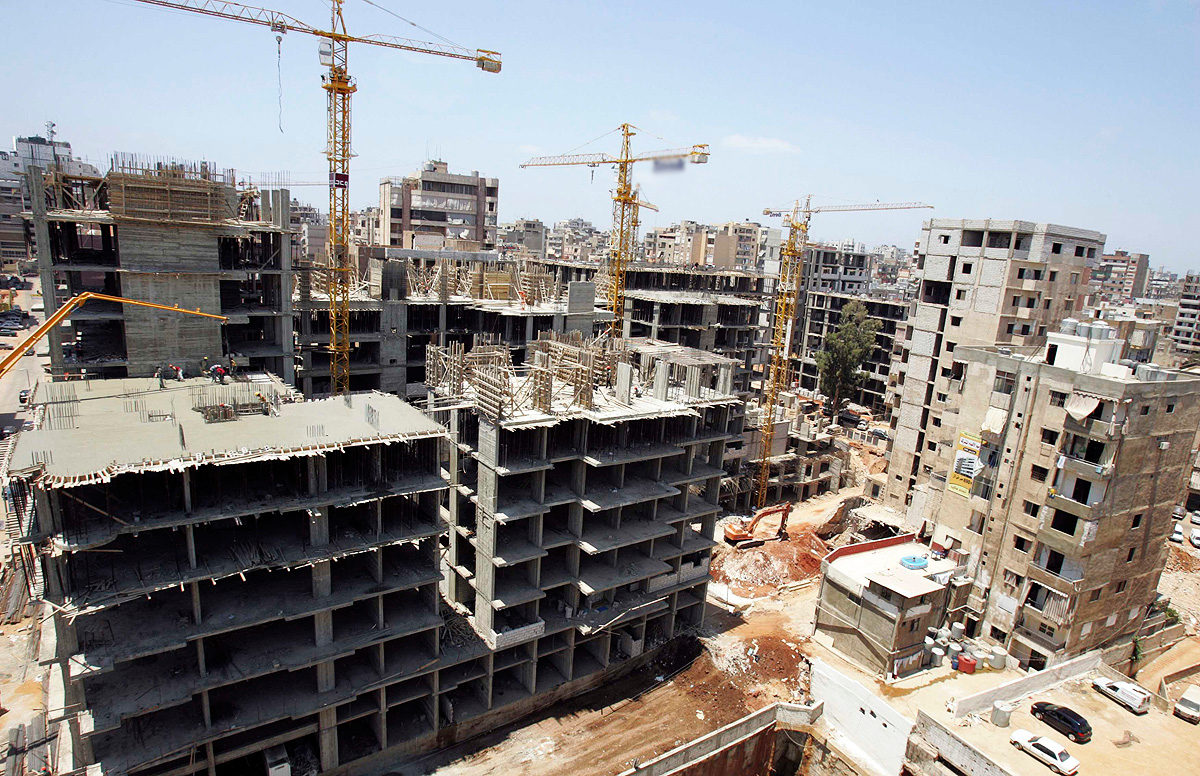
TIRANA, March 18- The luxury apartments in Tirana are reaching peak prices around the center areas as more luxurious construction sites are under development. The prices are quickly increasing and are reaching a price level at 4000 euros per square meter in the main areas. This price is the most expensive in the entire Balkans region.
Belgrade was previously the most expensive capital in the Balkans region, selling its premium apartments at a price of 3000 euros per square meter. Then comes Podgorica at a maximum price of 2200 euros per square meter, and then Skopje with maximum at 1800 euros per square meter. Pristina is also one of the expensive capitals in the region, with prices varying from 1100 to 2500 euros per square meter.
According to Colliers International Albania which operates in real estate, considering a regular building progress the total area in the main sections of Tirana foreseen to be under construction in the next five years will be 538 thousand square meters. The apartment prices in these blocks is expected to start at a minimum of 2000 euros per square meter. For instance at the residence near the presidency which is under development the prices are reaching 4000 euros per square meter.
“It is being built disregarding any market logic. The investments are directed towards locations disregarding the developmental potentials, because it is perceived that the risk will be zero if the location is primary,” said Stela Dhami, managing partner to Colliers International Albania.
Dhami said that she foresees that within two years a bubble will be created as it is being built without any criteria or a concept for the logical market development. The same thing is also said by Arben Dervishi who is chief of the Tirana Builders Association. Dervishi said that in Albania it is still being built in an empirical manner and without any proper research on the real estate market in our country.
According to Albanian Construction Portal in Tirana alone are under development 227 construction projects, where the majority are residential building and a small fraction is concerned with public infrastructure. Builder Hajredin Fratari said that market demands a number of 1000 to 1500 apartments for sale a year, that can be easily provided by two-to-three aforementioned projects. Only at the Great Ring area there are around 150 premium apartments available for sale.
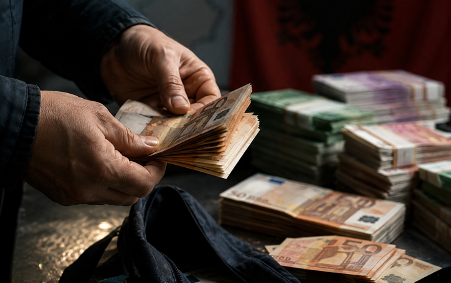
The capital has fluctuating prices with 500-600 euros per square meter in the suburbs to 3000 euros per square meter in the center. After a stagnation the prices experienced a quick rise at 10-30 percent due to higher infrastructure and other taxes, and from the increased offer. Operators have also claimed that there has been an increase in cash buyings.
According to Numbeo Tirana is the tenth most expensive city in Europe in property prices when considering the affordability index. The large projects will hit the market with a minimal price of 2500 euros per square meter, except from the Rruga e Kosovareve where the prices average from 1500-2200 euros. This offer is in a totally opposite direction from what the market requires and the real capacity of the Albanian economy. According to calculations from Colliers the prices are senseless because the rental yield is much lower than the real sales price. A rental yield is the return a property investor is likely to achieve on a property through rent.
It is interesting to note how Tirana remains between two contrasts as residential prices in the suburbs are of the cheapest in the region, whereas in the main areas are of the most expensive. The second case is estranging as the income per capita for Albanians still remains one of the lowest in Europe, standing at only 30 percent of the European mean. Bosnia-Herzegovina is at 32 percent, Montenegro is at 46 percent, and Serbia with Northern Macedonia have a 36 percent income level in ratio to the European mean.
Region prices are dropping
The apartment prices in the region have been recently experiencing a dropping when comparing to Albania. According to Global Property Guide in Montenegro the prices are decreasing because the Russian buyers are leaving. According to the Montenegrin Statistics Office the apartment prices dropped by 5 percent during the second quarter of 2018, adapted to the inflation levels in the country. The Russian owners are selling their vacation homes as also their has dropped significantly.
According to Colliers Montenegro the most expensive city in the country is Bar with an average price of 1461 euros per square meter during the second quarter of 2018. Bar surpassed even Budva, which has an average price of 1258 euros per square meter for residential properties, followed by Podgorica with 1116 euros per square meter, and Niksic with 550 euros per square meter.
The monitoring agency of the apartment prices in Serbia, the National Corporation for Mortgage Insurance (NKOSK) has noticed that apart from Belgrade the price tendency is on the fall. The end of June 2018 recorded an average price of 878 euros per square meter for residential properties in Serbia. In Belgrade the prices also vary per area. At the municipality of Barajevo in Belgrade the average price is 389 euros per square meter, whereas at the municipality of Savski Venac the price averages 1705 euros. For the most attractive areas of Belgrade in its center, the luxurious apartments cost between 2000 and 3000 euros per square meter.
Skopje remains the cheapest in the region. According to Global Property Guide the average apartment prices in Skopje are between 900 and 1200 euros per square meter. In other areas the prices are 23 percent lower than the national average which amounts to 800 euros per square meter.
The Bank of Albania
The Bank of Albania has a published a series of work objectives concerned with improving the supervision of the quality of loans granted for real estate. The objectives will develop instruments for risky sectors, including the loaning for the constructing or buying of real estate properties.
This plan will start its implementation in 2020 and will evolve in two years. The Bank aims to strengthen the monitoring of risks that the banking sector experiences from the real economy. By the end of this year the list of early risk factors is expected to be finalized.
The Bank of Albania wants to replenish the frame of data reporting procedures so it can enable the estimation and implementation of certain instruments as the loan value, the collateral value, the loan and/or income service value. A focus is centered on the establishing models that evaluate the option of risk expansion among the banking and non-banking financial institutions. For this purpose, the BoA refers a collaboration between international financial institutions or other specialized units in providing professional technical assistance.
In the past three years the banks have been careful in granting loans for the construction sector. The BoA reports that as of January 2019 the loan stock for this sector amounted to 47 billion lek (374 million euros). In 2016 this stock was 48.4 billion lek (385 million euros). Loans granted to this sector amount to 15 percent of the whole credit provided for the country’s enterprises.
Bankers also admitted that banks have backed down from crediting because the banking system is in a process of restructuring regarding sales and purchases. The banks are mainly crediting already existing clients that hold good CVs, that have successfully passed two or three projects, that have nice locations, or that diversified their activities as well. Meanwhile a boom of construction has subsumed the capital, with the apartment prices continuously increasing.
According to official data from the Albanian State Institute of Statistics (INSTAT), in 2018 alone are given 388 construction permissions comprising an area of 940 thousand square meters. Comparing to 2017 this is an 80 percent increase. And experts are fearful of this flux when in front of a weak purchasing power which might risk the creation of a bubble.
The banks have been quite set-back in financing construction projects during 2018 and have shown lack of enthusiasm regarding entrepreneurs rushing after this sector. According to data provided by the Bank of Albania the loans given in the sector of construction for 2018 amounted to 25 billion leks, or about 200 million euros, having decreased by 7 percent comparing to 2017. The bankers have admitted that most of the loans given in the construction sector are financing infrastructure projects, and only 20-25 percent are for residential projects in Tirana.
Construction is seen as risky sector due to its past problematic history. According to data from the Bank of Albania, until the end of 2015, the loans given to constructing companies which weren’t returned upon to scheduled date was 38.1 percent of the total. Even though the weight of the problematic loans has decreased due to clearing, the banks still have been guarded and careful towards granting new crediting.