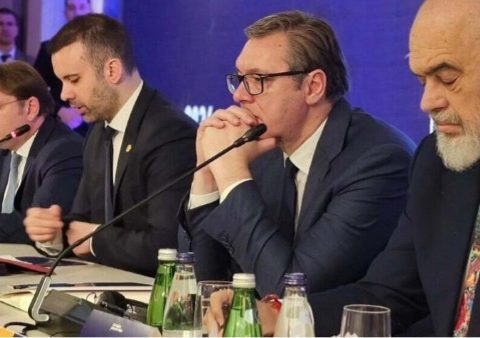
The U.S think tank named after President Woodrow Wilson realised a comprehensive report on the state of Kosovo-Serbia dispute and gave some recommendations on how to end the stalemate.
Though Kosovo and Serbia seem far from ready to strike a comprehensive law binding agreement on the normalisation of relations, the Washington-based think tank sees a ‘unique opportunity’ to resolve the dispute. According to the report, the stakes are too high for the west to fail in Kosovo and in the Balkans.
The Wests’ soft approach towards Serbia has not worked. On the contrary this has drifted Belgrade more away from liberal democracy’s standards and left room for “Russia and China in particular to use Serbia as a vehicle for increasing their own power and influence and undermine Western gains in the region”.
Therefore, the Wilson Centre recommends a more robust US and EU intervention in Kosovo-Serbia dialogue to realize the goal of independent, multi-ethnic states and societies co-existing peacefully in the Western Balkans.
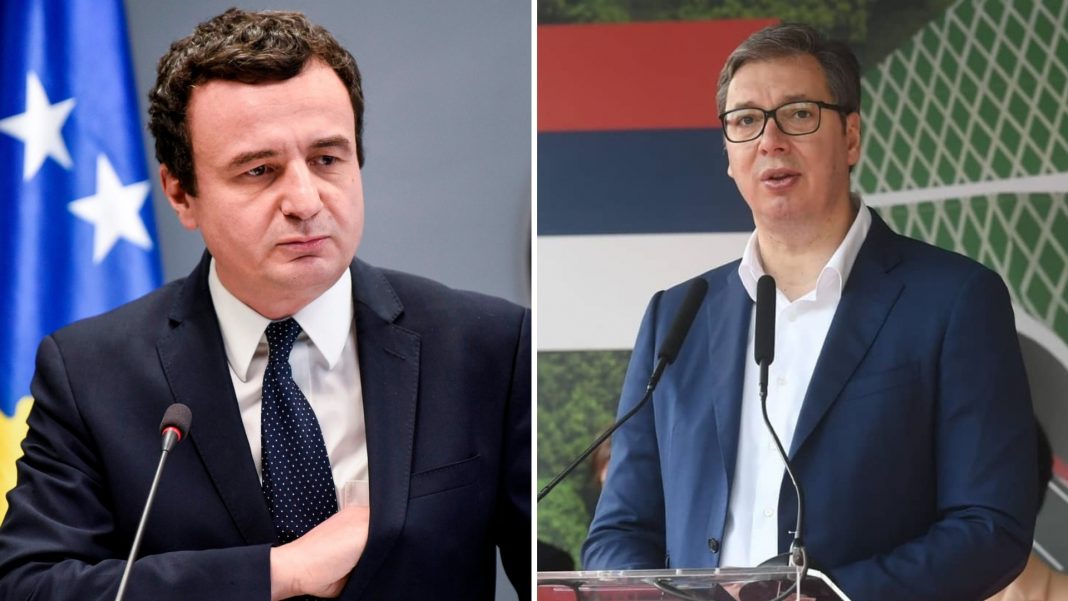
The U.S and EU should work closer together to support Kosovo’s government internally and externally in the framework of Pristina-Belgrade dialogue, says the report. Albin Kurti’s landslide victory this year gives his government strong popular legitimacy which is seen by the think tank as a “unique opportunity” to resolve the Kosovo- Serbia dispute.
The report recommends that the US and EU Recommit to a renewed dialogue that treats Kosovo and Serbia as equal parties, recognizing the sovereignty and territorial integrity of each. U.S. and EU dialogue facilitators should support these principles and unequivocally renounce border changes. Both parties should pressure the non-recognising EU member states to move from their position, or at least to not obstruct Kosovo’s bid to join international organisations. In addition, the US and leading European countries should invite Kosovo to join NATO by 2027, or otherwise “the United States, the United Kingdom, and those European states that recognize Kosovo should commit to signing a robust security and defense agreement with Kosovo as an alternative”.
For Kosovo, the report stresses the importance of implementing agreements in line with its constitution signed with Serbia under the auspicious of the EU and rule out the possibility of uniting with Albania. Kosovo must ensure that “the Association/Community of Serb Majority Municipalities is designed explicitly to support cooperation and exchange of resources among municipalities, according to the Kosovo Constitution, EU and international law. It must not have executive authority outside the purview of the central government”. Kosovo should also launch a parallel, internal dialogue between majority and non-majority communities in municipalities throughout the country and put citizens’ needs first.
With regard to Serbia, the Washington-based Centre highlights the importance of not allowing Belgrade to advance the EU integration path without meeting EU’s standards on having competitive political systems in place, the rule of law, and respect of free media. It should be clear to the EU by now that the politics of appeasing Serbia, “let Belgrade turn towards Moscow,” must be abandoned, says the report.
“If meaningful measures are not taken to further consolidate Kosovo’s sovereignty, and to support its multi-ethnic and inclusive society, Kosovo will—paradoxically—come to symbolize Western failure”, concludes the Wilson Centre.