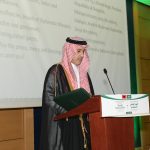
By Ambassador Hellmut Hoffman
I feel honoured to be invited to speak at the Albanian Institute for International Studies. Let me use the opportunity to congratulate the Institute and its Director, Dr. Albert Rakipi, on being once again named in a prestigious list among the best think tanks in Central and Eastern Europe. When Dr. Rakipi invited me to speak at the AIIS Foreign Policy Forum he suggested as the topic: “The German perspective on EU Enlargement”.
I said I would be happy to speak, but that I would prefer to put this topic into a broader context of German policy towards the Balkans.
So what I will try to do is to speak about “A German perspective on the Balkans” – but rest assured: I will make remarks about EU enlargement and Albania too.
I welcome an exchange of views on this and other topics relevant for positive developments in this part of Europe. We need to better understand how things are seen from different angles.
But I have to start with a disclaimer: I arrived in Tirana only last August and I am not an expert on the region – I worked many years in security policy and disarmament. My last posting was head of the German disarmament mission in Geneva. I still need to learn a lot about Albania and the wider region.
I find Albania and the region very interesting, particularly at this time when it is on its way into the European Union and when much is at stake in terms of reform and modernization. That I find the region interesting has perhaps also to do with the fact that I am an historian and political scientist by training- for such a person a place like the Balkans is naturally fascinating.
I start with an obvious point, but it is sometimes important to remind ourselves of obvious points and also to set the scene for what I intend to say: The Balkans has been a key region for European history and the way Europe and the world is going. We commemorate the 100th anniversary of the beginning of World War I this year. It is no accident: Sarajevo was at its beginning. And I think it is not wrong to say: Without World War I there would not have been World War II.
The outcome of World War II determined the situation on the Balkans for nearly half century: Greece was in the Western/NATO camp, Bulgaria, Romania, Hungary were in the Soviet/Warsaw Pact camp, and Yugoslavia was 50:50 – which corresponded pretty much with the famous Churchill-Stalin napkin division of spheres of influence.
The Balkans were relatively quiet between the end of World War II and the mid-1980s.
However: Albania was a special case – 45 years of self-isolation: a true tragedy.
The bloody conflicts on the Balkans in the 1990s cannot be understood without the legacy of World War I and World War II. (Of course: No one knows what would have happened here without WW I and IIũ
The death of Tito in 1980 and the fall of the Berlin Wall in 1989 opened the floodgates in Yugoslavia and subsequently in the entire Balkans. A rapid process of self-liberation was set in motion – by and large a relatively bloodless one, but not so in Yugoslavia. There was a difficult and tumultuous decade 1990-2000 nearly in the entire Balkans, including in Albania. NATO intervened in Bosnia and later in Kosovo. No-one in NATO was happy having to do this – but there was a clear insight: we cannot allow war and genocide to take place on our doorstep.
It was particularly difficult for Germany to participate in military intervention on the territory of former Yugoslavia given the role of the Wehrmacht in World War II in the region. Chancellor Kohl made his view and position clear: “No German soldiers on soil where the Wehrmacht had been”. So we had the rather exceptional situation that the Green Foreign Minister Fischer led the military intervention camp in Germany.
The pacification and stabilization of the region was difficult and costly and continues to be so. Many died, many were uprooted; a lot of damage was done. Srebrenica left behind very bad memories – but also the clear will: Something like this must not happen again!
A new order emerged in the last 20 years and still continues to emerge:
– New states emerged on the territory of former Yugoslavia; I mention in particular Kosovo, which is for obvious reasons of particular interest to Albanians. Kosovo was a most difficult case in terms of international law and also in view of the conflict-ridden manner it came into existence.
– Communism was thrown out in the entire region – from Romania via Albania up to Slovenia, market economies with Western style liberal democracies were created – many of them still struggling to find a sustainable mix of democracy, freedom, stability, economic growth and social justice.
Some issues are still in flux: the full recognition of Kosovo by the entire international community, the name issue concerning the Former Yugoslav Republic of Macedonia and the stabilization in Bosnia.
Why such a historical introduction? Because history matters! It is important to understand the historical narratives we have in our heads – and most probably they are not the same in different heads. But these narratives create the framework for how we see things and for that matter how we act today!
The Balkans are for many reasons a conflict-prone region with potentially critical political repercussions well beyond the region itself and with potentially negative impact on the European order and stability – consider the historical development of relations between Western and Central Europe and Russia from the 19th century to this day – conflicts of interest concerning the Balkans had always negative repercussions. Conflicts over borders and settlement areas of different national or ethnic groups were drivers for aggression in the 20th century, for bloody wars, murder and genocide: This must not happen again!
Now: Remembering the past is important, but at the same time we need to make sure: This must not prevent us from looking towards the future and building a better future. At the end of the day, violence and destruction does not help anybody. One must not be stuck in a time warp.
The Balkans were always and continue to be a homeland for many peoples, cultures and religions. Peaceful coexistence is in everybody’s interest.
After two decades of post cold war conflicts one can state: The map is drawn on the Balkans, the independence and territorial integrity of the new states, including Kosovo, are facts.
Germany has a strong interest in the development of free, stable and prosperous states and societies on the Balkans to make them become strong and reliable partners. That is why we support policies designed to help achieve exactly that. I will name some key multilateral structures and instruments which create an interlocking network of stabilization:
– The OSCE: it is meant to create a pan-European security structure by involving all member states in three key areas — “baskets” נhumanitarian, politico-military and economic;
– The NATO Partnership for Peace and full NATO membership: It helped a lot to stabilize the region. Albania is already a full NATO member;
– Through the Council of Europe and its conventions the region is woven into a European fabric of fundamental values;
– And last but certainly not least: The perspective of integration in the EU mobilizes an enormous drive for reform and modernization in the Balkans.
We have felt for a long time that all these institutions, organisations and activities create a dense network which can help a lot to provide peace and stability in the region.
We are pleased to see that nearly all actors in the region have in the meantime come to the conclusion: The EU perspective is the best option to make tangible progress on all fronts: to stabilize the democratic order, to get better government, to boost growth, social welfare and protection of the environment, and – last but certainly not least – to overcome past conflicts and divisions by encouraging policies of good neighbourliness within the region.
I am convinced: The day will come on which representatives of all states in the Western Balkans will be sitting in Brussels with the French, Poles and Germans, and other partners to determine the course of the EU. Only a few years ago this would have sounded like utopia, but not anymore! One needs to step back for a moment to be fully aware of the tremendous progress made!
The experience after the traumatic World War II was and continues to set a positive example: reconciliation led to trust – look at how Germans, French and Poles managed to find a new relationship to the benefit of Europe as a whole. But reconciliation requires patience, sustained good will and sustained effort.
As an EU member state, Germany has always pursued two objectives simultaneously:
i.) To deepen European integration – in the long-term perspective of some sort of United States of Europe;
ii.) To enlarge the EU — because the European project is not complete as long as not all European states who wish to do so have not been able to join.
Analysts who claim that the EU enlargement policy is over are wrong: Croatia joined, accession negotiations with Montenegro and Serbia opened – all these decision were taken only in 2013!
But it is true and let us not talk around it: enlargement policy is challenged. It is true: there is enlargement fatigue, driven by crisis in general and frustration with some developments in countries which joined the EU more recently. Therefore, demands on new applicants are generally higher than in the past – this is the result of plain experience. There is not much use to complain about that: We learn as we walk – if this were not so we would be rather foolish.
And let’s face it: Strict EU conditionality helps states and societies to drive reform and modernization processes forward in the face of strong forces of the status quo.
There is now a new focus in the enlargement process not only on law-making in accordance with the acquis, but on implementation and practice. EU Member States know that applicants know very well what the EU expects them to say – but the point is that rules and constitutions must not remain dead letters!
The key question is “democratic governance”, that is in particular:
– democratically-elected institutions and respect for the independence of institutions
– a truly democratic rule, i.e. elected institutions must have real power and must not only be fa袤es for power networks operating behind the scene
– respect for fundamental rights
– a democratic political culture with a sound balance between competition and cooperation
– a fair deal for national minorities. They need to be able to live in secure conditions and with a status of equality; the goal can only be to fully accept multiethnic societies
– a determined fight against organized crime, not only for the obvious reason that crime is hurting people, but because organized crime undermines democratic governance.
The real state of affairs on all these points is much more difficult to assess and verify than the adoption of laws and regulations — but the real state of affairs is arguably more important for citizens and life on the ground. This is a key reason why the enlargement process is more challenging and more demanding now than in past enlargement rounds.
In passing a brief comment on foreign investment: Everybody wants more foreign investment – but foreign investment does not come cost-free or just by keeping on calling for it. It requires an independent and corruption free and effective judiciary, fair taxes, correct customs, an efficient and professional bureaucracy – in a nutshell: the rule of law.
Now some remarks on Albania:
Albania has made much progress. My experience is this: People know history less and less – that is why people often do not fully recognize the enormous progress Albania has in fact made – given where it came from in terms of its very difficult historical experience – not only in terms of 45 years of bizarre communist rule, but also in terms of the difficult times before that unfortunate experience already!
But one needs only to open one’s eyes to see, for example, the enormous economic development of Albania in the past 10-15 years. But I would note in passing: One can also easily see the negative side effects of chaotic growth processes – one of the results is that the prospects for high-end tourism in Albania were severely damaged by a wild construction boom.
But of course, “it’s not only the economy” that matters, to vary on a well known phrase, as I tried to point out earlier. There are many dimension which matter – let me highlight two beyond the ones I mentioned already in the context of democratic governance:
i.) In view of the volatility of the region policies of good neighbourliness are of the greatest importance. Such policies are easy to stipulate – but not always easy to implement in a sustained way in the face of sometimes difficult challenges and popular expectations. And here one has to state with much appreciation that Albania has played a constructive role in the region over many years. Given the historical legacies that was by no means a foregone conclusion. I believe it is important to underline that point and to recognize it as such.
ii.) Another positive factor which one needs to highlight is the remarkably peaceful and relaxed way in which religious groups live together in Albania. You need not go very far from here to see on a daily basis that this is by no means a matter of course.
Germany fully supports Albania on its way into the EU. That is a key reason why Germany is strongly engaged here with many projects in many sectors- water/waste water, electricity, small and medium sized enterprises, vocational training, protection of the environment, to name some key sectors.
The EU has defined benchmarks – the determined fight against corruption and organized crime are very important elements in this regard. But allow me to add: My impression is that there is a strange reductionism in play here as if these two elements were the only points which really matter. That is in my view a misunderstanding.
The new government has made good policy announcements and has taken encouraging steps in many fields. What matters is a good track record of implementation, that is of translation of announcements and intentions into practical policy.
Which brings me to “the status”: My advice to our Albanian friends is this: Do not go down the road of endlessly agonizing, speculating and complaining about the fact that the European Council last December has not felt that the time had come to say “Yes” to the candidate status!
For one thing: much of the speculation about alleged reasons for this was in my mind pretty much off the mark – sometimes the truth is rather simple: I know people who took the not so difficult to comprehend view that they would like to watch a bit longer how the transition worked out in Albania after the roles were reversed between majority and minority and how the new government and the new opposition would go about their respective businesses!
And there are interesting issues, like:
i.) Will the notorious and rather extreme polarization continue in Albania or will a new political culture develop at long last with a more balanced mix between political competition and cooperation?
Quite frankly: I am not exactly encouraged by what one has seen in this regard recently.
Let me just observe here that not only the government but also the opposition has to play its proper role here.
ii.) To name another important issue: Will the new government stop the unfortunate practice of the past of treating the public service as party property – i.e. purge it and put party loyalists, sometimes even without proper job qualifications, into positions? In this connection: Will it be possible to reform the judiciary to get it out of the cloud of corruption without turning this exercise into a massive domestic controversy?
In my view these are key questions for the future of Albania – now is a chance to turn a new chapter!
But again: It takes two to tango – without a readiness on all sides to work together in a reasonable way rather than trying to scandalize practically everything it is difficult to see how such difficult tasks can be mastered.
If Albania can demonstrate that it can stay the course in pursuit of reform and modernization than I am personally confident this will make its impression when decision will have to be taken. The fact that a younger generation has come into important functions has already helped because interlocutors in the EU can better relate to them. But having said that: At the end of the day, this is not about a beauty contest of presenting the youngest ministers educated in Western Europe and presenting many well sounding policy announcements, but of convincing implementation of reform and modernization in Albania on all relevant fronts.
Let me sum up: The German perspective of the Balkans is a Balkans region which has become an integral part of the European Union – a community of shared values, a common space of democracy, freedom, economic progress and social justice. I wish to encourage Albanians to pursue the European route with determination, because after all the reform and modernization which it requires is first and foremost in Albania’s best enlightened self-interest.
No doubt: There are many challenges ahead, because the candidate status is only one further step on the road before you and us inside the EU as well, but I am convinced: It is worth the effort!
Hellmut Hoffmann is the Ambassador the Federal Republic of Germany to Albania. This is a speech he held at the Foreign Policy Forum, organized by the Albanian Institute for International Studies (AIIS) in Tirana on Feb. 13.