TIRANA, Nov. 22 – A former senior official of the opposition Democratic Party has been proposed by the ruling Socialists as a candidate to fill vacancies at the supervisory council of Albania’s central bank in a surprise move by Prime Minister Edi Rama as decision-making at the Bank of Albania remains paralyzed.
Ridvan Bode, a former long-time secretary general and finance minister of the Democratic Party, but critical of Democratic Party leader Lulzim Basha, has been shortlisted as one the three candidates proposed by the Socialist Party government for the supervisory council of Albania’s central bank, a key institution for the country’s economic and financial stability.
The proposal comes as the seven-year mandates of six out of nine members of the Bank of Albania’s supervisory council expired in early November, leaving the highest decision-making body at the central bank with only three members and unable to make decisions.
A former short-term finance minister during the collapse of the notorious pyramid investment schemes in 1996-97 turmoil and finance minister for eight years from 2005 to 2013 when the Democrats were in power, Bode, 59, was one of the key figures of the Democrats for about 16 years serving as party secretary general and MP for the region of Korà§a, southeastern Albania, for about two decades until he was left out for the mid-2017 elections along with several former key figures of the Democratic Party.
An experienced economist, Bode resigned party duties in 2013 after the Democrats lost elections but remained an MP until 2017 when he publicly came out against new Democratic Party leader Lulzim Basha after being left out of the DP MP lists.
Ridvan Bode was often the target of the Socialist Party, both in opposition and power, for alleged mismanagement of the country’s public finances and accumulated government arrears to the private sector which the Socialists said risked taking the country to bankruptcy when they assumed power in Sept. 2013.
Prime Minister Edi Rama said he had contacted Bode through a text message and the former finance minister had positively responded to his invitation to join the central bank’s supervisory council.
Arben Malaj, a former finance minister of the Socialist Party, has also been proposed by Parliament for a second consecutive seven-year term.
Prime Minister Rama described both two former finance ministers as “valid professionals, outside party functions, for decision-making at the central bank.”
Florion Mima, an opposition Democratic Party MP who will have to give up his MP mandate if elected, has also been proposed by Parliament, eligible to propose three candidates, as a supervisory council candidate.
There has been no official reaction over the proposed candidates by the main opposition Democratic Party and their allies who are eligible to propose candidates, but have been boycotting Parliament since early September in protest of alleged government ties to gangs and rising corruption.
Former Prime Minister Sali Berisha, who led the Democratic Party for more than two decades since its establishment as the first opposition party in the early 1990s as the communist regime was collapsing, described Bode’s decision this week as a personal choice of the former finance minister after quitting politics, but said there was a moral problem with it because of being proposed by the ruling Socialists.
The apparent election with central bank supervisory council of Florion Mima, a politician and economist which former Prime Minister Berisha described as a brilliant mind, will pave the way for the entry to Parliament of Agron Duka, a senior politician and ally of the ruling Democrats.
A former agriculture minister and MP representing various political forces since the early 2000s, Duka failed to get elected as an MP with the Democratic Party in the region of Durres in the mid-2017 general elections. He now heads the Agrarian Environmental Party, currently not represented in Parliament.
Majlinda Bregu, a former senior Democratic Party official who served as the country’s European Integration Minister from 2017 to 2013 and was critical of current Democratic Party leader Basha was also elected earlier this year as a ruling Socialist Party-backed candidate for secretary general of the Regional Cooperation Council for 2019-2021, a regionally owned and led cooperation framework serving regional cooperation and European and Euro-Atlantic integration of South East Europe.
Albania will be heading to local elections on June 30, 2019 in a key test for the united opposition as the Socialist Party comfortably rules alone in its second consecutive term with 74 MPs out of 140-seat Parliament, but are short of the 84 votes to press reforms alone.
Central bank at standstill
Albania’s central bank postponed two meetings of the supervisory council in November when it was supposed to decide on the monetary policy and the bank’s budget for next year.
Governor Gent Sejko, whose 7-year term expires in 2022, is among the three remaining members of the supervisory council, which makes the key decision-making at the central bank, primarily related to preserving price stability through an inflation target of 3 percent and preserving financial stability.
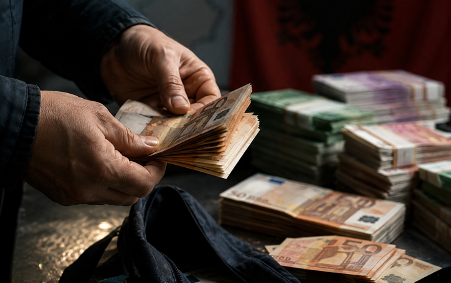
Albania’s central bank has been undertaking emergency currency exchange operations since last June after Europe’s single currency hit a 10-year low of 125 lek against the Albanian national currency, in sharp depreciation of about 10 percent compared to last year.
The central bank intervened in the country’s free floating exchange rate regime by purchasing excess euros from the local currency exchange market in a bid to stabilize the Albanian lek and curb a series of negative effects, primarily affecting Eurozone-destined exports and sizeable Euro-denominated deposits and remittances. The central bank also cut the key rate to a new historic low of 1 percent to handle disinflation pressure from cheaper imports and stimulate credit growth and consumption through lower interest rates.