Albania in twenty years
Impressive economic development, but state and institutions still lacking behind
Interview with Michael Weichert
1. Friedrich Ebert Foundation (FES) and you personally were one of the organizers of the International Conference “Twenty Years After: Rethinking Democracy and State in Albania”. According to all the comments, the conference was the most important academic undertaking reflecting on the Albanian transition. Can you tell our readers more about this conference?
The conference was one of the best events I have been involved in since many years. This has to do with the quality of the presentations and discussions. More than 30 well-known international experts were here, to exchange information and arguments with quite a number of excellent individuals and representatives from different sectors of the Albanian society. This is what the conference was about: To offer a platform for a serious reflection on Albania, to generate an Albanian reflection about itself – what has been achieved over the last twenty years, where are the failures and deficits, and what are the challenges ahead. The presence of such a number of extraordinary experts not only indicates the interest in Albania, but also an intellectual and personal commitment with this country and its society.
2. The conference focused on the state of democracy and state functioning, as well as on the economic and social transformations. According to you, what is the balance sheet of the achievements and failures on these issues?
There was a consensus that the achievements are enormous, if you take into consideration from where the country was coming. The picture, however, is very ambivalent: There are areas, sectors, regions, which have undergone a very dynamic – even though often chaotic – development. Others areas remain marginalizised. You have an impressive economic development, and the creative initiative of individuals is remarkable. But the state and its institutions still are lacking behind. You have western style modern institutions and laws, but in parallel there are other power structures, which are more decisive and undermine the rule of law which is a pre-condition for a modern and democratic state. Some of the experts said, that in comparison with the economic development since 1990, the development of the political system is 10 to 15 years behind. I do not agree completely with this assessment, but those who say so have some arguments in favor. There is a lack of a clear and regulated relation between the individual, the citizen on one hand, and the state and its institutions on the other hand. A major concern in this regard are the so-called independent institutions, which are not as independent as they are supposed to be. The state is not to be captured by interest groups. People have to have trust into their state institutions. There is still a lot of room for improvement.
3. Can we say for sure that the Albanian transition has ended, now after two decades?
I am not very much in favor of the term Ŵransition”. Maybe, it is possible to determine which has been the point of departure in 1990. Maybe, one can establish objectives in the process of the reforms of the state and in society. But what is the Űoint of arrival”? A functioning state and a democratic society? The accession to the European Union? Justice and welfare for everybody? I believe the process will have to continue; we might not want to call it Ŵransition”, but speak about the need to complete the construction of a democratic state and society, taking into consideration some of the points mentioned above.
4. Albania was the most isolated country in the planet 20 years ago. After 20 years, it is a member state of NATO, and has a strong aspiration to join the EU. What do you think about the current situation and which are the challenges ahead in short and long-term for Albania?
It is important that all those reforms, which have to be implemented in the process of integration into the EU, will have to be implemented not because the EU wants it, but because the society and the citizens want it, in their own interest. It is not the EU, and even lesser NATO, who builds the state and the society for the Albanians, but they have to do it themselves, with the support from outside, but in their own interest. This is a different approach, which has to gain wider support. Then, it will not be so decisive when exactly Albania will be joining the EU. Not becoming member is the important thing but how you proceed on the way towards this objective.
5. FES is a very visible actor in the public debate sphere. Can you tell for Tirana Times something more on your organization?
Next year FES will be active in Albania for twenty years. Over this long period, we have established very good relations with Albanian institutions and organizations, and even more importantly, with the people and with extraordinary personalities. We support their efforts to strengthen democracy, to facilitate participation in public affairs, and to promote a democratic political culture. As we do, by the way, in many other countries, including in Germany itself. We are partners, not actors, and we are part of the German – Albanian cooperation and friendship.
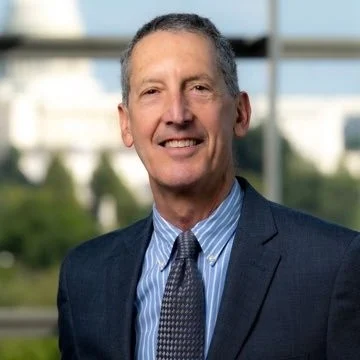
Michael Weichert is the Head of Friedrich Ebert Foundation Office in Tirana since summer 2010. He has been the Programme Manager for South East Europe in the FES Headquarters in Berlin and has been working as project manager and advisor for the Friedrich-Ebert- Foundation (FES) since 1981. During the last ten years, he has headed FES offices in Sofia, Belgrade and Sarajevo.