TIRANA, Feb. 25 – Albania has won an arbitration dispute against a foreign company that was claiming more than €200 million in compensation for its failed investment in Albania privatization vouchers in the 1990s when the country was in its initial stage of transition to a market economy after almost five decades of hardline communism, says a Tirana-based law firm.
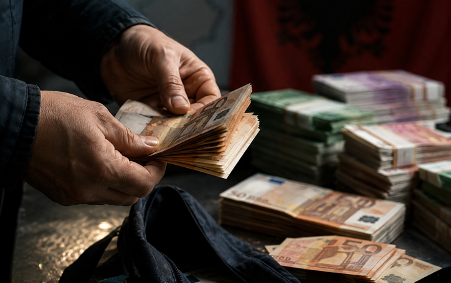
Washington-based International Centre for Settlement of Investment Disputes, ICSID, part of the World Bank Group, says it has declined jurisdiction over a claim concerning Albania’s alleged failure to honor vouchers issued during a privatization program in the 1990s.
The decision was made in early February 2019 after almost two years of arbitration proceedings between the Albanian government and the Anglo-Adriatic Group Limited, an investment fund that launched its Albania operations in 1996 as the Anglo-Adriatic Investment Fund to collect privatization vouchers issued by the then-Albanian government allowing citizens to obtain stakes in the privatization of the overwhelmingly state-run enterprises at that time.
Tirana-based Kalo & Associates, which defended the Albanian government at the arbitration tribunal together with a London-based law firm, confirmed the ICSID tribunal has dismissed the case brought by the Anglo-Adriatic Investment Fund which was claiming about €220 million in alleged foreign investment expropriation from Albania.
Vienna-based Kerres Partners defending the Anglo-Adriatic Investment Fund run by Irish investor Declan Ganle, claimed Albania failed to honor its promise that these privatization vouchers can be used in the Albanian privatization process.
However, the arbitration court upheld Albania’s claim that the tribunal lacks jurisdiction as the investor had not made a protected investment in Albania under the then-1993 law on foreign investment.
The arbitration dispute cost Albania around $1 million in court, law firm and travel costs which Albania will have to handle on its own.
Local Albania media report the investment fund collected about 12 percent of the privatization vouchers worth about $120 million but left the country in 1999, three years after its establishment, following the 1997 turmoil triggered by the collapse of some pyramid investment schemes and privatization vouchers losing much of their face value not allowed in the privatization process later.
In May 2018, the Albanian government postponed the validity of privatization vouchers until the end of 2020, in the seventh postponement since 2006, allowing holders to use them for the legalization of informal buildings and participating in the privatization of the few remaining state-run enterprise. The decision was apparently also influenced by the arbitration dispute with the Anglo-Adriatic Investment Fund which was claiming losses from the expiry of the privatization vouchers.
The face value of privatization bonds is estimated to have dropped to a mere 7 percent from about 18 percent in 1998 when the investment fund operated.
Arbitration threat
Arbitration disputes dating back to investment contracts signed two decades ago soon after the collapse of the country’s communist regime could pose a severe threat to Albania’s struggling public finances.
In early 2018, the Albanian government lost €80 million in arbitration disputes against Bankers Petroleum, the country’s largest oil producer and the illegal demolition and unfair compensation of owners of a seaside apartment block in the southern Albania.
The rulings also unveil the Albanian government’s arbitrariness when enforcing contracts and respecting property rights, two of the main concerns facing foreign investors in the country in addition to highly perceived corruption and an inefficient judiciary that Albania is trying to reform through a judiciary reform.
A late 2017 leaked confidential document by the country’s justice ministry showed Albania faces the threat of being punished with a staggering €2 billion from a handful of arbitration cases with foreign companies, raising concern over the devastating effects it would have on the country’s public finances and one of Europe’s poorest economies.
In case such a scenario is materialized, Albania risks losing almost a fifth of its GDP and half of the annual budget, not to mention public debt costs and economic and social effects from sharp cuts in government spending. Even losing a portion of that amount could cost Albania dearly as the country is trying to bring down public debt, currently at 70 percent of the GDP, a high level for Albania’s stage of development and holding back much-needed investment in road, health and education sectors due to its high servicing costs.
However, the scenario of Albania losing such a staggering amount is little likely to take place as the country has settled its biggest disputes where its faced the threat of losing hundreds of millions of euros in arbitration proceedings in out-of-court settlements, including disputes with Czech Republic’s CEZ over the electricity distribution operator and a customs scanning concessionaire.
The Albanian government is also claiming hundreds of millions of euros in damages through international law firms it has contracted to represent its interests in several cases.
Albania is estimated to have lost about 8.5 billion lek (€68 million) in arbitration cases until the end of 2016, the majority of which in one case dating back to 2010 in the so-called electric train project with U.S. giant General Electric over the unilateral cancellation of a 2005 contract.
The country still faces a key arbitration threat from Italian businessman Francesco Becchetti over cancelled waste management and renewable energy projects in Albania dating back two decades ago.
The Italian businessman, whose Albania assets, including a local TV station, were seized in mid-2015 on suspicion of money laundering and fraud-related offences, is seeking hundreds of millions of euros in compensation over the unilateral cancellation of unfinished Albania projects.