
TIRANA, Sept. 18 – A report on the CEE banking markets showed good records for the Albanian banking system with strong growth in credit in 2005. On 12 June 2006, Albania signed its Stabilization and Association Agreement with the European Union, the first formal step to eventual EU membership.
However, it is unclear how quickly Albania will gain candidate status or even start membership negotiations with the EU. With regard to the economy and the banking sector, both enjoyed strong growth in 2005. Total banking assets increased by 20% in 2005, reaching 58.1% of GDP. But the spectacular development was credit growth, which strongly accelerated in 2005. Both, credits to private companies as well as to households, increased close to 90% yoy in EUR terms. Still, at 14.9% of GDP, the level of outstanding total credits in Albania remains the
lowest as a percentage of GDP in all of CEE, pointing out both the current stage of development of the banking sector and the potential for future growth. Despite the almost doubled credit volume in 2005, total deposits in Albania still greatly outweigh credits with a ratio of 342.5% of total credits. Today, the major banks in Albania are majority foreign-owned. Raiffeisen Bank, the former Savings Bank of Albania, is the largest bank with a market share of more than 40% of total assets as at yearend 2005. In December 2005, Italian banking group Sanpaolo IMI bought an 80% stake of Italian Albanian Bank. Overall, a further positive development is expected for the banking system as a whole, in particular in the area of lending to the economy.
Albanian banks report growth in central eastern Europe

Change font size:
Recommended Articles


Latest from Business & Economy

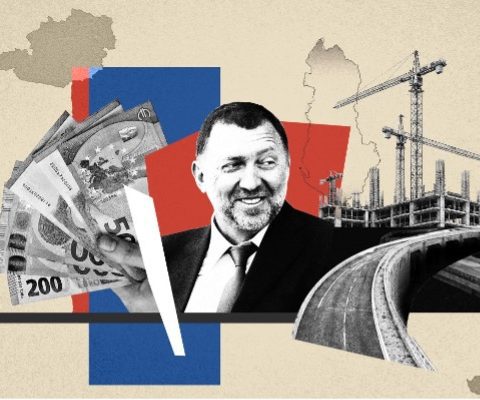
How a Sanctioned Russian Oligarch’s Business Interests Reached Albanian Public Contracts
Change font size: - + Reset Millions of euros flowed to companies linked to Strabag while Oleg Deripaska remained a major shareholder, exposing gaps in Albania’s ability to identify who ultimately benefits
Albania’s Cash Boom Raises Money Laundering Concerns
Change font size: - + Reset Cash outside Albania’s banking system reached a record 5.6 billion euros, last month. Tirana Times, August 30, 2026 – The amount of cash circulating outside Albania’s

Vlora Airport Heads to Arbitration
Change font size: - + Reset Albania faces another potentially costly international dispute after losing several arbitration cases in recent years that have exposed the state to hundreds of millions of euros

Concrete, Cocaine and Corruption: Albania’s Fragile Growth Model
Change font size: - + Reset Albania’s Concrete Economy: How Construction Became the Country’s Dominant Growth Model Tirana Times, July 10, 2026 – A booming construction sector has made Albania an outlier

Austria Leads FDI, but Real Estate Tells the Bigger Story
Change font size: - + Reset Bank of Albania data show Austria topping first-quarter foreign investment flows, while property and construction continue to shape Albania’s FDI model. Tirana Times June 25, 2026