By Ervin Lisaku
TIRANA, Jan. 22 – Almost half of unionists in Albania think trade unions’ activity in defending workers’ interests is hampered by political influence and that union leaders are unable to affect government policies on employment, a study has shown.
Perceptions over the efficiency of the emerging trade unions in the country are significantly worse among non-members with more than two-thirds of Albanians believing trade unions operate under political influence and are unable to lobby lucrative contracts for workers.
The study is based on the findings of some 1,800 respondents, including 800 trade union members in a bid to measure the first public and unionist perceptions on trade unions, which in Albania have been independently operating only after the early 1990s following the collapse of the communist regime and its centrally planned economy.
Albania has more than eighty trade unions, most of which operating under the umbrella of two major confederations, the Confederation of Trade Unions of Albania and the Union of Independent Trade Unions of Albania. Rifts among trade unions and poor representation among the private sector, representing 80 percent of total workers and the GDP, is often blamed for the poor efficiency in defending workers’ rights and interests in addition to perceived high levels of influence by incumbent governments due to the majority of union members working in the public sector.
Around half of unionists paying membership fees say they are unaware of the financial transparency among trade unions.
However, a majority of three-quarters to four-fifths, think trade unions protect workers’ interest regarding working conditions and offer protection from possible violations of work contracts, in findings which researchers say could be highly more positive than what they really are due to the respondents being trade union members.
Some unionists claim employers are often more powerful than trade unions during negotiations and often manage to prevent trade unions and their members from having unique stances on collective contracts.
“There are disagreements even among various unions representing institutions regarding collective contracts. This often leads to failure to sign them. Employers also have an impact on the rift among trade unions,” a trade union member is quoted as saying on condition of anonymity.
An earlier study conducted by Nikoll Doà§i, a social sciences professor with the public University of Tirana, has shown that although Albania trade unions have increased their activity in the protection of employees and in collective bargaining, “they have not managed to overcome the rift between them and membership in the private sector remains small.”
Some unionists claim politicians have a huge impact on trade unions’ performance.
“Politics has a huge impact on trade union’s performance. Political convictions also affect membership to a certain trade union. It also happens that trade union structures are reshuffled when a new government takes over. That means trade union leaders are elected based on political affiliation,” another member is quoted as saying.
Conducted by the Centre for Integrated Legal Services and Practices with the support of German Friedrich Ebert Foundation in Albania, the study measured perceptions in Albania’s four main cities including capital city Tirana, northern Shkodra, southern Vlora and southeastern Korà§a.
The study recommends trade unions should boost transparency over the management of their members’ financial contribution and set up online networks where members can register, engage on issues they face and get informed on the budget spending.
Trade unions should also increase transparency regarding their relations with politics and their impact on drafting employment policies to enable both the public and their members a more realistic approach on the situation, researchers say.
Albania trade union history
Trade unions were almost fictitious and under full state control for more than four decades until the early 1990s when the communist regime collapsed and Albania switched to a multi-party system and a market economy that left the country’s main industries in a state of bankruptcy.
A miners’ union was the first independent trade union set up in 1991 following a hunger strike over better working conditions, wage hikes and democratic changes at a coal mine just outside Tirana.
Almost thirty years after their establishment, trade unions’ role in the Albanian society remains small, undermined by insufficient funding they receive from membership fees and alleged political influence hampering their reliability.
Oil workers, miners protest
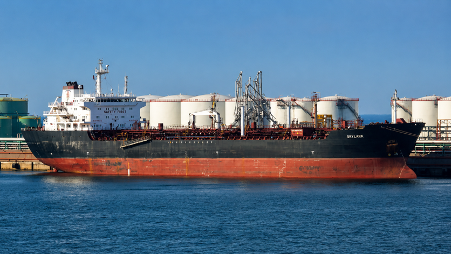
Around 1,000 oil workers in a former state-run oil refiner in Ballsh town, southern Albania, have remained jobless since late 2018 in a repeated scenario in the past decade following a failed privatization of the Armo oil refiner, where the Albanian government still holds a minority 15 percent stake.
Representatives of the company that has been managing the refinery for the past year say the situation is a result of inadequate crude oil supplies by Chinese-owned Bankers Petroleum, the country’s largest oil producer. However, Bankers Petroleum officials blame the refiner’s failure to meet financial obligations for the cut in local oil supplies, but leave open an option to negotiate a new contract for 2019.
Meanwhile, miners have warned of fresh protests over the government’s failure to meet their financial demands over miners’ status and pensions.
Albania has thousands of miners mainly engaged in chromium extraction, a majority of which destined for exports.