TIRANA, Dec. 9 – Albania’s top exporting industry has warned thousands of jobs in one of the country’s top private sector employers are at risk due to a sharp cut in profits from euro’s free fall against the Albanian national currency and delays in value added tax refunds.
The alarm was raised this week when the National Chamber of Garment and Footwear Producers called on the country’s central bank and the government for immediate intervention to overcome what they described as emergency situation.
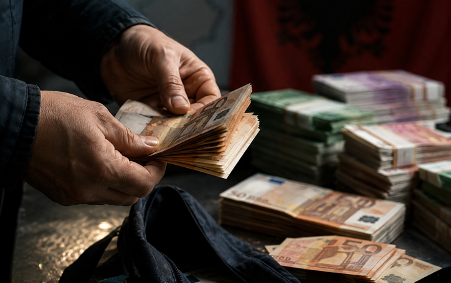
Garment and footwear producers say the euro’s depreciation by around 8 percent during this year has cut their profits by two-thirds due to bearing local processing costs in the national currency and having their income in euro.
The garment and footwear industry has been Albania’s traditionally top exporting industry during the past quarter of a century and currently employs around 70,000 people, mainly women from suburban areas. Relying on cheap labor costs, the industry imports raw material from Italy, Albania’s main trading partner, where the overwhelming majority of 90 percent of such exports end up.
The sector is mostly involved in cut-make-trim production but there are also a few emerging ‘Made in Albania’ brands.
Industry representatives say they could soon face bankruptcy unless Albania’s central bank intervenes to stop the euro’s free fall and the government unblocks VAT refunds.
“Under these circumstances, there is no perspective but job cuts and closure of the companies that is soon expected to happen,” an industry representative told local media.
Garment and footwear exports in the first eleven months of this year rose by an annual 6.2 percent to around 115 billion lek (€932 mln), leading Albania’s exports that grew by 15 percent over Jan-Nov. 2018, according to INSTAT, the country’s state-run statistical institute. However, their contribution to the total exports’ growth was at a mere 2.7 percentage points, significantly behind electricity, fuel, minerals and metals that drove exports’ growth this year thanks to abundant hydro-dependent electricity sales in the year’s first half and a pickup in international oil and mineral prices.
While Albania’s central bank made clear this week, it does not intend any further emergency intervention in the country’s free floating currency exchange rate in the short run, the government has also earlier downplayed the negative effects that euro’s free fall could have on garment and footwear producers.
Finance Minister Arben Ahmetaj has earlier noted the negative effects that euro’s free fall could have on garment and footwear producers are quite minimal due to the industry importing raw material from the Eurozone and re-exporting it to the EU in euro-denominated transactions, with a maximum value added of 20 percent.
Garment and footwear companies in Albania have been facing rising difficulty in finding new workers in the past few years amid hesitation and refusal of potential employees to work for low wages, rising competition by call centers offering much better benefits and a new migration wave.
An earlier study has shown workers in Albania’s thriving garment and footwear factories face poor working conditions, overload and in some cases don’t even manage to get the minimum wage which at around €195 is the region’s lowest.