
The Albanian Finance Minister, Ridvan Bode, admitted on Tuesday that 18 percent of money to fund public investment and projects was not spent during the first quarter of 2008. According to Bode, USD 120 million had been set aside in the state budget for investments and, during the first quarter, remained unused. “The state budget data for the end of the first quarter shows a surplus of ALL 10 billion, which the government chose to invest in short term loans to the banking system, or to help KESH (The Albanian Power Corporation) with short-term working capital loans. The above mentioned funds, and future surpluses and the programmed deficit as well, are set aside to support the acceleration of public investments in the future”, said Bode.
Nevertheless, Bode was satisfied with the result. Bode compared the first quarter of 2008 to the first quarter of 2007. “Regarding the investments, I would like to point out that there are realized investments worth ALL 53 billion out of ALL 64.7 billion planned in the budget. Therefore, there is a difference of 18 percent compared to the plan, but the realised investments were 8.9 percent higher than during the same period last year”, Bode said.
Bode pointed out a number of reasons for the poor performance of state institutions.
First, the government has planned to use a record-high 10 percent of the country’s GDP for public investments, “something which demands rhythmic spending of the funds allocated for public investments”.
Second, the first quarter is comparatively slower because state institutions are still at the procurement phase of their projects.
Third, the Ministry of Public Works, Transport and Telecommunications has the capacity to increase its public investments, but for the moment, it has chosen to be very cautious in its investments.
Bode admitted that the increasing revenue surplus is going to increase pressure to allocate more funds for public investments.
Bode: Public Investments, 18% Less Than Planned

Change font size:
Latest from Business & Economy
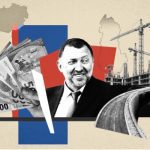
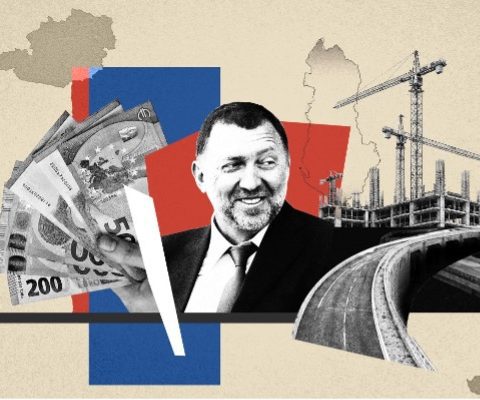
How a Sanctioned Russian Oligarch’s Business Interests Reached Albanian Public Contracts
Change font size: - + Reset Millions of euros flowed to companies linked to Strabag while Oleg Deripaska remained a major shareholder, exposing gaps in Albania’s ability to identify who ultimately benefits
Albania’s Cash Boom Raises Money Laundering Concerns
Change font size: - + Reset Cash outside Albania’s banking system reached a record 5.6 billion euros, last month. Tirana Times, August 30, 2026 – The amount of cash circulating outside Albania’s
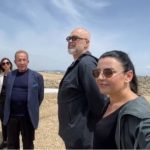
Vlora Airport Heads to Arbitration
Change font size: - + Reset Albania faces another potentially costly international dispute after losing several arbitration cases in recent years that have exposed the state to hundreds of millions of euros

Concrete, Cocaine and Corruption: Albania’s Fragile Growth Model
Change font size: - + Reset Albania’s Concrete Economy: How Construction Became the Country’s Dominant Growth Model Tirana Times, July 10, 2026 – A booming construction sector has made Albania an outlier

Austria Leads FDI, but Real Estate Tells the Bigger Story
Change font size: - + Reset Bank of Albania data show Austria topping first-quarter foreign investment flows, while property and construction continue to shape Albania’s FDI model. Tirana Times June 25, 2026