By Helmuth Lohan
Thank you very much for giving me the opportunity to present the European Commission perspective on this interesting theme “business environment and the crisis”.
I would like to start my intervention with two quotes from the European Commission’s Annual Progress Report:
One relates in very general terms to the existence of a functioning market economy: “Overall, there has been good progress towards establishing a functioning market economy. However, uncertainty about property rights, poor contract enforcement and outstanding shortcomings in the rule of law remained main obstacles.”
The other is specific to industry and small and medium-sized enterprises: “Progress has been good in the field of industry and SMEs. ŠHowever, further efforts are required as regards human capital development, and competitiveness and technological capacity of SMEs.”
It is good news that the Progress Report uses twice the terms “good progress” to qualify developments over the past 12 months in areas that are directly relevant for the business environment in Albania.
The global economic and financial crisis is being felt less in Albania – so far at least – than in other countries of the Western Balkans and less than in its main trading partners Italy and Greece. However, until the world economy picks up and the economic situation in Europe and its Member States improves, Albania cannot have the comfort of feeling safe.
Countries in the region and elsewhere are vying for foreign investments in order to maintain economic growth and to temper the impact of the crisis. FDI should not stop when privatisation has come to an end.
Countries will gain a competitive edge in the international market for FDI if they offer a business environment in which the rules of the game are clear and where they are respected, and a legal environment that leaves no loopholes for unexpected or unpredictable costs of doing business.
A recent Eurochambers survey on “Obstacles to investing in the Western Balkans – the view of the private sector” couches the same argument in the terms of three main concerns by potential investors: the level of corruption; the existence of anti-competitive and informal practices; and uncertainty about regulatory policies.
I am sure that entrepreneurs will consider these points, explicitly or implicitly, when deciding on their engagement in Albania. I can imagine some of the issues at the back of their minds:
– First, the level of corruption. The Annual Corruption Perception Index of Transparency International is bad news for the region and for Albania whose score and ranking deteriorated. May I recall the message of the Commission’s Progress Report: “Overall, Albania has continued to address corruption … The legal framework and inter-agency structures are in place but implementation remains uneven ŠCorruption is prevalent in many areas and continues to be a particularly serious problem.”
– Second, the “cost” of doing business that stems from the non existence of administrative courts. The government is ready to adopt the required legislation; however, this requires a qualified majority in Parliament – which can not be obtained as long as the elected Socialist Party members do not take up their seats in Parliament;
– Third, the habit of consulting stakeholders during the preparation of draft legislation, or the lack of doing so. When consulted, businesses will often make points that are in their own – sometimes narrow – interest. Consultations may therefore be cumbersome, but they do create understanding and trust, and more often than not they will help make better laws that can be implemented and enforced.
A few weeks ago, representatives of two different foreign investors in Albania told me that they had found excellent Albanian staff for their IT departments – better than in other countries of the region in which they were also present.
I am sure that potential investors in Albania will, from time to time speak to actual investors, question them about their experiences and seek their advice. It is a common expression here that nothing bad comes from speaking – “fjala nuk sjell gje”. Yet, perceptions and repute are very important in international business, and negative experiences of foreign investors, transmitted to fellow investors by word of mouth, would discourage as would positive messages encourage fresh investment.
I mentioned the highly qualified Albania IT experts: Indeed, the availability of well educated and skilled labour, education and human capital, the possibility to incorporate local enterprises in the supply chain are all factors that could help countries compete well for FDI.
The European Union, through its assistance, has proven to be a strong and reliable partner in addressing these issues. Large amounts are going into, for instance, the areas of Vocational Education and Training, into Albania’s quality infrastructure, into support to SMEs on into helping solve the problems in the area of immovable property.
On its path towards European integration, Albania has just entered a crucial phase at the end of which the EU will decide on a European Commission recommendation on whether or not to grant Albania candidate country status. In the meantime we will continue to support Albania through our assistance instruments and with advice where required. I hope that potential investors will also help Albania accelerate its movement towards the European Union.
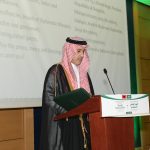
The speech was held during the Regional Conference on Business Environment Reform in South East Europe: “Growth and Competitiveness: Weathering the Crisis and Looking Ahead” Tirana, Albania, November 17 – 19, 2009