
Gone are the days when Prime Minister Berisha spoke about the low ten percent flat income tax and business applauded. Now, it seems that the relationship between the government and the business community is increasingly turning sour. The first problem observers point to is the new draft law, “On the Taxation Procedures in the Republic of Albania”. In a meeting with the Committee on Economy and Finance of the Parliament of Albania, the Chamber of Commerce and other business organisations managed to present a list of almost 70 detailed objectionsŮ.even though the draft has only 137 articles. Business representatives complained that the draft fails to resolve current problems, such as reference prices, and creates new problems and proposes severe measures.
The American Chamber of Commerce was represented in this meeting by its legal adviser, Genc Boga. Boga said it was unacceptable for Albanian businesses to wait while the Appeal Directorate has three months to process requests for appeals. Also, the AmCham said the period during which the Tax Office was going to investigate the appeal of legal entities was unnecessarily long. A shorter case processing period, they said, would lower the cost of doing business. Further, Boga presented his objection to Article 90 of the draft in which the director of the Regional Tax Office is to be given the right to seize any bank account in the name of the debtor. Boga suggested that such sequestration should only be ordered by the court upon the request of the director of the Regional Tax Office.
Further, the AmCham adviser objected to Article 73 of the draft regulating the statute of limitations. Article 73 stipulates that the Tax Office may audit a legal entity up to six years from the date the tax release form was handed over to the Tax Authority. Boga argued that a three year statute of limitation was more appropriate, which was also recommended by the World Bank.
Next in line with objections was Konfindustria, represented by its general manager, Gjergj Buxhuku. “The draft is damaging to the entire relationship between private initiative and the state. The draft needs to be rewritten from the beginning because, if implemented in the current form as represented by the government, it is going to force businesses into bankruptcy”, said Buxhuku. Konfindustria opposes those provisions that stipulate that a legal entity has the right to challenge the decision of the Tax Authority only after is has paid its tax obligation (imposed by the tax office) and its interests, and 15 percent of the fine imposed by the Tax Authority. “If the business that aims to challenge the decision of the Tax Authority to the court does not have financial means to pay its obligation, then it is forced to close down its activity, because the Tax Authority has the right to seize its bank accounts and/or assets”, added Buxhuku.
Buxhuku said he feared the draft is going to increase corruption in the Tax Authority and its policing of businesses. He repeated his appeal for the organisation of the Administrative Court which would handle legal disputes between the state and businesses. Buxhuku also objected to Article 16 of the draft that opens the possibility of the selling debts originated from tax obligations to private debt collection agencies. In fact, there are no such agencies in Albania. Even further, there is no public debate about their organisation and rules governing their activities.
Xhavit Curri, tax expert to the building industry, argued that the draft erases the principle of self-declaration of taxes. “This is entirely unfair. According to the draft, the tax inspectors always have the right to conduct a new tax assessment from their officesŠonly because they have reservations for the self-declared tax obligation”, said Curri. In general, business opposes the idea that tax inspectors can assess the activity of a company through so-called reference prices, set a priori by state authorities.
Curri further argued that the draft erases one of the avenues for appeal available to businesses. According to the Article 109, decisions of the Regional Tax Office can be appealed to the Appeal Directorate, created as an independent body, but only in hearings held inside the Ministry of Finance. The Association of the Constructors of Albania said they doubted the impartiality of such a body and fear they would lose every appeal.
The Chamber of Commerce declared that the draft needs to be rewritten and supported objections presented by other participants in the meeting. The Chamber of Commerce and Industry made it clear that they opposed Article 68, paragraph 4 and 5, regarding the self-assessment and self-declaration of the tax obligation based on financial data kept by the companies themselves. “In our opinion, it is very important to be understood as clearly as possible that the tax declaration of the taxpayer can be reassessed only at the end of the tax audit, or upon the request of the taxpayer itself”, said their representative. The Chamber added that the draft was inconsistent in several points. As an example, the taxpayer can postpone the deadline to deliver its self-declaration by a month, but it cannot postpone the payment of its tax obligation. “This does not make sense, practically it is impossible for a taxpayer to be able to pay on time without having the possibility to declare it on time”.
The draft was opposed by the Socialist opposition and some representatives of the ruling Democratic Party. Socialist MP Arben Malaj said, “The law augments the repressive measures against business, and we are going to represent our draft, reflecting the necessary changes, in order to have a functional law”.
Under pressure from all sides, Finance Minister Ridvan Bode offered a deal which the business community strongly opposed. Bode claimed the government is willing to change the articles that stipulate taxpayers should prepay 15 percent of fines, beside the tax obligation, before he can appeal the decision of the Regional Tax Office to the Appeal Directorate. However, there was a condition. “We can agree the fines should not be prepaid, only if we pass a law that prohibits businesses from bringing these cases before the court”, said Bode. This proposal was considered, by representatives of business, as absurd and unconstitutional.
Business – Government: The honeymoon is over

Change font size:


Latest from Business & Economy

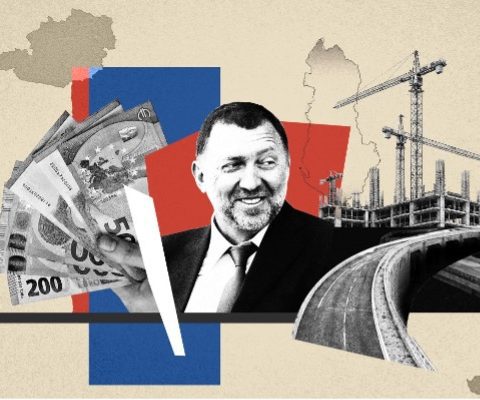
How a Sanctioned Russian Oligarch’s Business Interests Reached Albanian Public Contracts
Change font size: - + Reset Millions of euros flowed to companies linked to Strabag while Oleg Deripaska remained a major shareholder, exposing gaps in Albania’s ability to identify who ultimately benefits
Albania’s Cash Boom Raises Money Laundering Concerns
Change font size: - + Reset Cash outside Albania’s banking system reached a record 5.6 billion euros, last month. Tirana Times, August 30, 2026 – The amount of cash circulating outside Albania’s

Vlora Airport Heads to Arbitration
Change font size: - + Reset Albania faces another potentially costly international dispute after losing several arbitration cases in recent years that have exposed the state to hundreds of millions of euros

Concrete, Cocaine and Corruption: Albania’s Fragile Growth Model
Change font size: - + Reset Albania’s Concrete Economy: How Construction Became the Country’s Dominant Growth Model Tirana Times, July 10, 2026 – A booming construction sector has made Albania an outlier

Austria Leads FDI, but Real Estate Tells the Bigger Story
Change font size: - + Reset Bank of Albania data show Austria topping first-quarter foreign investment flows, while property and construction continue to shape Albania’s FDI model. Tirana Times June 25, 2026