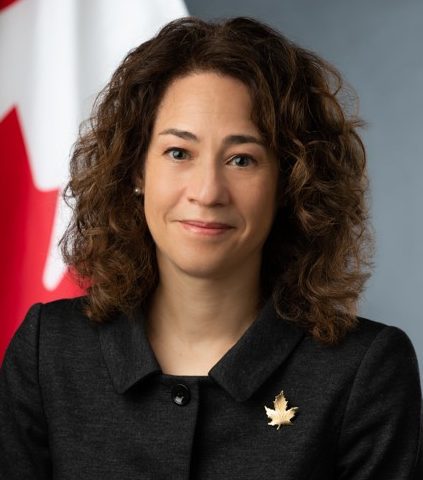
Governor Fullani said the sharp rise in the budget deficit due to rising public spending ahead of the June 23 general elections had taken public debt to 62.4 percent of the GDP
TIRANA, June 26 – Central Bank governor Ardian Fullani has appealed to the new government out of the June 23 elections to set a new clear fiscal rule and reestablish relations with the International Monetary Fund. Speaking in a press conference on Wednesday when he announced the central bank had kept the key interest rate unchanged at 3.75 percent, governor Fullani announced that a joint IMF-World Bank mission will arrive in Albania next July to assess the country’s economic performance and suggest measures such as setting a debt ceiling to preserve the fiscal discipline.
Currently hovering at around 62 percent of the GDP, Albania has one of the highest debt levels in the region which costs the government around 52 billion lek or 3.88 percent of the GDP annually.
“In cooperation with the IMF-World Bank mission we will take the steps for a broad economic reform which will be the basis of the economy for the next 20 to 30 years.”
“The important thing is the continuation of structural reforms at a rapid pace, the identification of the most important branches to increase the competitiveness of the economy in the frame of fiscal consolidation with clear measures and policies which guarantee macro-financial stability. A fiscal rule under IMF assistance is on top of this agenda,” said Fullani.
Congratulating the left-wing coalition for its victory in the June 23 general elections, Fullani said “The Bank of Albania remains interested in harmonizing monetary and fiscal policies.”
Albania’s central bank expects the economy to grow at around the same levels of 2012, when at 1.6 percent it registered the lowest growth rate since the collapse of the notorious pyramid schemes in 1997, and half of the average of 3 percent growth rate from 2009 to 2011. The forecast is in line with international financial institutions which expect the Albanian economy to grow between 1.5 to 1.8 percent compared to government’s projection of a 3.1 percent growth for 2013.
In its latest monetary policy report for the first quarter of 2013, the central bank estimates growth will remain at around the same levels of 2012 with foreign demand and fiscal policy as the key drivers of growth.
Speaking of economic developments in the first five months of this year, governor Fullani said the sharp rise in the budget deficit due to rising public spending ahead of the June 23 general elections had taken public debt to 62.4 percent of the GDP.
“The central bank continues drawing the attention of the need for fiscal measures which guarantee the long-term stability of the public debt increase the confidence of financial markets in our public finances and reduce the long-term cost of the debt service. This target should be the top priority for the public finances in the mid-term,” said Fullani.
The performance of the Albanian economy will continue being conditioned by unfavourable developments in the economies of top trade partners, especially in the first half of 2013, says the central bank referring to crisis-hit Italy and Greece, and the impact they will have on the slowdown of Albanian exports.
While exports have registered a double-digit increase also thanks to huge electricity exports, consumption and private investments during this year remain sluggish while lending has dropped to as low as 0.9 percent in the first four months of this year.
Low inflation pressures have allowed the Bank of Albania to cut the key interest rate by 1.5 percentage points to a historic low of 3.75 percent since Sept. 2011 in an effort to stimulate the economy but the moves have been poorly reflected in lower loan interest rates and an increase in consumption or investments.
With the key interest rate standing at a historic low of 3.75 percent, the positive impacts of the easy monetary policy the central bank has been following since around two years have mostly been reflected on lower T-bill yields on government’s domestic debt.