
TIRANA, April 30 – Corruption remains still high in Albania. That is the conclusion of the survey conducted from IDRA and funded from the USAID.
This Survey, prepared by IDRA with funding from USAID, is the fifth in a series of reports on corruption in Albania. These surveys are tools to help all Albanians better understand the extent and nature of corruption.
The perception of corruption in Albania remains high. Out of 20 institutions rated by the general public in the 2009 survey, 14 are considered to be more corrupt than honest and only 6 fall below the midpoint of a scale where 0 means “Very honest” and 100 means “Very corrupt”. Religious leaders, the President, media, military, public school teachers and NGO leaders are perceived as least corrupt. Custom officials, tax officials, ministers, parliamentarians and doctors, on the other hand, are perceived as the most corrupt. About half of the general public sample (48.5%) thinks that corruption has increased compared to a year ago, while 38% think it has remained at the same level.
In general, the overall experience with corruption transactions has declined from 2005 to 2009. Out of 10 ways in which an individual could be victimized, the average number of ways of victimization experience for 2009 is 1.29, a decrease from 1.7 in 2005. From the 10 scenarios presented, the percentage of people who declared at least one experience with corruption has decreased from 66.5% in 2005 to 57.1% in 2009. Health represents the sector most quoted for bribery. 37.1% of respondents said that they had bribed a doctor or nurse during the last year.
Overall, the Albanian public reports that institutions are not doing enough to fight corruption. On a scale of 0-100 where 0 means “Does not help at all” and 100 means “Helps a lot”, the average score of all 9 institutions evaluated is 43.8 points. Only media is seen as contributing to the fight against corruption with 63.6 points, while all other institutions are evaluated with less than 50 points on the scale. Religious leaders, High Inspectorate for the Declaration and Audit of Assets and government, are seen as least helpful in the fight against corruption. Courts and the General Prosecutor’s office show an improvement of about 5 points and 6 points, respectively, from 2005 to 2009. However, both still have less than 50 points on the scale.
Albanians’ trust in institutions continues to be low. The average score of trust for all 15 institutions presented to respondents is 44.3 points on a scale where 0 means “Do not trust at all” and 100 means “Trust a lot”. This score is also below mid-scale for public sector employees (48.8 points).
The public perceives institutions as not being transparent. None of the institutions evaluated received more than 50 points on a 0 to 100 scale, where 0 means “Not at all transparent” and 100 means “Fully transparent”. The most transparent institution, according to the general public, is local government, which still scores only 40.3 points. The least transparent institution is the Property Restitution and Compensation Agency with a score of 27.2 points.
When judging the two parties in a corrupt transaction, Albanians show more tolerance towards “givers” than towards “takers”. For example, a student who gives a shirt to the teacher with the hope of receiving a better grade is seen as either not corrupt (35.4%) or justified (34.7%). Similarly, a mother who pays 500 Leks for the certificates of her children to avoid staying in a queue is also seen as not corrupt (26.3%) or as largely justified (43.4%). There is a tendency from the Albanian public to include under the term “corruption” even phenomena that are generally not considered as corruption related. Asked about a flower vendor who raises the prices of flowers during holidays, almost half of respondents say that the vendor is corrupt and must be punished. Although this misconception has an impact on over-inflating the corruption perception, analyses show that the impact is rather low
46.6% of the respondents have a lot or some trust in the judicial system. This is a 12 percentage point improvement from 2005 when 34.6% of the respondents had the same opinion. Almost three-quarters of citizens that have dealt with courts declared that the courts have treated them either “Very well” or “Well”. This represents a notable improvement from 2005 by almost 15 percentage points.
More than half of the respondents (54.4%) think that the economic situation of the country is “Bad” or “Very bad”. Economic optimism, judged by the opinions of respondents on how the economic situation will be a year from now, is only slightly better than in 2008, but much less than the levels of the 2006 and 2005 surveys. One in four respondents replied that they are pessimistic about the country’s economic situation a year from now.
USAID Albania Director Roberta Mahoney said that corruption continues to be a very serious problem.
Personal experiences with corruption have fallen but both perceptions and experiences of corruption remain high. Albanian trust in institutions continues to be low. Transparency, as seen by the public, appears to be a critical issue. The general public, but also public officials, think that corruption is a widespread phenomenon.
“Simply put – corruption is a problem and its existence robs Albanians of time, energy, and money that could be better spent on more positive pursuits,” said Mahoney.
Corruption is undermining all that is being gained.
Every case of corruption, small and large, undermines the strength of Albanian society. Each case weakens the links between people – making people less trusting, less open and less willing to invest in public society.
Albania – a small country on the edge of the EU – means Albania must be extraordinarily hard working, dedicated, diligent and transparent to be a reliable partner.
The reputation of Albania as a place for corruption must be overcome by a constant, unrelenting public battle against it, urged Mahoney. Europeans need to see a constant, open and transparent fight against corruption – alongside the very real improvements that anyone can see.
Albania’s recent admission into NATO and its progress towards European Union integration bring with them a number of behavioral standards Albania must honor.
Citizens should hold Government accountable to deliver basic public services. This is the heart of a democracy. Democratic institutions cannot exist without that trust. Governments must EARN trust, she said.
Corruption can only be lessened when people care about it and fight against it.
Corruption in Albania

Change font size:
Recommended Articles

Latest from News
Mecca Defense Pact Signals Saudi Arabia’s Bid to Shape a New Security Order
Change font size: - + Reset The agreement with Turkey and nuclear-armed Pakistan strengthens Riyadh’s position as a central architect of regional security, while reflecting a broader shift toward a more multipolar

SPAK Brings New Charges Against Former Deputy PM Balluku
Change font size: - + Reset Tirana Times, August 07, 2026 — Albania’s Special Prosecution Office Against Corruption and Organized Crime has brought new allegations against former Deputy Prime Minister Belinda Balluku, widening
Milošević’s Language Returns to Serbia’s Government
Change font size: - + Reset Ethnic Cleansing Remark Tests Serbia’s Claim to Have Broken With Milošević A Serbian minister’s declared willingness to expel Kosovo Albanians has drawn condemnation across the region
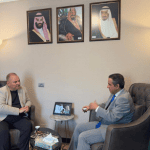
Saudi Ambassador Meets Head of Albania–Saudi Parliamentary Friendship Group
Change font size: - + Reset Tirana Times, July 6,2026 – Saudi Arabia’s Ambassador to Albania, H.E. Turki bin Ibrahim Al-Madi, received Albanian MP Baldi Çomo, Chairman of the Albania–Saudi Arabia Parliamentary Friendship
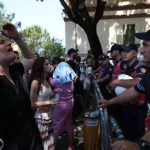
Anti-Government Protests Escalate in Tirana as Demonstrators Block Parliament
Change font size: - + Reset Tirana Times, July 03, 2026 – Albania’s month-long anti-government protest movement entered a more confrontational phase on Thursday, as demonstrators gathered outside Parliament, blocked access points