
TIRANA, Jan. 25 – The EBRD, one of the country’s biggest financiers, has lowered its GDP projection for Albania in 2010 to 3 percent and expects the country’s economy to grow by only 2.2 percent in 2011, far lower than the World Bank and the IMF and twice less compared to government’s 5.5 percent estimate for this year.
Meanwhile, government expects a 4.1 percent growth in 2010, 5.5 percent in 2011, 6.1 percent in 2012.
In a recently released report called “Regional economic prospects, EBRD Countries of Operations: January 2011” the European Bank for Reconstruction and Development lowered its GDP estimates on Albania by 0.7 percent for 2010 and another 0.4 for 2011 compared to its latest projections made last October.
However, according to the EBRD, Albania, which registered the highest GDP growth rate in the Southeaster Europe, still remains vulnerable to the Greek crisis effects.
“The highest growth rate last year was in Albania, where industrial production grew strongly on the back of record levels of electricity exports. However, Albania remains vulnerable to a serious Greek downturn, as the majority of remittances into Albania come from migrants in Greece, many of whom work temporarily in seasonal jobs,” says the report.
The key macroeconomic risk in Albania stems from potential spillover effects from Greek crisis, mostly in the form of falling investment, lower remittances, higher costs for local subsidiaries of Greek banks and reduced trade flows, said the EBRD in its latest 2010 Transition Report published few weeks ago.
Experts previously said Albania would be the hardest hit country from the crisis because of the size of Greek investments and the big Albanian migrant community in Greece, whose remittances are a major source of revenue for Albanian families.
Around 46 percent of immigrants sending remittances are reported to living in neighbouring Greece, compared to 41 percent in Italy, according to a central bank survey.
Albania has more than 600,000 immigrants in Greece, who make up 10 percent of the Greece’s total workforce.
The EBRD expects the Albanian economy to grow by 4.6 percent in the final quarter of 2010 after the 4.9 percent growth rate reported by the country’s Institute of Statistics INSTAT in the third quarter of 2010.
In the western Balkans, all countries are expected to record positive growth in 2011.
The EBRD is one of the most active private-sector financiers in Albania with a recent focus on small production enterprises, development of natural resources, as well as improving infrastructure.
To date the EBRD has invested 120 million euros for the modernization of transport infrastructure in Albania. Overall the Bank has committed to date around 550 million euros in various sectors of the country’s economy, mobilizing additional investments of close to 1 billion euros.
EBRD lowers Albania’s GDP projections

Change font size:


Latest from Business & Economy
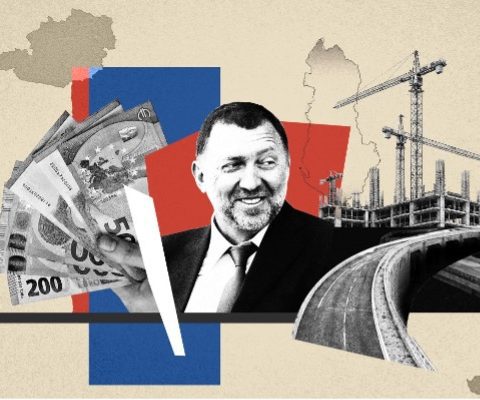
How a Sanctioned Russian Oligarch’s Business Interests Reached Albanian Public Contracts
Change font size: - + Reset Millions of euros flowed to companies linked to Strabag while Oleg Deripaska remained a major shareholder, exposing gaps in Albania’s ability to identify who ultimately benefits
Albania’s Cash Boom Raises Money Laundering Concerns
Change font size: - + Reset Cash outside Albania’s banking system reached a record 5.6 billion euros, last month. Tirana Times, August 30, 2026 – The amount of cash circulating outside Albania’s

Vlora Airport Heads to Arbitration
Change font size: - + Reset Albania faces another potentially costly international dispute after losing several arbitration cases in recent years that have exposed the state to hundreds of millions of euros

Concrete, Cocaine and Corruption: Albania’s Fragile Growth Model
Change font size: - + Reset Albania’s Concrete Economy: How Construction Became the Country’s Dominant Growth Model Tirana Times, July 10, 2026 – A booming construction sector has made Albania an outlier

Austria Leads FDI, but Real Estate Tells the Bigger Story
Change font size: - + Reset Bank of Albania data show Austria topping first-quarter foreign investment flows, while property and construction continue to shape Albania’s FDI model. Tirana Times June 25, 2026