
TIRANA, Sep 14 – Bashkim Shehu, son of the ex-communist prime minister, Mehmet Shehu, said that the government and all the other institutions should open the files of the former intelligence institution and other law-enforcement ones in order to clean the consciousness of the country.
Shehu allegedly committed suicide in 1981 after which the late communist dictator Enver Hoxha declared him a traitor, an enemy and his family was almost lynched. His wife was executed for allegedly serving as a spy for the west, the same with his son and another son committed suicide in prison. Bashkim ‘enjoyed’ years of imprisonment and then isolation in internment camps.
He has now turned into a writer basing his novels on stories from the former communist past.
In an interview to Gazeta Shqiptare newspaper, Shehu said that the files of the powerful persons, those who are in posts, should be open.
“I am not for the people’s moral lynching,” he said. “I think however that a democratic country should be transparent referring to the personalities, which means the opening of the files of powerful persons if there are such who have also been repressing mechanisms of the past.”
Post-communist Albania has passed certain laws especially during election times prohibiting former communist officials from running for posts.
The parliament has also passed a resolution denouncing the crimes of the former communist regime, and asked that the secret police files on all public figures in the country be opened.
The late dictator Enver Hoxha held power in the tiny Balkan country from the end of World War II until his death in 1985. He was later followed by Ramiz Alia until December 1990 when a protest launched by students toppled the regime.
The communists ran a vast network of prisons and labor camps, where thousands of Albanians, including small children and pregnant women, were sent for political, ideological and religious reasons.
There have been many calls, especially from the former politically persecuted, to open the files of the notorious secret police, or Sigurimi, to see if they identified collaborators among the ranks of current politicians and administrators or in the judiciary or media.
Hoxha led his Balkan country into more than four decades of international isolation and dictatorship.
During those years, the intelligence service was one of the strongest weapons of the communist regime, spying on people’s lives and buttressing the rule of those in power.
The communist regime that followed Hoxha’s death eased some of his most repressive measures, but real democracy only started in 1991, with the staging of free elections.
Many officials of the regime have faced trial after the Democrats took over in 1992, including Hoxha’s widow, Nexhmije, and the last communist president, Ramiz Alia. They both served jail terms for crimes against humanity.
Ex-communist premier’s son asks for files to be opened

Change font size:




Latest from News
Milošević’s Language Returns to Serbia’s Government
Change font size: - + Reset Ethnic Cleansing Remark Tests Serbia’s Claim to Have Broken With Milošević A Serbian minister’s declared willingness to expel Kosovo Albanians has drawn condemnation across the region
Saudi Ambassador Meets Head of Albania–Saudi Parliamentary Friendship Group
Change font size: - + Reset Tirana Times, July 6,2026 – Saudi Arabia’s Ambassador to Albania, H.E. Turki bin Ibrahim Al-Madi, received Albanian MP Baldi Çomo, Chairman of the Albania–Saudi Arabia Parliamentary Friendship
Anti-Government Protests Escalate in Tirana as Demonstrators Block Parliament
Change font size: - + Reset Tirana Times, July 03, 2026 – Albania’s month-long anti-government protest movement entered a more confrontational phase on Thursday, as demonstrators gathered outside Parliament, blocked access points
Are Europe’s Star Architects Helping Launder Albania’s Criminal Economy?
Change font size: - + Reset The Albanian Files suggests that international architecture may have served not only as design, but as a prestigious façade for opaque money, captured institutions and one-man
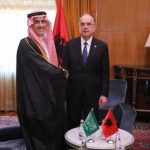
Saudi Ambassador Presents Credentials To Albanian President As Ties Gain Momentum
Change font size: - + Reset Tirana Times, June 05, 2026 – Saudi Arabia’s new ambassador to Albania, Turki Ibraheem Almadhi, presented his credentials to President Bajram Begaj, marking the formal start