
TIRANA, July 24 – The resumption of electricity exports has had a positive impact on exports despite demand from crisis-hit top trade partners Italy and Greece remaining sluggish. Albania resumed electricity exports last May after continues imports as the country faced prolonged drought and heavy snowfall in early 2012. INSTAT data published this week show total exports during the first half of this year grew by 2.1 percent to 100 billion dollars. In the first four months of this year exports registered negative growth rates of up to 12 percent and recovered only last May when they reached the same levels of the first five months of 2011. “Minerals, fuel and electricity” were Albania’s top exports in the first half of 2012, increasing by 19 percent to 33.7 billion lek. Second came garment and footwear products with 31.2 billion lek, down 5 percent compared to the first half of 2011. The garment and footwear sector known as the fa谮 industry, once Albania’s top export performer, has been suffering continuous negative growth rates during this due to declining demand from traditional trade partners.
Exports to top trade partner Italy, the destination of more than half of Albanian exports, have also been affected by the crisis there. Exports to Italy in the first six months of this year decelerated to 5.7 percent to 54.3 billion lek, accounting for 54 percent of the total exports. Meanwhile, exports to Greece, the country’s second most important trade partner rose by 3.4 percent to 5 billion lek, accounting for only a 5 percent share. Greece is the second most important partner for imports with trade exchanges accounting for 12.5 percent of the total.
Spain surprisingly ranks the second most important destination of exports with around 7.9 billion lek followed by Kosovo with 7.1 billion lek accounting for 7.9 percent and 7.1 percent respectively .
As far as imports are concerned, INSTAT data show a drop of 2 percent during the first six months of this year, confirming the sluggish domestic demand, which is the key driver of the Albanian economy, a net importer.
“Food, beverage and tobacco” imports stood at identical levels of44 billion lek in Jan-June 2012, reconfirming the freeze in domestic consumption in a country which is a net importer. “Mineral, fuel and electricity” imports during this period jumped by 23.2 percent to 53 billion lek, ranking first in the import list.
The performance of imports also reveals the difficult situation businesses are facing with investments. INSTAT data show imports of “machinery, equipment and spare parts” dropped by 5.3 percent to 47 billion lek in Jan-June 2012 compared to the same period in 2011.
Almost all key economic sectors including production, construction, transport and services report lower profits of up to 22 percent in the first half of this year.
A recent report by London-based EBRD has shown Albania’s strong trade, investment and remittance ties to Greece and Italy are likely to continue to hold back growth in the coming year, while public debt close to the statutory limit of 60 per cent of GDP limits the room for fiscal manoeuvre.
The Albanian government’s projection of the 2012 growth being stimulated by domestic private consumption and investments, on a falling trend since 2011 remains an overoptimistic scenario unlikely to achieve the target for 4.3 percent economic growth rate at a time when the IMF says Albania will hardly manage to escape recession.
Exports remain sluggish, imports shrink by 2% in H1

Change font size:
Recommended Articles



Latest from Business & Economy

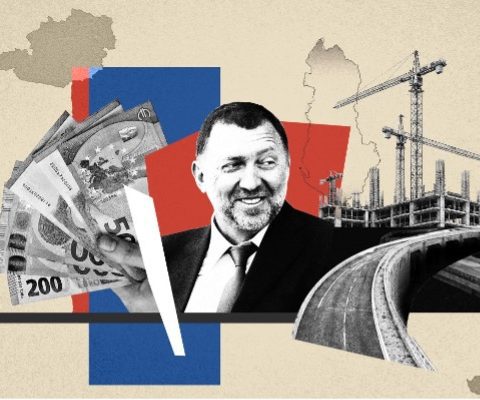
How a Sanctioned Russian Oligarch’s Business Interests Reached Albanian Public Contracts
Change font size: - + Reset Millions of euros flowed to companies linked to Strabag while Oleg Deripaska remained a major shareholder, exposing gaps in Albania’s ability to identify who ultimately benefits
Albania’s Cash Boom Raises Money Laundering Concerns
Change font size: - + Reset Cash outside Albania’s banking system reached a record 5.6 billion euros, last month. Tirana Times, August 30, 2026 – The amount of cash circulating outside Albania’s

Vlora Airport Heads to Arbitration
Change font size: - + Reset Albania faces another potentially costly international dispute after losing several arbitration cases in recent years that have exposed the state to hundreds of millions of euros

Concrete, Cocaine and Corruption: Albania’s Fragile Growth Model
Change font size: - + Reset Albania’s Concrete Economy: How Construction Became the Country’s Dominant Growth Model Tirana Times, July 10, 2026 – A booming construction sector has made Albania an outlier

Austria Leads FDI, but Real Estate Tells the Bigger Story
Change font size: - + Reset Bank of Albania data show Austria topping first-quarter foreign investment flows, while property and construction continue to shape Albania’s FDI model. Tirana Times June 25, 2026