
The private sector is held back by weaknesses in the regulatory environment and the rule of law while substantial efforts are required to improve the labour market, says the European Commission’s 2014 progress report.
TIRANA, Oct. 9 – Albania maintained macroeconomic stability but still faces significant challenges as persistent fiscal imbalances have caused public debt to reach high levels and fiscal buffers are largely exhausted, says the European Commission in its 2014 progress report after granting Albania the candidate status last June.
“Large accumulated government arrears have sapped liquidity and confidence in the economy, despite the government beginning to clear these in March. The high current account deficit reflects weak competitiveness and a narrow production base. The private sector is held back by weaknesses in the regulatory environment and the rule of law. Substantial efforts are required to improve the labour market,” says the report about Albania’s barriers to growth.
Albania’s GDP growth decelerated further to an estimated 1.4 percent in 2013 from 1.6 percent a year earlier. Sluggish domestic demand remained the main driver of the slowdown as both private consumption and especially investment were adversely affected by weak confidence and anaemic lending.
“The timely execution of the plan to clear accumulated government arrears and the removal of obstacles to bank lending are key to further improving confidence, bolstering investment and reviving growth in the short run.”
Continued strong emphasis on attracting foreign direct investment is crucial both for mitigating vulnerabilities linked to high external imbalances and for transferring knowledge, boosting productivity and broadening the production base, suggests the European Commission.
The report says macroeconomic stability should be further increased by lowering the public debt-to-GDP ratio, while preserving fiscal space for growth-enhancing public investment. Fiscal consolidation, focusing on revenues, started with the 2014 budget, but continued work is needed to put public finances on a sustainable footing
Both market entry and exit procedures should be further improved to facilitate an efficient allocation of resources.
Progress is needed on reforms to deal with uncertainties over property ownership, deficiencies in the regulatory framework and weaknesses in contract enforcement and the rule of law, which continue to be detrimental to the business environment.
There has been little progress in the area of public e-procurement, in extending the procurement system to concession contracts and public private partnerships. “The increasing use of unpublished and opaque procurement procedures and exceptions from the law on concessions and public private partnerships are issues of concern.”
Little progress is also reported in the energy sector. The power sector remains fragile and dependent on hydro sources with a high level of losses, unsustainable bill collection rates and serious financial debt.
The unresolved problems of the electricity sector are an enduring drain on public resources, says the report, citing government loan guarantees of Euro 83 million, around 0.8 percent of the GDP, to state-owned power company KESH to help it survive financial difficulties and enable it to import electricity in late 2013 and early 2014.
Fiscal imbalances pose serious threat, progress report says

Change font size:



Latest from Business & Economy
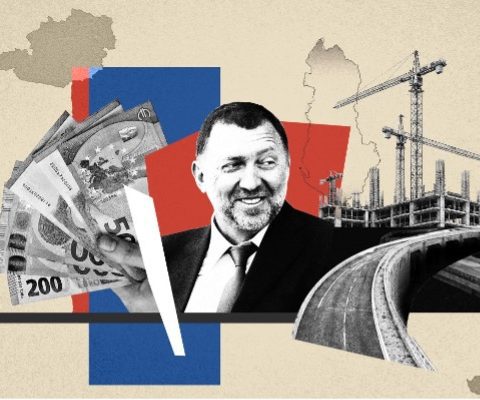
How a Sanctioned Russian Oligarch’s Business Interests Reached Albanian Public Contracts
Change font size: - + Reset Millions of euros flowed to companies linked to Strabag while Oleg Deripaska remained a major shareholder, exposing gaps in Albania’s ability to identify who ultimately benefits
Albania’s Cash Boom Raises Money Laundering Concerns
Change font size: - + Reset Cash outside Albania’s banking system reached a record 5.6 billion euros, last month. Tirana Times, August 30, 2026 – The amount of cash circulating outside Albania’s

Vlora Airport Heads to Arbitration
Change font size: - + Reset Albania faces another potentially costly international dispute after losing several arbitration cases in recent years that have exposed the state to hundreds of millions of euros

Concrete, Cocaine and Corruption: Albania’s Fragile Growth Model
Change font size: - + Reset Albania’s Concrete Economy: How Construction Became the Country’s Dominant Growth Model Tirana Times, July 10, 2026 – A booming construction sector has made Albania an outlier

Austria Leads FDI, but Real Estate Tells the Bigger Story
Change font size: - + Reset Bank of Albania data show Austria topping first-quarter foreign investment flows, while property and construction continue to shape Albania’s FDI model. Tirana Times June 25, 2026