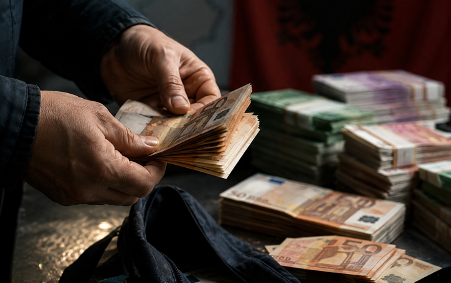
TIRANA, March 4 – The latest ‘Trade-Related Illicit Financial Flows’ report by the Global Financial Integrity stated that manipulated import and export bills of goods and services total 2.2 billion dollars from 2013 to 2017. During this period, the unreported invoices of goods and services in customs accounted for 21.18 percent of the country’s total foreign trade. Moreover, according to the GFI report from 2008 to 2017, the value of misinvoiced imports and exports amounts to a total of nearly 5 billion dollars.
Other key findings in the report state that the sum of the value gaps identified in trade between 135 developing countries and 36 advanced economies over the ten-year period 2008-2017 is 8.7 trillion dollars while the sum of the value gaps identified in trade between 135 developing countries and 36 advanced economies totaled 817.6 billion dollars.
“Overall, the analysis shows trade misinvoicing is a persistent problem across developing countries, resulting in potentially massive revenue losses – at a time when most countries are struggling to mobilize domestic resources to achieve the internationally-agreed UN 2030 Sustainable Development Goals (SDGs),” according to the report summary.In order to identify a country’s imports/exports that may have been misinvoiced, Global Financial Integrity (GFI) conducts a value gap analysis by examining data submitted by governments each year to the United Nations Comtrade database and applying a series of filters to ensure unmatched trades are omitted. GFI then uses a partner-country analysis to compare and contrast the differences between any set of two countries in order to identify value gaps, or mismatches, in the reported data. For example, if Ecuador reported exporting US$20 million in bananas to the United States in 2016, but the US reported having imported only US$15 million in bananas from Ecuador that year, this would reflect a mismatch, or value gap, of US$5 million in the reported trade of this product between the two partners for that year.