
TIRANA, March 7 – Despite significant progress in statistical development in recent years, there remain also important issues of lack of credibility among at least some of Albania’s compiling agencies, the IMF says in a recently released report on the technical assistance evaluation mission to the transition economies Albania and Georgia.
“At the users’ meetings, and confirmed at meetings with officials, there were strong indications that Albania’s history of past government involvement in statistics has generated a legacy that is not yet fully resolved that there is mistrust in official statistics.” As in other countries, issues such as whether the country has gone into recession have threatened to produce an apparent politicization of statistics, meaning that whatever numbers are produced may not be believed. While Albania has introduced an institutional framework that seeks to mitigate these concernsشhe BoA for instance has statutory independence and INSTAT was taken out from its former ministry and placed directly under the Prime Minister, the establishment of credibility seems not yet complete, and might be an area for technical assistance (TA). In particular, credibility might be helped by further increases in the transparency of statistics, such as disseminating fully the weights in the baskets for the CPI, quarterly GDP in current prices, and other indicators: the reasons for any revisions in any statistics; and meticulous adherence to Advance Release Calendar for statistics.
The substantial recent increase in staff resources for INSTAT, particularly at a time of budget cutting, is an important demonstration of the commitment of the Albanian government to the development of macroeconomic statistics, says the IMF.
The Fund says Albania has made substantial progress in statistical development in recent years, but the protracted delays in its subscription to the Special Data Dissemination Standard (SDDS) make it increasingly an outlier. Albania had been targeted as a potential candidate for early SDDS subscription for much of the previous decade, but road blocks remain and seem unlikely to be resolved at a very early date.
IMF Technical Assistance to Albania seems to have been broadly successful. The Data ROSC of 2006 provided a mixed picture of the state of statistics in Albania, with the biggest problems on the national accounts side. National accounts were therefore the main focus of IMF’s Statistics Department TA efforts, with a peripatetic advisor making repeated visits over a two-year period
Progress has been achieved also across a number of the other topical areas, serviced through conventional short-term (two-week) missions. Most particularly, a number of surveys on external statistics identified as needed in the Data Report on the Observance of Standards and Codes (ROSC) have been conducted. On the other hand, there has been no progress on some issues identified as priorities in the Data ROSC, i.e., enforcing penalties for nonresponses to surveys.
In the period ahead, EU-sponsored programs will be providing the largest part of TA in statistics to Albania. Albanian agencies have been twinned with a number of EU counterpart agencies, and extensive programs prepared for implementation over the coming few years.
The evaluation of technical assistance (TA) and training in statistics looks at the experience of two transition economies, Albania and Georgia, during roughly the period 2005-2010. The TA, including the training, to these countries covered all the topical areas on which the IMF’s Statistics Department’s (STA) focuses, i.e., national accounts, price statistics, and monetary, balance of payments and government finance statistics, albeit with differing emphases between the two countries. Part of the assistance was funded directly from the IMF’s budget, while other elements (in particular the peripatetic advisors) were financed externally, in these cases by the Japanese government.
In both countries a benchmark was the Data ROSC conducted for the country, which provided a snapshot of the state of statistics at that time together with recommendations for improvement. In both countries the mission visited the statistics agency, the central bank, and the ministry of finance (MoF), and met with users. The evaluation is based on responses to questionnaires, desk reviews of available data, and in-country discussions with national authorities, data users, donors, and officials who had participated in IMF courses in statistics.
IMF: Albania’s statistics still lack credibility

Change font size:


Latest from Business & Economy

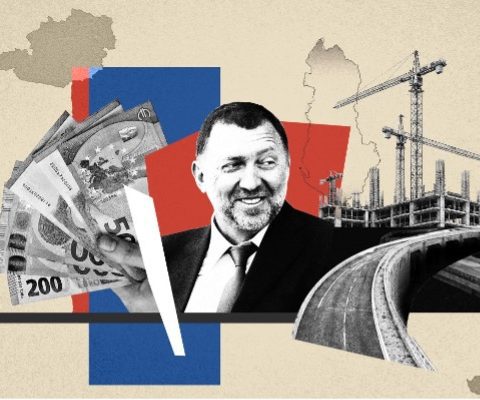
How a Sanctioned Russian Oligarch’s Business Interests Reached Albanian Public Contracts
Change font size: - + Reset Millions of euros flowed to companies linked to Strabag while Oleg Deripaska remained a major shareholder, exposing gaps in Albania’s ability to identify who ultimately benefits
Albania’s Cash Boom Raises Money Laundering Concerns
Change font size: - + Reset Cash outside Albania’s banking system reached a record 5.6 billion euros, last month. Tirana Times, August 30, 2026 – The amount of cash circulating outside Albania’s

Vlora Airport Heads to Arbitration
Change font size: - + Reset Albania faces another potentially costly international dispute after losing several arbitration cases in recent years that have exposed the state to hundreds of millions of euros

Concrete, Cocaine and Corruption: Albania’s Fragile Growth Model
Change font size: - + Reset Albania’s Concrete Economy: How Construction Became the Country’s Dominant Growth Model Tirana Times, July 10, 2026 – A booming construction sector has made Albania an outlier

Austria Leads FDI, but Real Estate Tells the Bigger Story
Change font size: - + Reset Bank of Albania data show Austria topping first-quarter foreign investment flows, while property and construction continue to shape Albania’s FDI model. Tirana Times June 25, 2026