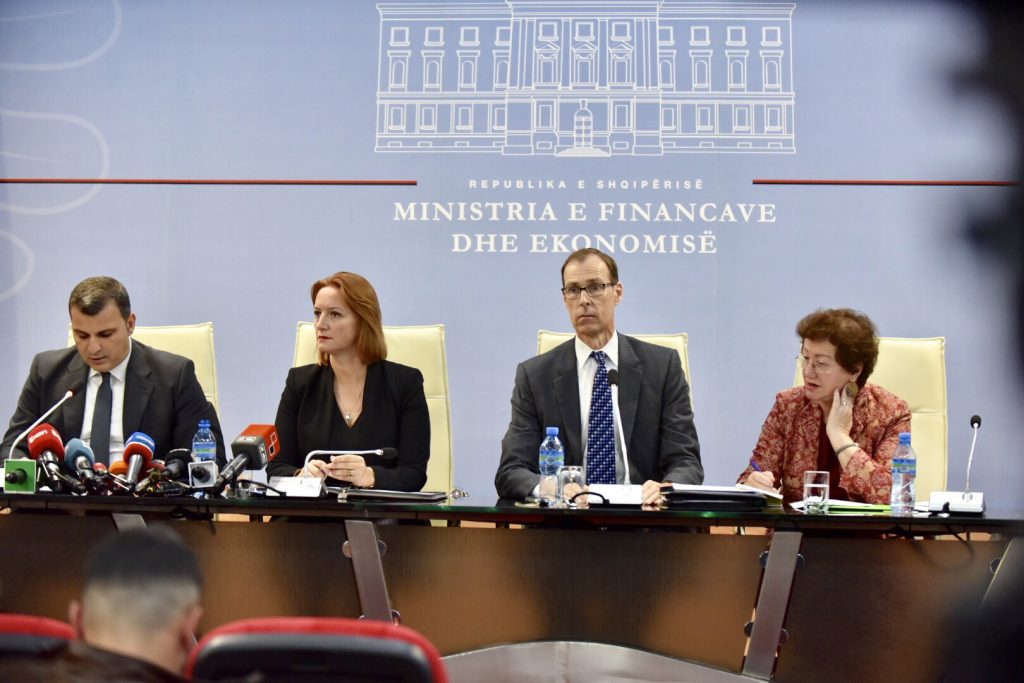
TIRANA, May 7- The International Monetary Fund (IMF) mission in Albania conducted a visit in Tirana with country mission leader Jan Kees Martijn for the second Post-Program Monitoring (PPM) discussions during April 26 to May 6. Martijn insinuated that as the public debt is not decreasing and overdue liabilities are increasing, the Albanian government appears to have no more means to improve the situation.
Martijn said that discussions with Albanian authorities focused on the weak points and the risks that threaten the country’s economic growth. He said Albania’s economic prospects are favorable, but this year will be more moderate. The economy will grow by only 3.5 percent in 2019 and in the medium run by about 4 percent.
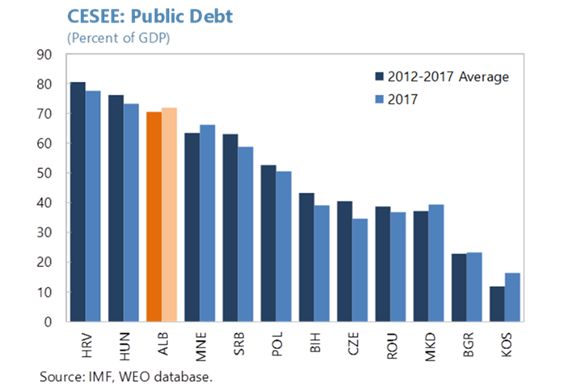
The fiscal deficit has decreased, but it is expected to reach 2.5 percent. The deficit will rise from paying back arrears, but also from weaknesses in revenue. The public debt in 2018 was 69.9 percent, including arrears, but is expected to decrease this year. The government reported that Albania’s debt was 67.1 percent at the end of 2018. The government does not include arrears on debt calculation like the Fund does.
The IMF representative noted that fiscal policy has little room to cover the arrears and obligations that arise from Public-Private Partnerships (PPPs). Martijn urged authorities to reduce the risks from PPP concession contracts through recent legal changes and suspend unsolicited proposals.
“We recommend reducing fiscal risks. Specifically we think corrections should come from fiscal revenue, as the costs can not be lowered further,” said Martijn in a press release.
Some other notices and suggestions from IMF and Martijn regarded a necessary immediate action to reduce arrears, VAT reimbursements on time, and the stock to be settled as soon as possible. Debt management should be improved and the reinstatement of 3 and 6 month short-term bond issues were also recommended. The IMF added that reforms should be fostered for the creation of an internal liquidity market. Another mentioned point was that authorities need to further reforms in the energy sector as limiting fiscal risks requires improved administration of energy companies. Also further measures are needed to reduce the risks arising from the financial system, by implementing the legal framework on bankruptcy.
During the press conference Minister of Finance and Economy Anila Denaj said that the government is creating steps to minimize the risk of PPP contracts in line with the medium-term framework, adding that state enterprises are being monitored and that this year will clear all arrears. She said a broad consultation process for the fiscal package including IMF assistance is being sought, as further improvements on the risk analysis will be sought.
Governor of the Bank of Albania (BoA) Gent Sejko on the other hand said that the macroeconomic balances of the Albanian economy have improved. The increase in wages and employment has influenced inflation growth which is at 2 percent, but demand is still insufficient to increase in the inflation target of 3 percent. Liquidity in the banking sector is abundant, credit interests are low and the exchange rate is stable. Non-performing loans are in a downward trend and the consolidation of the banking system will help lending.
BoA strengthened the monetary stimulus and mitigated fluctuations in the foreign exchange market during 2018. The country’s development perspective remains positive, fueling employment and wage growth. Sejko added that the balance of risks is at the bottom. Political tensions in the country and developments in the foreign sector increase the risks. He said that structural reforms must be ambitious, forward-looking and inclusive, and that BoA will be engaged in the development agenda.
PPM is a regular surveillance tool for countries with IMF credit outstanding above 200 percent of quota. PPM missions focus on vulnerabilities and risks to the repayment capacity to the IMF. At the end of the visit, the mission issued the following statement:
Risks to Albania’s capacity to repay seem limited
Although gross financing needs are fairly high due to the relatively short maturity of public debt, debt service, including to the IMF, is expected to remain well within Albania’s capacity to repay. IMF credit outstanding stood at 2.8 percent of GDP at end-2018. Albania’s strong payment record and macroeconomic stability also suggests that repayment risks are contained.
The economic outlook is broadly favorable
Growth is expected to moderate in 2019 but remain close to 4 percent over the medium-term. This year, growth is projected to slow to 3.5 percent, owing to the base effect of record electricity production in 2018 and the slowdown in partner countries. In the medium-term, activity is expected to be driven by a pickup in EU growth, increasing labor market participation, a gradual strengthening of exports including tourism, and the investments needed to close Albania’s large infrastructure gap. However, sustained development also hinges on improvements in economic governance, including in the rule of law and the fight against corruption. As inflation remains well below its 3 percent target, the monetary policy stance should continue to be very accommodative. Inflation is expected to converge slowly towards its target, as the output gap narrows and inflation in the euro area recovers.
However, there are important downside risks
Albania is significantly exposed to the increasing risks to growth in the EU, notably in its main trading partners. On the domestic front the vulnerabilities are mainly in the public sector. While the fiscal deficit declined in 2018, it is projected to widen to 2.5 percent of GDP in 2019 (including guarantees for new loans to the energy sector of 0.4 percent of GDP). This widening is driven in part by the planned repayment of government arrears which, by itself, is welcome. However, the deficit is also augmented by recent tax measures that erode the already narrow tax base, and introduce preferential treatment of additional sectors, including through reduced VAT and corporate tax rates. Moreover, there are risks of further revenue shortfalls, and expected losses in the energy sector due to lower hydropower production. Despite a decline in recent years, public debt continues to be high at 69.9 percent of GDP (including arrears) at end-2018, and it is projected to decline to 66.3 percent of GDP by the end of this year. At the current level of public debt and the deficit, fiscal policy has little room for absorbing or offsetting adverse shocks. Furthermore, there are fiscal risks from the increasing contingent liabilities, such as those related to public-private partnerships (PPPs).
Building on recent reforms to strengthen risk management and tax administration we recommend containing fiscal risks and creating fiscal buffers that require further fiscal consolidation via sustainable revenue efforts and stronger budgetary institutions. Specifically:
- We urge the authorities to use the favorable economic environment to improve the fiscal position by strengthening the revenue base. Specifically, a front-loaded fiscal adjustment to bring the primary surplus to 1.5 percent of GDP by 2021 should help build fiscal buffers, and ensure faster convergence of debt towards the 45 percent objective stipulated by the organic budget law. This adjustment should be achieved through higher revenues because Albania’s large infrastructure and human development needs argue against expenditure cuts. We recommend strengthening the tax system by reversing measures that fragment and weaken the tax base and by levelling the playing field for businesses. In this context, we welcome the authorities’ intention to develop a medium-term revenue strategy covering both tax policy and administration. This approach should help to build consensus on revenue goals and on a comprehensive package of tax measures for achieving them.
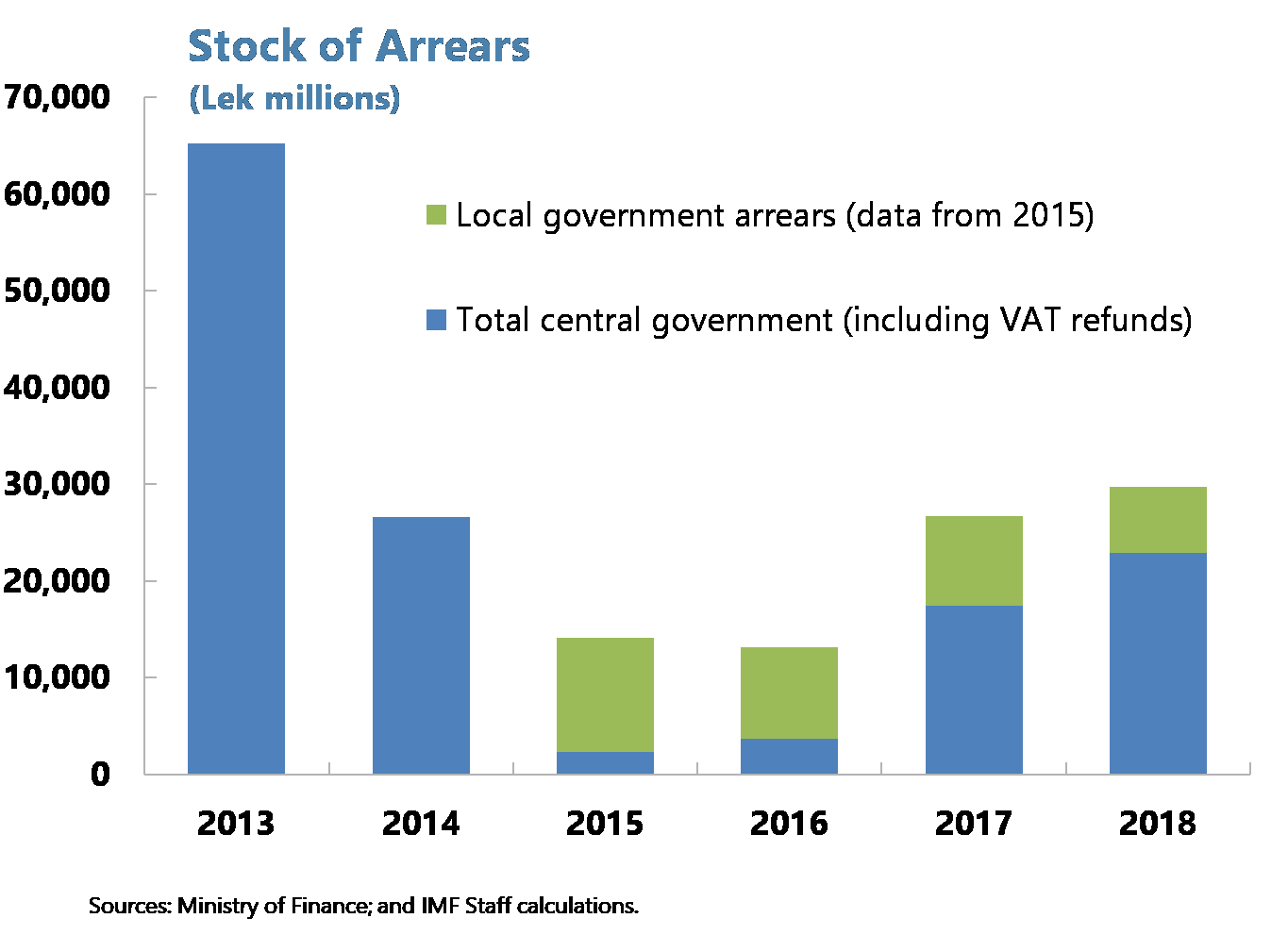
- Urgent action is needed to curtail the persistent public sector arrears. These arrears undermine the business climate and trust in the government. We urge the authorities to ensure the full and timely payment of all validated new VAT refund requests from now on, disconnecting them from corresponding revenue flows. And we welcome the authorities’ plans to repay the outstanding stock of VAT refund arrears as soon as feasible (and for the most part within 2019). It is also important to take swift measures to strengthen commitment controls for investment projects to put an end to government payment arrears, in particular by the road fund.
- Debt management should be improved including by resuming the issuance of short-term (three-months and six months) T-bills. This would be in line with the debt issuance strategy prepared in collaboration with the World Bank. While the authorities have made valuable progress in lengthening the maturity of public debt, this should not halt the issuance of short-term instruments. These instruments are necessary for cost-efficient cash-flow management by the treasury as well as commercial banks, for the development of secondary and hedging markets—which utilize the pricing at different segments of the yield curve—and for facilitating BoA liquidity management. Furthermore, while the increased reliance on Eurobond issuances may seem beneficial in favorable times, building a robust and liquid domestic debt market should be a priority as it helps mobilize domestic savings and reduces currency and rollover risks. In this context, it is critical to strengthen the Finance Ministry’s debt management capacity and to ensure good coordination with the BoA.
- We urge the authorities to make use of the recent amendments to the PPP law to limit the risks from PPP-related contingent liabilities and to ensure more consistent public investment management. This is important to protect the public finances and to help ensure value for money. We welcome the amendments that aim to improve risk management of PPPs. As the Finance Ministry embarks on its new role as gatekeeper for PPPs, it will be essential to make sure it has the capacity to assess the risks and costs of these projects, particularly in the pre-feasibility stage. In this context, the Ministry should have access to all contractual information from line-ministries (including for existing projects). Moreover, reversing the fragmentation of decision making in public investment management would greatly enhance cost-effectiveness. We also continue urging the authorities to abolish the use of unsolicited proposals for all PPPs.
- We strongly advise the authorities to revisit recent proposals for establishing the Albania Investment Corporation (AIC), to help avoid risks to the budget and to the integrity of the public investment management framework. The draft law would allow the government to direct individual investment decisions, which could make the AIC an off-budget spending tool that risks eroding fiscal discipline and circumventing public investment management processes. Instead, the framework should ensure that the AIC will operate on a commercial basis and at arm’s length of government. The law should affirm the independence of the AIC in operational decisions and in selecting individual investment projects. The AIC should also be subject to the Public Procurement Law.
- Containing fiscal risks requires improving the performance of the energy sector,which is financially weak and struggling with endemic arrears. The dependence of the sector on rainfall exacerbates its financial vulnerability and creates risks for the government budget (including this year). We encourage authorities to implement the restructuring plan for the sector prepared with World Bank advice to put the sector on a sustainable financial footing.
Further measures are also in order to contain the risks from the financial sector
The banking sector is finishing a consolidation process and is well-capitalized and liquid
We welcome the ongoing measures by the BoA to strengthen the regulatory and supervisory framework and implement Basel standards amidst the changes in bank ownership, and to continue cleaning up bank balance sheets with a reduction in non-performing loans.
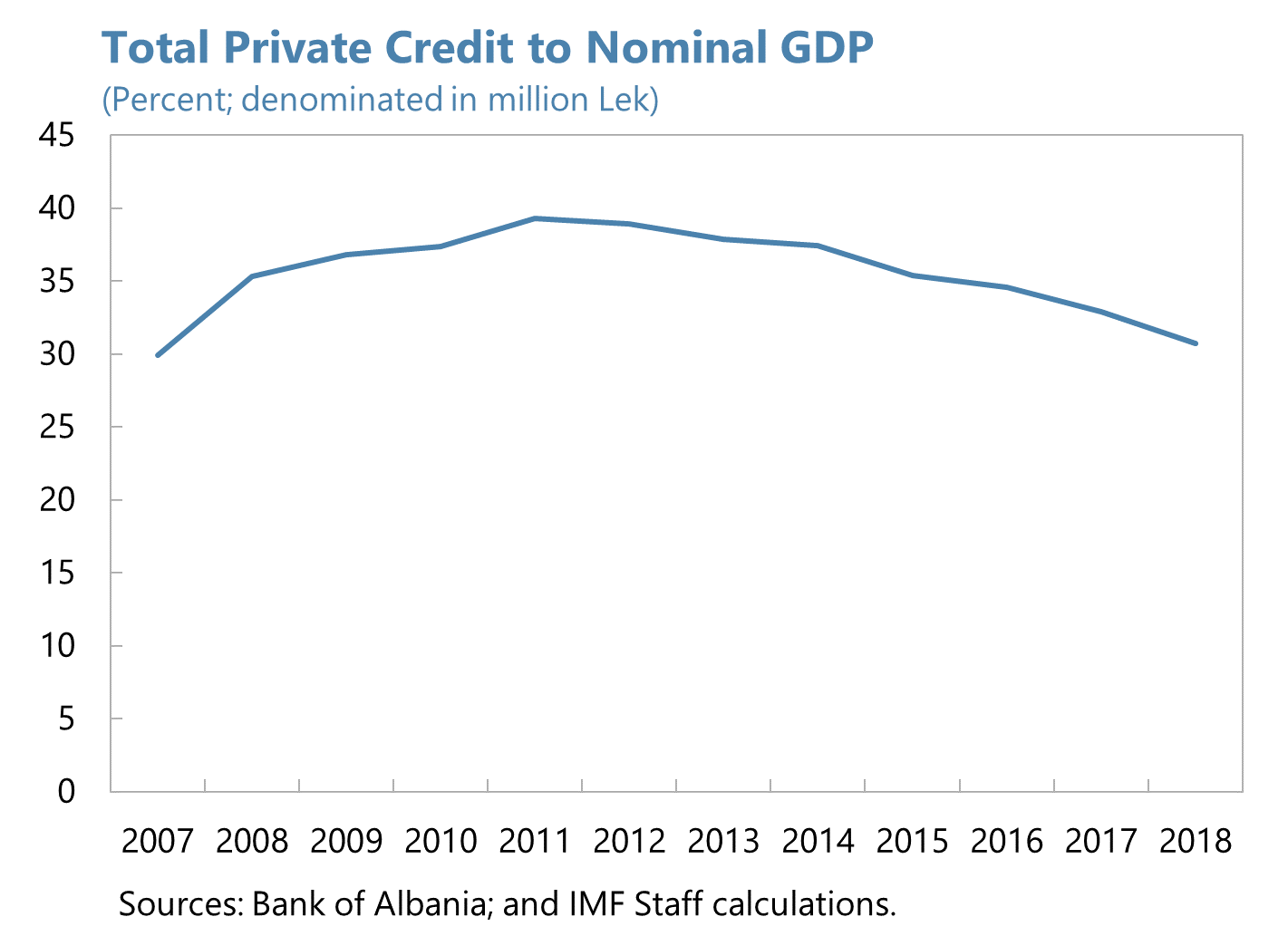
However, structural weaknesses in credit environment undercut the business climate (especially for SMEs) and hinder the transmission of monetary policy
Unlocking credit growth would require an ultimate resolution to the stalemate with bailiffs, full implementation of the insolvency and resolution framework, and government measures to support further de-euroization.
(*SME- small and medium enterprises)
The BoA has been very active in strengthening its supervisory and macroprudential tools
Regarding the latter, the BoA has aligned its regulations more closely with international standards, including on capital buffers and the development of a wide range of macroprudential indicators. The bank has also put in place more intensive inspection and supervision, both on-site and off-site, for banks with new shareholders. However, other banks, including systemically important ones, are inspected on-site only once every two years. We advise the BoA to increase the frequency of inspections to once every year to enhance its ability to identify risks stemming from large exposures and related-party lending in a more timely manner.
We also urge the authorities to continue reforms to address weaknesses in the AML/CFT framework, by implementing the action plans to address the deficiencies identified in the Moneyval evaluation report without delay.
(*AML/CFT- Anti-Money Laundering and Countering Financing of Terrorism)