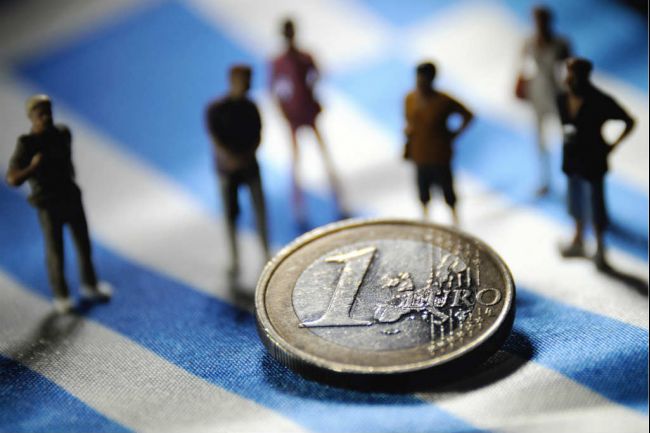
“If the situation in Greece gets worse, it could cause spillovers to the financial sectors of some SEE countries through a loss of confidence, deposit outflows, and possibly pressure on the currencies,” warns the IMF
TIRANA, May 12 – A possible Greek default on its debts and its withdrawal from the eurozone could affect Albania more through financial rather than trade links, the IMF has warned in a report.
Greek bank subsidiaries hold around 15 percent of total bank assets in Albania while the share of Albania’s exports to the neighboring country has dropped to around 1 percent of the GDP.
The spillover risks in the Albanian banking system are minimized by the fact that Greek bank subsidiaries in Albania are the largest funded by local deposits in SEE markets, including Bulgaria, Macedonia, Romania and Serbia, with the loan-to-deposit ratio at around 60 percent.
“If the situation in Greece gets worse, it could cause spillovers to the financial sectors of some SEE countries through a loss of confidence, deposit outflows, and possibly pressure on the currencies, particularly in countries with pegged (fixed) exchange rate regimes and high euroization,” warns the report about Southeaster Europe’s links with Greece.
While Albania applies a floating exchange rate, its high euroization rate remains a concern with euro-denominated loans at 60 percent and deposits in the single European currency at around 50 percent.
Financial links between Greece and SEE economies are more significant than trade channels.
“The banking sector exposure, though weaker than at the beginning of the financial crisis, is still significant in a number of countries. SEE subsidiaries of Greek banks account for 14 to 22 percent of banking sector assets. The loan-to-deposit ratios in Greek subsidiaries have also declined over time, reflecting weak domestic demand for loans and less reliance on parent bank funding. Higher nonperforming loans in some subsidiaries, however, pose additional risks,” says the IMF.
With the Greek eurozone exit edging closer as markets expect Athens to default on its debts, Albania’s central bank has assured it is prepared on every possible scenario.
“The Bank of Albania has been analyzing for a long time all possible scenarios in order to be prepared in case Greece exists eurozone,” central bank governor Gent Sejko has said.
The governor says the Albanian economy has already handled the major impacts of Greece’s six-year recession with a sharp decline in remittances from around half a million migrants in the neighboring country and a sharp cut in trade exchanges, especially exports.
“Greece has a high level of foreign investment in Albania but Albania’s exports to Greece are low at only 3 percent, which is a factor showing that we are somehow immune economically,” said Sejko.
The central bank governor has also assured the three Greek bank subsidiaries operating in Albania are liquid and well capitalized and have a capital adequacy ratio of 17 percent, well above the central bank’s regulatory minimum of 12 percent.
“We have been monitoring so that Greek banks are not exposed to their home country and parent banks. These banks are licensed and operate in Albania as independent banks and any deterioration in the Greek economy would not have any real and powerful impact apart from confidence factors,” added Sejko.
Experts say a possible exit of Greece from the Eurozone would also affect Albania, where the neghbouring country is one of the top trade partners, investors and source of remittances.
Analysts in Albania warned last December just before leftist Syriza party formed the new government, Greece’s return to its old drachma currency would have positive impacts in the short run because of the transfer of savings by Albanian migrants there but negatively affect remittances in the long run because of a weaker drachma.
Ardian Civici, an economy expert, says Greece’s eurozone exit would favor Albanian imports from Greece but damage Albanian exports to the neighboring country.
Greece, which is Albania’s second top trade partner and the largest foreign investor, escaped its crippling six-year recession with two consecutive positive growth rates in the second and third quarter of 2014, but experts estimate that it will take years for Greece to recoup the economic ground during its worst-ever recession that has made its economy around a quarter smaller compared to the onset of recession in summer 2008.
Neighboring Greece, whose position as Albania’s second top trade partner sharply weakened during the past six years, registered a surprise increase in foreign direct investment in 2013 with its FDI stock exceeding 1 billion euros, ranking the top foreign investor in Albania, according to annual Bank of Albania data.
Greece’s unemployment rate has climbed to 25 percent with youth unemployment at almost 50 percent and the country’s public debt stands at 175 percent of the GDP.
Greece was forced use an emergency account to meet deadlines in paying the IMF Euro 750 million this week.
Greece, whose finances are running so slow that it has had to ask public bodies for help, has until the end of June to reach a reform deal with its international creditors.
The eurozone is insisting on a rigorous regime of reforms, including cuts to pensions, in return for the bailout, but Greece’s anti-austerity Syriza-led government is resisting the tough terms.
Syriza has said it will not break its anti-austerity electoral promises, and that has raised the prospect of a referendum on any deal agreed in Brussels.
IMF assisting to contain default risks
The IMF is working with authorities in southeastern Europe to prepare in case of a Greek default, Jorg Decressin, deputy director of the Fund’s Europe department, has told The Wall Street Journal.
“We are in a dialogue with all of these countries. We are talking with them about the contingency plans they have, what measures they can take,” Decressin told WSJ as quoted by Greece’s Kathimerini.
Several Greek lenders are active in Bulgaria, Romania, Albania and Serbia.
According to the report, the IMF has requested local officials to make sure that subsidiaries of Greek banks have enough assets that they can exchange for emergency financing at their own central banks and that there are adequate deposit-insurance funds.
“It would be foolish for anyone in the policy world not to be worried at this stage,” Decressin said.
Greek banks account for less one-fifth of Albania’s banking system.
NBG Bank Albania, a subsidiary of the National Bank of Greece, holds 3.3 percent of the total assets in the Albanian banking system. The two other Greek banks operating in Albania, the Tirana Bank part of Piraeus Bank and Alpha Bank Albania, part of Alpha Bank, hold 7.4 percent and 5.9 percent respectively, according to an IMF report.
The share of assets held by Greek bank in Albania has dropped from an estimated 25 percent in the pre-crises years to around 18 percent.