TIRANA, Jan. 11 – The language law that predicts the official use of Albanian in all Macedonian state institutions that have public functions was approved in the Macedonian parliament today with 69 votes pro it and none against.
One of the country’s biggest party’s lawmakers, the Internal Macedonian Revolutionary Organization – Democratic Party for Macedonian National Unity (IMRO-DPMNU), did not participate in the vote.
Instead, it was passed by a double majority, meaning it obtained the necessary level of support by most MPs belonging to ethnic minority groups as well as MPs generally.
The law has been a parliamentary debate since September, but it could not be passed last year due to the lack of quorum. It was cooperating on this law that brought about the coalition between Macedonia’s other major party, the Social Democratic Union of Macedonia (SDUM) and the largest Albanian political party in Macedonia – the Democratic Union for Integration (DUI).
The issue has been a matter of controversy outside of the parliament as well. The opposition warned that it would present a number of amendments concerning the law, while the IMRO and a big part of the country’s civil society suggested a public debate with experts of the field, convinced the law was in need of at least some corrections.
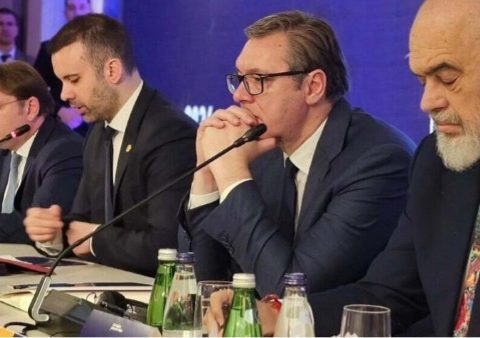
Prime Minister Edi Rama released a tweet some moments after the news was made public, saying the approval of the Albanian language in Macedonian parliament is a “historical achievement for Albanians, which in turn strengthens and makes Macedonia more democratic.”
Macedonia’s opposition, however, along with a big part of the country’s population, says that using Albanian will only deepen the country’s ethnic gap. For this reason, the IMRO voted in the past against the law that will supposedly turn Macedonia unconstitutionally into a bilingual state.
The law contains 25 articles and predicts that all judicial organs of the central executive power, institutions, public agencies, organizations, directives, commissions and judicial persons should use the Albanian language nationally, as opposed to only in the areas where Albanians make up for 20% of the population.
This new provision is seen as the last legal remaining position coming from the 2001 peace deal that brought the armed conflict between Albanian insurgents and Macedonian forces to an end. However, the law cannot be fully passed until President Gjorge Ivanov signs it and Ivanov has said he will not be signing anti-constitutional legislation.
Rama was accused in the past of meddling with Macedonia’s affairs and launching the so-called “Tirana platform” – a list of demands put forward by ethnic Albanian parties in the country. Rama’s replies to these accusations was urging Macedonia to respect the Ohrid peace agreement by pointing out Albanians are not a minority in the country, but an ethnicity.