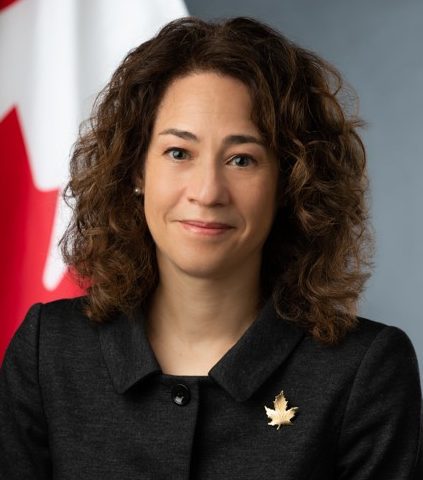
Addressing a conference on Greek-Albanian relationships, organized last month in Albania, Antigone Lyberaki, Professor of Economics at the Panteion University in Athens, brought not only a thorough economic perspective but a new and refreshing voice. Her speech brings a completely scientific and rational approach to the economic aspect of the immigration issue. Thanking the author for her courtesy, Tirana Times brings the full text in this issue:
“In talking about relations between neighboring states, I will start with an anecdote: In the late 1980s, at a time when economic good news was very scarce in Greece and news bulletins were full of problems, a radio commentator, after listing the Greek economic problems of that day, went on to say: “And now for some good news: Inflation in Turkey has risen”. At that time there was an unspoken assumption that relations between neighbors were what we economists call “A Zero Sum Game”. What one side gains, the other side loses. And, what one side loses, the other side gains.
Now, thankfully, very few people subscribe to this view of international relations. Interdependence means that relations are positive sum game, where it is in the interests of both sides that the other side should do well.
But how positive is it? In Spain, some 8% of the population (3.7 million people) are immigrants. A report written by the Prime Minister’s main economic adviser (Miguel Sebastian) says 30% of Spanish growth in the past 10 years and 50% in the last five has been thanks to immigrants. The report says “immigrants have contributed to the creation of 50% of new jobs and have contributed net 23 billion euros to the Treasury every year.
Yet, and this is the paradox, the thing most often mentioned in the press is how Spain tries to limit immigration with naval patrols in the Atlantic and repatriation deals with African countries.
But why mention Spain? My research has shown that an equally positive effect has been in operation in Greece. Some IMF calculations concur with this. The example of Spain, and the analysis of Dr. Sebastian, only serves to show in a neutral manner that the Greek and Albanian case is no exception.
However, the contrast with Spain serves to illustrate another vital point. Spanish immigration is composed of people from a large number of countries -from North Africa, from South Saharan Africa, from Latin America, some from Eastern Europe. No one country dominates and hence what happens in the countries of origin is of limited impact to the Spanish economy.
Take Greece and Albania. The overwhelming majority of immigrants in Greece are Albanians. Similarly, immigrants to Greece form a substantial proportion of Albanian emigration. These labor flows are complemented with trade in both directions and lately, by substantial outflows of capital from Greece to Albania. Greece and Albania, therefore, have a potentially very dense network of interactions which span the totality of economic relations. That is an important element of the difference with Spain.
The potential of the positive sum game between Greece and Albania is much larger than that between Spain and source countries. In a paper with L. Lambrianidis and other colleagues, we have shown that immigrants are well above the poverty line and their contribution to poverty and inequality is insignificant. They display considerable occupational and social mobility. Their housing conditions improve with time as their income. After an initial period of difficulties, an increasing number of immigrants start up their own business. About trade flows, the research points out that Greece’s trade relations with the Balkans increased very rapidly after 1990, most notably Greek exports. This alleviated part of the pressure of diminishing exports towards Greece’s main trading partner, the EU. As far as Direct Foreign Investment is concerned the expansion of Greek enterprises abroad is very much a recent phenomenon (last 15 years). Although the available data do not give a very accurate picture, our estimate by the end of the 1990s was that more than 80% of Greek Direct Foreign Investment projects in the area were concentrated in three countries (Bulgaria, Albania and Romania), all of which are also source countries of emigration to Greece.
Our main argument was that these three trends are not only linked but also that they are mutually reinforcing. Flows of investment, commodities and people create important mutual externalities, both at the micro -i.e. the firm- level, and at the macro level due to multiplier effects and increasing synchronization. Re-establishment of historical trading and economic patterns is part of a process of re-integration of the Balkan region. After more than half a century of enforced separation, the Balkan are gradually becoming a unitary economic space. Trade, investment and people movement all contribute to this process.
One can talk about these things, the potential and real achievements of economic cooperation, for a very long time. However, the point I want to make in this audience is different and is related to the Spanish paradox with which I began my talk.
As in the case of Spain, and perhaps more so in the case of Greece because of the density of economic ties, what we are essentially seeing is the possibility of further economic benefits being limited by fears of social or cultural reaction. Better understanding and greater confluence of values can be translated into hard economic gains. This observation is borne out by research done by Migration Policy Institute in Washington. In comparing the economic effects of migration in various host countries, they found that societies exhibiting greater appreciation of immigrants’ contribution, ended up with greater economic gains and less problems. Whereas, societies locked-in xenophobic attitudes and perceptions, ended up with fewer economic benefits from migration and bigger problems.”
Antigone Lyberaki, Professor of Economics, Panteion University, Athens. Speech delivered in the first panel of the conference “Greek-Albanian relationships”, organized in Tirana by the Institute for Peace and Communication on November 18, 2006.