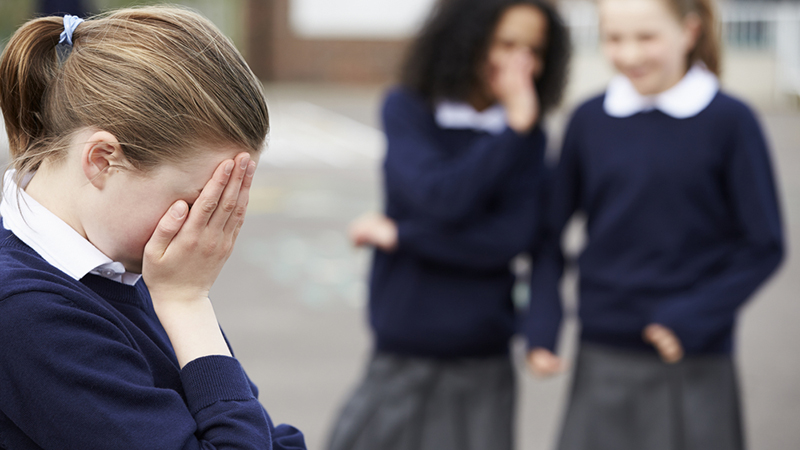
TIRANA, May 4 – At least one out of five pre-university students in Albania has suffered bullying with psychological, verbal and physical bullying as the most common forms, a nationwide survey has shown.
The survey conducted in 141 schools in all 12 regions of Albania showed 20 percent of Albanian students in all levels of pre-university education from the 4th to 12th grades are involved in the phenomenon of bullying.
“Some 45 percent of affected students claimed psychological bullying, 37 percent verbal one and another 33 percent physical bullying as the most widespread forms of the manifestation of this phenomenon,” showed the survey. Conducted as part of the joint EU/CoE action “Fighting bullying and extremism in the education system in Albania,” thousands of students, teachers and parents were interviewed in the survey conducted in the first quarter of this year.
About three-quarters of teachers said they did not get any training on such issues and a considerable number claimed uncertainty on dealing with such controversial cases. The overwhelming majority of teachers and parents suggest the most effective way to address bullying would be an anti-bullying school policy and continuous training of the teachers and school staff to prevent and deal with these cases.
Teachers believe that the most effective strategies to prevent extremism in schools are discussions with students on the consequences of violent extremism, teaching students conflict resolution techniques including mediation and informing parents and teachers to recognize early signs of extremism and radicalization.
Albanian psychiatrist Anila Hashorva says childhood bullying can have long-lasting effects during adulthood.
“We cannot continue to ignore bullying and treat it as something transitional, harmless, inevitable and part of growth. We should change this mentality and accept that this is a serious problem both for the individual and the whole society because what happens at childhood has consequences during adulthood,” says Hashorva.
“It has now been proved that bullying is accompanied with serious problems of physical and mental health, including self-destructive and aggressive behavior as well as psychopathic disorders. The long-terms effects are present for several decades in adulthood,” says the psychiatrist.
“There should be advising and assistance by mental health workers for every case of bullying. Awareness should also be raised among teachers and parents. School psychologists should actively work with every child and consulting the psychiatrist should not be a taboo,” she adds.
Cyber bullying, or using electronic technologies in order to bully another person through the internet is becoming more common among children and youth today even in Albania.
The United Nations Children’s Fund, UNICEF, in Albania also says violence remains a daily reality for many children and teens in Albania, regardless of their age, gender, economic and social circumstances, culture, religion, ethnicity or abilities. Violence takes place in all contexts, including environments where children are supposed to be safe – at home, in schools, in care and justice institutions.
Two-thirds of children have experienced psychological violence like shouting, name-calling and threatening, and 48.42 per cent have experienced physical violence, surveys show.