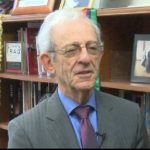
Interview of the Ambassador
of Spain to Albania,
H .E Dr. Manuel Montobbio
Exclusively to Tirana Times
TT: Spain holds the Presidency of the Council of the European Union at a time when the Lisbon Treaty is in force. What are the changes in substance and in the structure as far as the functionality of EU is concerned and could you briefly summarize the priorities of the Spanish EU presidency?
Innovating Europe. That is precisely the title of our EU Presidency’s program. We have new global challenges, a global economic crisis, a new European Parliament and a new European Commission, and, at the same time, a new European Union entering into functioning through the application of the Lisbon Treaty, with new institutional figures, such as the President of the European Council and the High Representative for Foreign Affairs and Security / Vice President of the Commission and Chair of the EU Foreign Relations Council, Baroness Ashton. One of the key innovations of Lisbon Treaty is the European External Action Service, whose design is being negotiated and should be ready in April. Thus our Presidency takes place in a foundational institutional moment, and therefore the putting into practice of the new institutions and competencies established by the Lisbon Treaty constitutes a crucial challenge. A challenge with three purposes or strategic guidelines which orient the priorities, objectives and actions of our Presidency: to overcome the economic crisis and define a new economic strategy Europe 2020, which will substitute the Lisbon Strategy, pursuing a model based on economic, social and environmental sustainability, promoting also a common energy policy; to build Europe as a common space of security and fundamental freedoms and rights, paying special attention to equality between men and women and promoting a common migration and asylum policy; and strengthening Europe as a global actor for global governance based on peace, development, human rights, democracy and common responses to common challenges such as climate change, developing of the opportunities for strengthen international actorness derived from the Lisbon Treaty.
T.T. Which would be the attention of Spain towards the Western Balkans?
The Spanish Presidency is engaged to promote the advancement of the EU perspective of the Western Balkans, both at the regional and national level. Regionally, an EU -Western Balkan high level meeting will take place in May in Sarajevo, which is an occasion for the countries in the region to present a common approach to the European Union and an occasion to define a vision for our common future. We are also engaged to impulse the different national processes, such as enlargement negotiations with Croatia and with FYROM, as soon as the name issue is solved. Another challenge we are dealing with are pending visa liberalization processes in the region, a dossier we are conscious is extremely sensitive as well as practically and symbolically important for its citizens.
T.T. Which are the main processes for the advancement of Albania’s European perspective and what are the implications for it of the present political deadlock?
As I have explained in other occasions, Albania’s relations with EU and its advancement towards European integration are determined by three processes: the Stabilization-Association process and the accomplishment of the Progress Report recommendations; the process on the request for candidate status; and that for obtaining visa liberalization. The first one is the key, since advancement on it will determine the fulfillment of conditions for the other two and further progress towards EU integration. It requires not only electoral processes according to EU standards but also substantial advancement on rule of law and justice reform, stability and professionalism of Public Administration, and organized crime and corruption, questions which have been lately overshadowed by the debate and attention focused on the electoral process. On the present political deadlock, in relation to it the European Union has made very clear its position through the EU statement made public last Thursday which is a position consensuated by the Commission and all the Member States of EU: the European Union reconfirms the EU perspective for Albania, but if actions are not taken to overcome the present political deadlock, no further steps in the process conducing to make this perspective reality can take place, and therefore such deadlock has to be overcome by the Albanian political leadership, taking into account all implications of a continued impasse for collective national interests. In this sense, we welcome the process of dialogue conveyed by President Topi and we encourage Albanian political leadership to produce results out of it and to conclude agreements, including the constitution of the Parliamentary Investigatory Commission on the elections whose mandate respects both the principles of constitutionality and transparency, in due time, so that opposition enters into Parliament before the 6th of March and dialogue and consensus on the electoral process as well as on the other great challenge that Albania is facing for European integration, continues in the Parliament. We hope that the Albanian political leadership will be conscious of what is at stake and will show maturity and constructiveness to find points of encounter and agreements that may permit Albania advance on the mentioned process and may become an active for its credibility in front of the Albanian citizens, the European Union and the international community.
T.T. Albania became a member of the Barcelona Process on November 2007 and it is participating as a member State in the Union for Mediterranean, whose second summit will take place in Barcelona on 6th and 7th of June. Which are the challenges and opportunities for Albania?
I would say that is a challenge and opportunity to show its Mediterranean vocation and condition not only in words and papers but also through facts, proposals and proactive participation. I know also from Spain’s transitional experience that when you enter into an international organization or forum you did not belong to, at the begging you say how happy you are to be there and how historically important it is for your country, but as time passes you are not anymore in the Union for the Mediterranean: You are the Union for the Mediterranean and you are expected to contribute actively to what you want it to be. That is the Mediterranean challenge and opportunity for Albania during the next months.
Manuel Montobbio
Ambassador of Spain to the Republic of Albania
Manuel Montobbio de Balanz