By Anastasia Nazarko
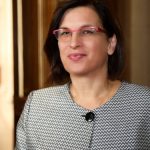
This week American financial veteran, Mark Crawford, sat down with Tirana Times to discuss his decades-long relationship with the Balkans and its financial potential.
TIRANA, Nov. 17 – Mark Crawford, an American veteran of Balkan financial initiatives, has had a relationship with Albania for almost as long as the country has been a transitioning democracy. Though he admits that his first knowledge of the small Balkan country first came through Sam the bartender in the American television show Cheers, Mr. Crawford has had a presence in Albania since 1993, when he arrived as a volunteer with a Christian charity organization.
“Some university friends of mine had been part of a Spring break mission to Albania in 1992. They recommended I also visit the country, since they believed it was a place where one had the opportunity to make a meaningful, positive impact. So I went,” Mr. Crawford remembers.
“But the Albania of that time compared to the Albania of today was dramatically different,” he adds. “Electricity outages were constant and people had to ration water. I remember one time we had to warm up our previously-cooked dinner over a candle.”
Though his initial visit to Albania was temporary, Mr. Crawford returned to the country in 1996 as an administrator with the Albanian-American Enterprise Fundנafter having received an MA in Economics from University College London and working for some time at his family’s brokerage firm in the United States. However, his arrival shortly before the fall of Albania’s financial pyramid schemes meant that his time in the country would be cut short. As social unrest spread throughout the country, Mr. Crawford decided to take a hiatus in Istanbul.
“At that time of unrest, I remember seeing my bosses suddenly hinting at ‘urgent business meetings abroad.’ I figured I should follow their lead and get out,” he recalls with a smile.
A few days later the American Embassy in Tirana declared an official evacuation.
The second evacuation of Mr. Crawford’s Albanian experience came just a few years later in 1998. Following the bombings of the American Embassies in Kenya and Tanzania, Albania was deemed a high-level threat, and many U.S. officials were evacuated. The Albanian-American Enterprise Fund moved its staff to Ohrid, where it continued to direct its operations within Albania.
In 2001, Mr. Crawford left the Albanian-American Enterprise Fund and responded to USAID’s call for assistance with opening a bank in Montenegro. The resulting bank was called Opportunity Bankدf which Mr. Crawford was CFO and later CEOנand soon became one of the most successful banks in the country.
“Sometimes the only thing you need to do to become a leader in the sector is keep the bank steady. When we first started, there were around four other banks that were at the head of the sector. But they were so volatileسometimes having great profit, other times losing it allشhat they ended up taking themselves out of the running,” notes Mr. Crawford.
Thus, after a successful 8-year stint as the bank’s leaderؤuring which Mr. Crawford also founded and became chairman of the American Chamber of Commerce in Montenegroشhe American financial veteran presided over the Austrian Erste Bank’s acquisition of Opportunity Bank.
While Mr. Crawford’s relationship with Montenegro is still present through this position as a partner for BDO, an accountancy network, he has now returned to Albania with his latest project: Aksioner International Securities Brokerage.
The company, which Mr. Crawford founded in January, 2011, aims to act as an intermediary for investors who want to take ownership or debt positions in local companies and for Albanian citizens who want to invest through global capital markets.
“Albania has a stock market (though nothing is listed on it) and the legal framework for a capital market system. We can recall that just after Communism the real assets of the country remained in state hands. Much of this has now been privatized via strategic bids done outside of a capital markets framework. This isn’t a bad option in terms of attracting strategic investors but it has left average Albanian citizens without a developed mechanism for becoming involved in the ownership of the country’s assets. Ultimately, the result is that the growing wealth of Albanians is sitting in their homes or at banks earning less than it could get in capital markets,” reasons Mr. Crawford
“Typically, the Albanian investor operates on a limited investment playing field, using excess funds to buy a home, or deposit funds in a local bank account. These are normal first steps for an investor. However, most Albanians see that investing all of their excess funds into real estate or leaving all of their funds in an account with a nominal interest margin is not attractive.”
As such, Aksioner International Securities Brokerage provides interested clients with opportunities to invest in stocks in markets around the world. Aksioner also works with institutions and can help companies raise money in the local market.
“Essentially, someone with a good idea could walk into our office and we could help equip them with the funding they need to get started,” remarks Mr. Crawford.
Yet, with regard to the future of financial markets, Aksioner’s founder is less optimistic. He fears that within the next 18 months there will be many significant changes that will arise as a result of the problems facing the European Union. Though Albania has managed to remain relatively insulated from the EU crisis until now, Mr. Crawford believes that the effects will reach the Balkan country as well.
“Albania’s banks have parent banks in European countries. So if the parent suffers, the Albanian sector may too. Anyway, who are two of Albania’s greatest trading partners? The two countries that are making headlines for their problems,” he commented.
Thus, he hopes the Albanian financial sector and its individuals take the necessary precautions to minimize the crisis effects in Albania, and ensure long-term stability.