
TIRANA, April 4 – The World Bank announced Wednesday it had published a report on Albania’s social insurance system, presenting its problems and forecast. The social insurance system in Albania faces many problems, not the least of which is an extremely high contribution rate, among the highest in Western Europe. The original design of the system was all-encompassing, covering the risks of old age, disability, death of the family earner, short term illness, maternity, unemployment, and health costs. These benefits were to be financed through payroll contributions, assessed on both employer and employee, but in differing degrees for different benefits. However, Albania, as many of the other transition countries, has seen an increased informalization of the labor force, which has led to limited revenue from the payroll contributions while it faces the burden of supporting several generations of elderly, most of whom have full pension rights. Albania has managed to avoid fiscal crisis in its social insurance system by severely compressing benefits and by transferring funds across the branches of social insurance. The compression of benefits has led to its own set of problems as individuals realizing that their benefits will be low regardless of how much they contribute, choose to declare lower earnings and spend more of their careers in the informal sector. At the same time, the Government has tried to raise the benefit level for the recipients of the lowest pensions, the rural pensioners, to equalize their pension levels with those of their urban counterparts. As a result, a number of inequities have arisen in the pension system with urban workers expected to pay large contributions in return for limited pensions, while rural workers pay little and receive smaller pensions, but still huge relative to what they paid. The current policy mix may not be tenable for the future. The Government has just reduced contribution rates in order to provide incentives to participate in the formal labor market. This policy reduces revenue to the pension system without addressing the benefit structure. Rather than maintaining the benefit structure, the Government has in fact enhanced benefits, raising urban sector pensions both directly and through the recalculation exercise currently taking place and raising rural sector pensions substantially. The Government is considering further cuts to the contribution rates and further benefit increases. Clearly, reducing revenues while increasing benefits will lead to fiscal problems sooner or later.
The Albanian Government currently finds itself at a crossroads. The current policy is leading to future fiscal deficits, poor benefits, and large percentages of the population exposed to social risks. The Government either needs to fix the social insurance system, removing the various disincentives which have crept into the system as a result of attempts to patch problems as they occurred, or it needs to abolish the system and focus fiscal resources on poverty alleviation measures. If the Government chooses to fix the social insurance system, the resulting system must be self-sustainable without the enormous Government subsidies provided today. The Government can then focus its fiscal resources on providing poverty relief for those not covered in the system.
The pension system is the largest element o f the social insurance system, both in terms of revenues and in terms of expenditures. As such, this paper focuses on the pension system. If the Government makes the decision to move toward social pensions and away from a contributory insurance pension system, it would be hard to justify maintaining the other branches of social insurance as social insurance. On the other hand, if the Government retains the contributory pension system, separate decisions may need to be taken on whether the other branches should continue as well and at what level of contribution and benefit.
The social insurance system in Albania while covering the risks of short term illness, maternity benefits, unemployment, and health costs as well as pensions, is largely focused on pensions. The bulk of the revenues are earmarked for the pension system and the bulk of the expenditures are also targeted toward pensions. However, there are significant flaws in the current design of the pension system, which evolved as a patchwork of attempts to fix previous problems. The Government now finds itself at a crossroads in terms of pension design. The Government could either do a fundamental restructuring of the current system, eliminating many or most of its flaws, but this would still leave a system which imposes relatively high payroll costs and leaves large segments of the population unprotected against various risks. On the other hand, the Government could choose to abolish the contributory system, eliminating the high payroll costs, and focus on providing poverty alleviating benefits against the many risks that an individual might face, but this would not provide vehicles for substantial consumption smoothing. Whatever the Government decides with respect to the pension system will have implications for the other branches of social insurance. Most of these other risks could either be covered by the Government at a poverty alleviating level or could be covered directly by employers if there were no contributory pension system. On the other hand, if the contributory pension system is to continue, each of these insurances needs to be evaluated to determine the appropriate level of contribution required and some, if not all, could continue.
Report forecasts problems for Albania’s social insurance

Change font size:
Recommended Articles


Latest from Business & Economy
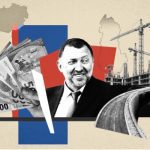
How a Sanctioned Russian Oligarch’s Business Interests Reached Albanian Public Contracts
Change font size: - + Reset Millions of euros flowed to companies linked to Strabag while Oleg Deripaska remained a major shareholder, exposing gaps in Albania’s ability to identify who ultimately benefits
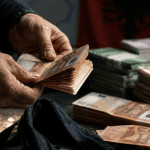
Albania’s Cash Boom Raises Money Laundering Concerns
Change font size: - + Reset Cash outside Albania’s banking system reached a record 5.6 billion euros, last month. Tirana Times, August 30, 2026 – The amount of cash circulating outside Albania’s

Vlora Airport Heads to Arbitration
Change font size: - + Reset Albania faces another potentially costly international dispute after losing several arbitration cases in recent years that have exposed the state to hundreds of millions of euros

Concrete, Cocaine and Corruption: Albania’s Fragile Growth Model
Change font size: - + Reset Albania’s Concrete Economy: How Construction Became the Country’s Dominant Growth Model Tirana Times, July 10, 2026 – A booming construction sector has made Albania an outlier

Austria Leads FDI, but Real Estate Tells the Bigger Story
Change font size: - + Reset Bank of Albania data show Austria topping first-quarter foreign investment flows, while property and construction continue to shape Albania’s FDI model. Tirana Times June 25, 2026