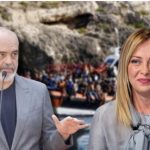
The approaching presidential and general elections, combined with the current razor-thin majority, force Albania’s political parties to carefully calculate their bets.
Tirana Times
TIRANA, May 17 – Opposition Socialist Party leader Edi Rama and Ilir Meta of the Socialist Movement for Integration met for the first time recently since the June 2009 elections that saw Meta, once a Socialist prime minister, become kingmaker for the current Democratic Party-led government, which has been in power ever since through a coalition with SMI.
The meeting is part of political calculations on all sides of political spectrum over the election of the new president in parliament later this summer and the parliamentary elections scheduled for 2013, analysts say.
Rama and Meta have had an acrimonious relationship for a long time, and the Socialist electorate holds largely negative views of SMI who they see as propping up the power of Prime Minister Sali Berisha.
Meta’s reputation has also suffered heavily due to corruption-related trial stemming from being secretly filmed by one of his own SMI colleagues, Dritan Prifit, for allegedly taking bribes to grant a concession to a preferred company. Meta was found innocent in court for lack of evidence, but the Albanian public opinion in general and opposition voters in particular haven’t changed their minds about the former deputy prime ministers’ corruption-related allegations, analysts note.
Rama: ‘Willing to meet anyone’
Rama says he’s “willing to meet anyone,” including the prime minister to discuss topics important to the country’s EU integration process like electing an impartial president that will guarantee free and fair elections.
“The goal of today’s meeting was part of our willingness to communicate with all the parties represented in parliament and to explore the possibility of a consensus process in the election of the President of the Republic. And those who are surprised or angry about my meeting today with Ilir Meta Šand later on with Sali Berisha, I tell them that when we speak of dialogue it means dialogue with opponents too,” Rama told journalists outside a Tirana hotel where he met with Meta. “Albania now needs a president who can guarantee this great challenge of getting EU candidates status, it needs a president who can guarantee the independence of the institutions under him and the activities of the constitutional institutions, נit needs a president that can be a guarantee for all Albanians in relations to the next elections.”
But analysts note that the meeting between Rama and Meta had more to do with the 2013 general elections, than the presidential election this year.
“The head of the opposition is trying to get votes by flirting with anyone that comes in front of him just so power is not lost. Rama has decided to pay a heavy tax to get into power in 2013, much heavier than the one he refused to pay in 2009,” writes analyst Skender Minxhozi in the Albanian daily Shqip.
Meta vying to regain leftist supporters
Meta is not showing up his cards yet. He and his party representatives have insisted that they are discussing things with the opposition only when it comes to the election of a new president, and that the governing coalition is solid.
“It’s important that there be dialogue among all the parliamentary parties and beyond with the key goal of fulfilling key integration goals,” Meta said after the meeting with Rama.
Prifti, the former SMI member of parliament who became an independent after accusing Meta of corruptive affairs told an Albanian television show that Rama stands to lose more by warming up the Meta, noting that the Socialist electorate cannot forget the deaths of four opposition protesters in the Jan. 21 2011
“Jan. 21 as a revolt against government corruption,”Prifti said. “Rama loses votes by meeting with Meta.”
Prifti, who himself came under investigation, adds that Meta came to the coalition with votes from the left side of the political spectrum and is now trying to cozy up to the Socialists again so he can recuperate some of the left-wing electorate he lost by partnering with the center-right government of Prime Minister Berisha.
But more importantly, he added, these moves could put a stress on the current coalition and the election of the president could end up in a 70-70 vote tie.
A thin majority
Because the majority in the Albanian parliament is very slim, opposing parties sometimes rely on persuading MPs from the other side to jump ship. It has happened in the past, but grave accusations were made public this week, as Rama told the media the Democratic Party and Prime Minister Berisha had tried to bribe two Socialist lawmakers ahead the voting for the new president next month.
The ruling Democrats maintain that, based on amendments to the constitution passed with the blessing of the opposition in 2008, they have the right to select a candidate from their own ranks.
The new president in the 140-seat needs to get three-fifth, or 84 votes, in the first three rounds and only 71 votes in the next two rounds. The question at this point is whether Berisha can get those numbers.
SMI and Meta has said that the new president should be a figure of national unity and that means it should be elected with a general consensus. That means that their four votes, Prifti as an independent, may not vote with the Democrats.
Meta’s meeting with Socialist leader Rama has created a chilling effect on the coalition as served as a warning to Berisha, analysts note.
Berisha has 68 Democratic MPs, one Republican, two of the Cham community, but he could also face descending votes in his own parliamentary group from MPs who may affiliate with splinter New Democratic Spirit Party created recently.
Other than the former Socialist leader Fatos Nano, Democratic Alliance leader Neritan Ceka and Parliament Speaker Jozefina Topalli, there have been no other strong candidates still not formally running for the post.
The process of selecting a new president wills in all likelihood fuel more such accusations as both sides remain deeply divided over the process, analysts note.
The Socialists say that new head of state should be a consensual candidate, in the spirit of the constitution, which defines the President as “a figure of national unity”.
‘Presidential election, a first test’
Danish European Affairs Minister Nikolai Wammen made it clear Wednesday, while visiting Tirana, that presidential election is the first test for the country’s democratic progress and its fulfillment of the 12 key recommendations from the European Union on its candidate status request. Denmark heads the EU’s presidency this first half of the year.
Wammen said that despite some very encouraging signs noted in Tirana, the country still needed to do a lot in the integration process. It has 12 key recommendations in which Albania should make concrete progress.
“Presidential election will be the first test for Albania’s progress, for its own progress and for the next parliamentary elections to be held next year,” said Wammen at a news conference with Albanian Foreign Minister Edmond Haxhinasto.
Wammen said that Europe would closely follow the process of the presidential election in Albania.
Opposition leader Rama repeated that the premier was not expressing any sign of putting the country’s interests above those of his own. Rama said that the prime minister was deaf to their call for dialogue on the new president.
Berisha on his side has brushed this issue away, calmly, saying there is still time to come when the topic will be the focus of attention, likely after his return from NATO’s Chicago summit.
OSCE Ambassador Eugen Wollfarth said that the political parties now have the chance to demonstrate fully that they can cast aside partisan self-interest and, instead, agree on a candidate who will perform the duties of the head of state in the most dignified manner in the national interest.