
TIRANA, March 29 – Rehabilitation of the Skanderbeg Square turned into a hot political issue sidelining the attention of common Albanians from other political issues of the day.
The central government of Prime Minister Sali Berisha started to take steps towards rehabilitating the square on its own at a time when the Tirana city hall was saying that it would do so in a matter of days.
Consequently city hall started rehabilitation work on Sunday, ahead of time, after complaining that the central government was not making the ex-appropriation steps needed for the project.
The project is funded by Kuwait.
All these steps reminded Albanians of the fight between the government and Tirana city hall four years ago at the Zogu I Zi intersection.
The government also blocked the work there. The town hall complained at court which decided the central government was wrong and that it should also pay a certain amount of money to the city hall.
Nothing followed up in that case but at the moment the two institutions, which represent the two main political parties in the country – Democratic Party government and main opposition Socialist Party running Tirana city hall – are determined to likely resume the same fight.
That also seem to be a tool to attract the attention away from the political deadlock that has blocked the parliament over the June 28 parliamentary election transparency.
Lawmakers from the opposition Socialist Party have ended their parliament boycott but insist they will attend parliamentary sessions only when it covers the transparency of elections and skip the rest.
Last weekend the opposition Socialists said they will resume protests in April to culminate with a big one April 30 in the capital Tirana.
In a counter-reaction the governing Democrats said they would hold their own rally a day later.
The European Union, which Albania has said it wants to join one day, has warned the country’s political crisis may hurt its integration efforts.
The Socialists want the parliament to investigate allegations of fraud in the general election last June, and orders a partial re-count if required. Conservative Prime Minister Sali Berisha has ruled out a re-count.
The Socialists turned down a commission created by the parliament earlier in March without their consent as it did not agree on the recount.
An investigative commission was approved by parliament with only 71 votes in favor from the Democratic Party led majority; however it does not have the power to reopen the ballot boxes and has been boycotted by Socialist MPs.
Although the commission had been in the works for weeks, the parties failed to agree on whether it will be granted permission to recount the election ballots and used a marathon hearing on Thursday and Friday to exchange jibes with each other.
Albania has applied for the EU candidate status. It joined NATO last year.
The international community re-appealed to the political parties to achieve compromise as such partisan commissions would not help find a solution to the crisis.
The Socialist led opposition seeks the recount, arguing that complete transparency of the electoral process is necessary in order to avert fraud in the future – a constant problem over the last two decades as Albania emerged from the Stalinist regime of former dictator Enver Hoxha.
Meanwhile, the majority refuses the recount, contending that the courts have already denied the Socialists such a petition and that parliament would be overstepping its power and taking on the role of the judiciary if it moved to recount ballot boxes.
The Socialists boycotted the parliament for more than six months and returned in February only after direct pressure and mediation from the Council of Europe and the EU agreeing only to discuss the investigative parliamentary commission.
They are now determined to either ‘convince’ or oblige the governing Democrats to make a partial recount, or they will turn down the government through protests.
In fact, that does not seem so likely to happen due to the way the constitution dictates the removing of a government.
Every new prime minister should be able to create a government that secures 71 of the 140 parliament’s seats. At the moment Berisha controls 75 seats together with the small allies while the opposition Socialists have only 65.
Skanderbeg Square turns into a hot political issue

Change font size:
Latest from News
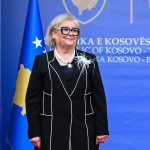
Kosovo’s New President Ends Political Deadlock, Opens a New Chapter
Change font size: - + Reset The election of respected academic Justina Shiroka-Pula averts another political crisis and highlights Kosovo’s tradition of female leadership and religious coexistence, while offering new prospects for
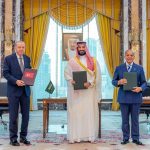
Mecca Defense Pact Signals Saudi Arabia’s Bid to Shape a New Security Order
Change font size: - + Reset The agreement with Turkey and nuclear-armed Pakistan strengthens Riyadh’s position as a central architect of regional security, while reflecting a broader shift toward a more multipolar
SPAK Brings New Charges Against Former Deputy PM Balluku
Change font size: - + Reset Tirana Times, August 07, 2026 — Albania’s Special Prosecution Office Against Corruption and Organized Crime has brought new allegations against former Deputy Prime Minister Belinda Balluku, widening
Milošević’s Language Returns to Serbia’s Government
Change font size: - + Reset Ethnic Cleansing Remark Tests Serbia’s Claim to Have Broken With Milošević A Serbian minister’s declared willingness to expel Kosovo Albanians has drawn condemnation across the region
Saudi Ambassador Meets Head of Albania–Saudi Parliamentary Friendship Group
Change font size: - + Reset Tirana Times, July 6,2026 – Saudi Arabia’s Ambassador to Albania, H.E. Turki bin Ibrahim Al-Madi, received Albanian MP Baldi Çomo, Chairman of the Albania–Saudi Arabia Parliamentary Friendship