TIRANA, March 28 – Albania continues remaining one of the first countries in the region to celebrate the Tax Freedom Day, known as the day you stop earning money for the government and start earning it for yourself.
A report published by local Altax centre shows the Tax Freedom Day for 2016 was marked on March 27, one day earlier than in 2015 but in the same 88 calendar days due to 2016 being a leap year. The findings come at a time when Albania’s total tax rate as a percentage of commercial profit of rose to 36.5 percent in 2015, up from 30.7 percent in 2014, ranking Albania among the countries with highest tax burden in the Balkans.
However, Tax Freedom Day came in exactly the same number of calendar days thanks to the economy growing by an estimated 2.6 percent in 2015 compared to sluggish growth rates of 1 to 2 percent from 2012-2014 and a pre-crisis decade of 6 percent annually. For 2016, the Albanian government and international financial institutions expect the country’s economy to accelerate to 3.4 percent.
Back in 2014, soon after Albania abandoned its 10 percent flat tax regime to shift into progressive taxation, Albania was the first regional country to mark the Tax Freedom Day on March 19 due to lower personal income tax for low and mid-wage earners but higher corporate income tax of 15 percent.
The two largest regions of Tirana and Durres, where about half of the country’s resident population is concentrated, provide 54 percent of total taxes although the Tax Freedom Day in these two areas comes in 100 calendar days, 12 days later than the national average, the report shows.
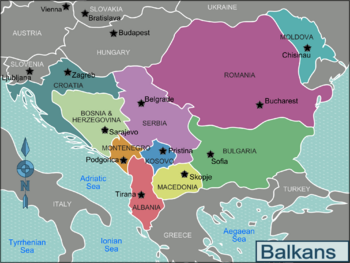
On March 28 Albania was the second regional country to celebrate Tax Freedom Day, the day when the nation as a whole has earned enough money to pay off its total tax bill for the year, after Kosovo’s March 27.
Tax Freedom Day in regional countries is set to be celebrated from April 5 in neighboring Macedonia, May 8 in Serbia and May 22 in crisis-hit Greece.
However, when it comes to the tax burden, Albania’s total tax rate as a percentage of commercial profit is among the region’s highest, lower only compared to Serbia’s 39.7 percent, Romania’s 42 percent and Greece’s 49.6 percent, all of which have much bigger economies.
Among regional competitors with a similar GDP, neighboring Macedonia has a 12.9 percent tax rate, which along with investment incentives is one of the key factors making it a front runner in the attraction of foreign direct investment. In 2015, the tax rate in Kosovo was at 15.2 percent, compared to Montenegro’s 21.6 percent and Bosnia and Herzegovina’s 23.3 percent.
Albania’s tax to GDP ratio is also among the region’s lowest at only 24.1 percent, unveiling high informality rates estimated at about 30 percent of the GDP and poor performance by the tax administration despite an aggressive nationwide campaign to tackle tax evasion launched in Sept. 2015.
FDI, mainly focused in the energy sector, accounted for 8.7 percent of the GDP in 2015, ranking Albania among the top performers.
Albania registered the highest increase in the total tax rate among 189 countries in 2014 when the rate of the corporate income tax increased by 5 percent to 15 percent and the property tax doubled, according to the 2016 Paying Taxes report published by the World Bank and the PwC audit firm. The report shows Albania lost 11 places to rank 142nd with a total tax rate as a percentage of commercial profit of 36.5 percent, up from 30.7 percent in the 2015 report.
Albania’s total tax rate is composed of 14.1 percent in profit taxes, 18.8 percent in labor taxes and 3.6 percent in other taxes such as municipal fees and vehicle and fuel taxes.
Since 2014, the corporate income tax and the withholding tax on dividends, rents and capital gains have increased by 5 percent to 15 percent, making the tax burden in Albania one of the region’s highest.
The high level of taxes and unfair competition are the two main obstacles faced by businesses operating in Albania, according to a survey conducted by the National Business Forum, a network bringing together some of the country’s most important business associations.