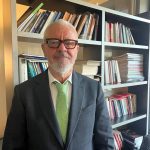
By Eda Derhemi
During the recent months of negotiation between the Serbian government and the Kosovar Albanian representatives, the newspapers and TV news broadcast in Prishtina, Belgrade and Tirana have been filled with reports of hostile declarations from both Serbian and Kosovar Albanian politicians, and constant attempts by European and American diplomats to calm things down and control them. But nobody is doing a thing to change almost a decade of political and economic stagnation in the status-less Kosovo. During the seven years after the NATO war and the withdrawal of the Serbian military and paramilitary groups from Kosovo, the Kosovar Albanians who constitute more than 90% of Kosovo, have lived without the traditional threats and maltreatment from Serbs. But since 1913, when the weak Turkish empire was losing one after another of the Balkan regions it had ruled for almost five centuries, Kosova officially remained part of the Serbian state and territory. The Albanians of Kosovo finally have a chance to reach their old dream, independence from Serbia, a dream that has survived several genocidal campaigns against them, wars, racist discrimination and population exodus. After the Serbian occupation of Kosovo in 1912, Kosovars fought to win their independence and have rebelled several times against Serbian rule. But in recent times they are known more for their strategic peaceful resistance to the Milosevic regime between 1989 and 1999, and the organization of parallel structures of government and administration, schools and hospitals during those years.
Following Serbia’s wars against the ex-Yugoslav republics that sought independence, and especially after the Serbian attempts at genocide in Bosnia and Kosovo, the international mood for the first time has changed. In the last seven years Kosovar Albanians’ drive for independence from Serbia has finally found support from the US and some of the main EU states, who claim to be ready to recognize a unilateral independence proclaimed by the Kosovar parliament, if the negotiating process fails. The Serbs make veiled threats to use force to protect their territorial integrity if Kosovo declares independence, and the Kosovars vow that they will be independent, with or without Serbian consent. Meanwhile, Kremlin, for reasons that have little to do with the romantic claims of protecting a ‘weak Slavic brother’ or the threatened integrity of another state, fans the flames. This is the only factor that gave the momentum to the Serbian side once again this Spring, making them believe in surprise that Kosovo is in fact not yet lost. The Albanian government poses as a serious fighter for the right of Kosovars for self-determination, but Albania has no real influence with the world powers that control the future of Kosovo. Still, it has raised the pro-Kosovar rhetoric in all its international activities and has made Kosovo status one core issue of its foreign policy.
The Kosovo problem seemed to have a clear and logical solution in late spring 2007, when, after the failure of long talks between the Serbian and Kosovar Albanian representatives, Ahtisaari presented his complex proposal for a supervised independence for Kosovo with broad rights for its Serbian minority. Ahtisaari’s proposal is still considered by the US and most EU leaders as the best possible solution. But enthusiasm for the Ahtisaari plan has waned after the failure of the UN Security Council to pass a draft resolution based on it, in the face of Russia’s threatened veto. Another 120-day period was agreed on, for more talks between Kosovar Albanians and Serbian government to negotiate a solution for Kosovo’s status. These talks are led by three representatives from the EU, the US and Russia, and end on December 10. During September and October, the rounds of talks in New York, London, Brussels and Vienna have brought nothing new in the position of the sides. In fact, neither of the two sides expect anything new or positive to come from these talks, and everybody in the international community knows this. These new talks are just another way to postpone dealing with the problem. Nothing during the recent months has provided anything to fill the vacuum created by the international hesitation after Ahtisaari’s vision. This last one is in fact the only sensible novelty produced in the last 10 years to solve Kosovo’s problem.
Recently it is very common to read that the Albanians of Kosovo are becoming impatient and won’t wait for their independence much longer. Their frustration is understandable. Newspaper accounts of events in Kosovo in 1981, 1989, 1990, 1996, 1997, and 2004, all dates related to important political processes and ethnic confrontations, show an astonishing similarity to today’s press reports. Not only is the political rhetoric the same, but there are times when a press conference or declaration of a Kosovar or Serbian politician from several years ago is repeated now, word for word, as a new statement. In the moderate Kosovar newspaper Koha Ditore of April 1997, one reads about the first international meeting between the Serbian and Albanian representatives in New York organized by Allen Kassof of PER, the Project for Ethnic Relation. The report says that the only place the Serbian and Albanian representatives ever were in a room together without third-party moderators was in a room set aside for smokers. Ten years ago that meeting concluded that Kosovo needed a solution quickly, based only on agreement and dialogue and on the reciprocal respect for human rights. Allen Kassof even underlined that the solution should come in the same yearױ997. The Kosovar Albanians declared at that time that they could not accept anything but independence, representing the will of over 90% of the Albanians in the region of Kosovo, expressed in a popular referendum and in the free elections for a parallel government. The Serbian side on the other hand, declared that a solution for Kosovo could only be found within a democratic Serbia, and that there will never be an independent Kosovo. Ten years later, in November 2007, international politicians continue to repeat the same line: a solution should be found this year, and every delay might cause new instabilities in a region worn out by the prolongation of these talks. “The continuation of the current situation is impossible”. But the years show that so far it has indeed been possible.
Inside Kosovo, which lives under the UN administration, tension grows as economic problems increase: without independence Kosovo cannot attract investors, provide jobs to the unemployed, negotiate with international financial organizations, become a member of international bodies like the UN, the EU, and so on. The political atmosphere becomes tenser as Kosovo prepares for its November general elections. Armed groups from both sides, like the Serbian Guard of Tsar Lazar and the Albanian National Army beat their chests and threaten to make war for their causes. Until now these groups have been well controlled by the political institutions in Serbia and in Kosovo, whose attention is concentrated on the negotiations in process. But eventually, they could be used by interested political forces to cause unrest and destabilization, or might even act independently as they threat to do. Other unsolved problems in the neighboring Macedonia, which is country to a large number of ethnic Albanians with close kinship ties with Kosovar Albanians, can also serve as a destabilizing factor if the status talks take forever.
December 10, the end of this new period of negotiations to solve the status of Kosovo, is not really that far off. What did both sides offer each other over one month ago in their first direct encounter with the presence of three international mediators? Practically nothing that can serve as a basis for negotiation: the Serbian side offered 95% autonomy to Kosovo, but not any sort of independence; the Kosovo Albanians offered good-neighbor relations and recognition of a long list of rights for the Serbian minority in Kosovo, but only after independence. The following meetings in Brussels and Vienna in October and early November have only raised the level of hostility. The last Serbian proposal for Hong Kong status for Kosovo is another maneuver of the Serbs to appear as the side that is moving towards a solution with new ideas and refreshed will, but the real proposal is essentially nothing more than the autonomy they offered before. In the recent talks, the Kosovar side is stuck to its “independence” claim without much creativity to serve it in attractive and changing dishes, certainly keeping the independence in the heart of their new proposals. Perhaps this time in Brussels they do bring something eye-catching and do not repeat themselves.
However, not much new is expected. Each side is simply trying to convince the international community that it is not to be blamed for withdrawing from the political game of negotiations. Serbs do not want to repeat the mistake of Rambouillet that brought NATO to the stage. What Albanians and Serbians are really waiting for as they argue for their unchanged positions is to see which one of their respective protectors, the US-EU or Russia, will yield.
But an agreement for an independent Kosovo does not seem to be possible this year with Russia standing against it, and a Kosovo under Serbia’s thumb again, seems even more distant. Probably there will be a unilateral proclamation of independence from the Kosovar Albanians after December 10, if the US and important EU members will allow it. Is this the solution to the Kosovo problem? If a large number of states, including the major world powers, recognize Kosovo, it could be. If a unilateral independence without a UN Security Council blessing leaves Kosovo recognized as independent by only a few non-major political actors, it would be just another failure of international bodies to deal with the world’s ethnic problems. It would also be a failure of the Kosovar Albanians to get rid of Serbian rule and repugnance once forever, hence their strong repeated promise to not act without the support of the US-EU factor.
However, one thing is certain: “The continuation of the current situation is impossible”.
Eda Derhemi (PhD) teaches communications and Italian at the University of Illinois, at Urbana-Champaign, and is an IREX advanced research fellow (IARO) working for six months in Kosovo and Albania.