By Genc Pollo
Albanian MP and former Chairman of the Parliamentary Committee on European Integration. He is also an ex-Deputy Prime Minister, Minister of Education; Telecoms
The European Parliament adopted a resolution on June 19 regarding the Western Balkans which warmly affirmed their EU membership perspective and the necessary reforms and efforts required by all sides.
An amendment proposed by the EPP Group stressing the 15 conditions that the European Council asked Albania to fulfill before accession negotiations can really start was adopted by a large majority. It was supported by Renew Europe and Conservative groups, and many other MEPs on the left and on the right, and from other groups that formally didn’t support the amendment. Not that these groups would like contradict the Council or would want to deny official reality. Their reason, as reported by the media, was that such a reminder would not fit in the celebratory mood they wanted the resolution to convey. That exactly epitomizes a certain thinking that is as well wishing as it is counterproductive.
The same week the MEPs were busy with the Western Balkans and other matters in Albania as another bizarre debate developed parallel to Brussels on the Council conditionality. Prime Minister Edi Rama kept publicly denied the 15 conditions by sometimes vehemently asserting their nonexistence or blatantly ignoring them, including in institutional meetings called to discuss…the 15 conditions.
Unimpressed by criticism from the opposition, civil society, institutional figures, and voices within his own ranks Rama stuck to his own narrative. While the events in Brussels and Tirana are just episodes in a longer story, it would be wrong, however, to dismiss them as insignificant.
One would wonder why grandees like US Secretary of State Mike Pompeo, the EU’s High Representative Josep Borrell, and Enlargement Commissioner Oliver Varhelyi, along others would publicly applaud a partial agreement reached on June 5 between the Albanian government and the opposition. However, a central demand of the EU conditions is that Albania holds free and fair elections that are accepted by each party. While all our elections have been criticised in the past by international monitors for the use of state resources and other chronic malfunctions, in the last seven years their recommendations have focused more on vote buying and vote pressuring risks. That is the reason why electoral reform, followed by its implementation, plays a central role in the EU conditionality.
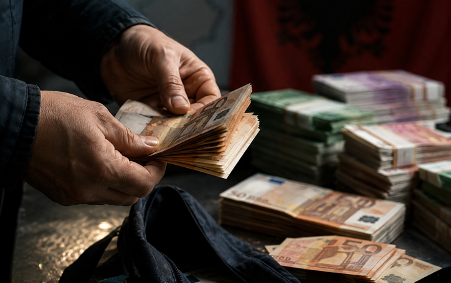
The prosecution wiretaps, featuring high officials from the ruling Socialist Party – including Rama, himself – scheming with each other and with crime bosses to intimidate and/or bribe voters, caused uproar when published last year by the majot German daily Bild Zeitung. This probably explains a very unusual request known as Condition 8: “the initiation of proceedings against those accused of vote buying”. It was initiated by the German Bundestag and made its way into the Council conclusions.
The Commission, at the highest political level of the Enlargement Department, made a very helpful mediation that prevented the ruling party’s abrupt capture of the election administration and facilitated its gradual and well-structured professionalization, which made the June 5 deal possible. Still, it is far from being fully concluded as the ruling party is artificially stalling when detailing pre-agreed issues and one cannot be certain that what is written in the law will be implemented in real life.
There are two developments that signal trouble: 1) The Rama government has announced the legalisation of medical cannabis. Don’t be fooled, because drugs of any kind in Albania can’t be related to anything medical. In the spring of 2016, every possible land plot was cultivated with cannabis despite its cultivation being a series criminal offence. The “farmers” didn’t worry as they were in cahoots with the police. Today, the then-Interior Minister and some senior police officials face drug charges, but dozens of others who were involved are still with the force. Conveniently, back then, general elections were to scheduled to take place the next year and drug money would play quite a role as the wiretaps show. The next general elections are scheduled for 2021 and the “medical cannabis” initiative is a way to hint to the “farmers” of 2016 and their protectors that “good business” is on their way.
The other troublesome government initiative is the “fiscal amnesty” meaning that illicit money will be legalised for a fee ranging about 7%. That means that from a €100 revenue, an honest businessman will keep roughly €65 in their pocket; while another type of businessman will keep €93 out of €100. There is more to it than this moral dilemma, but in the context of huge ongoing money laundering from drug proceeds (with the European Council requesting its tackling, a process also known as Condition 4) this looks like the creation of alternative money flows for vote buying.
In previous articles I have tried to explain why the EU conditions are important first for the restoration of democratic and constitutional normality in Albania and for the advancement towards the not-so-close EU membership. In this sense, the European friends of the Albanian people and of a European Albania would be well advised to repeatedly refer and insist on the 15 EU conditions.